
Midwest hail damage · John Beal Roofing since 1947
The Complete Midwest Hail Damage Guide
Everything we know about hail in this region, written down in one place. No sales pitch - just the things homeowners keep having to learn the hard way.
Short answer
Midwest hail season runs from roughly March through September, peaking in May and June, with the heaviest activity in the corridor from Kansas and Nebraska east through Missouri, Iowa and Illinois. Homeowners should have a roof inspected after any hail event of three quarters of an inch or larger, and should do so before winter rather than waiting until spring.
Why the Midwest gets hail
Hail forms when a thunderstorm updraft is strong enough to carry raindrops above the freezing level and hold them there, cycling them up and down as they accumulate layers of ice until they are too heavy for the updraft to support. The Midwest produces exactly the conditions this requires: warm, moist air pushing north out of the Gulf of Mexico meets cold, dry air coming down from Canada and off the Rockies, and the collision zone migrates across the region through spring and summer. That collision zone is why this part of the country produces more damaging hail than anywhere else on the continent.
When the season runs
Broadly March through September, peaking in May and June across most of the region. The season starts earlier in the south - southwest Indiana and southern Missouri can get claim-worthy events in March - and it is compressed into roughly June through August in the far north around Fargo, Duluth and Green Bay. Storms outside the peak window are just as claimable as storms inside it, and dismissing an August or October hailstorm as out of season is a common and costly mistake.
What hail actually does to a roof
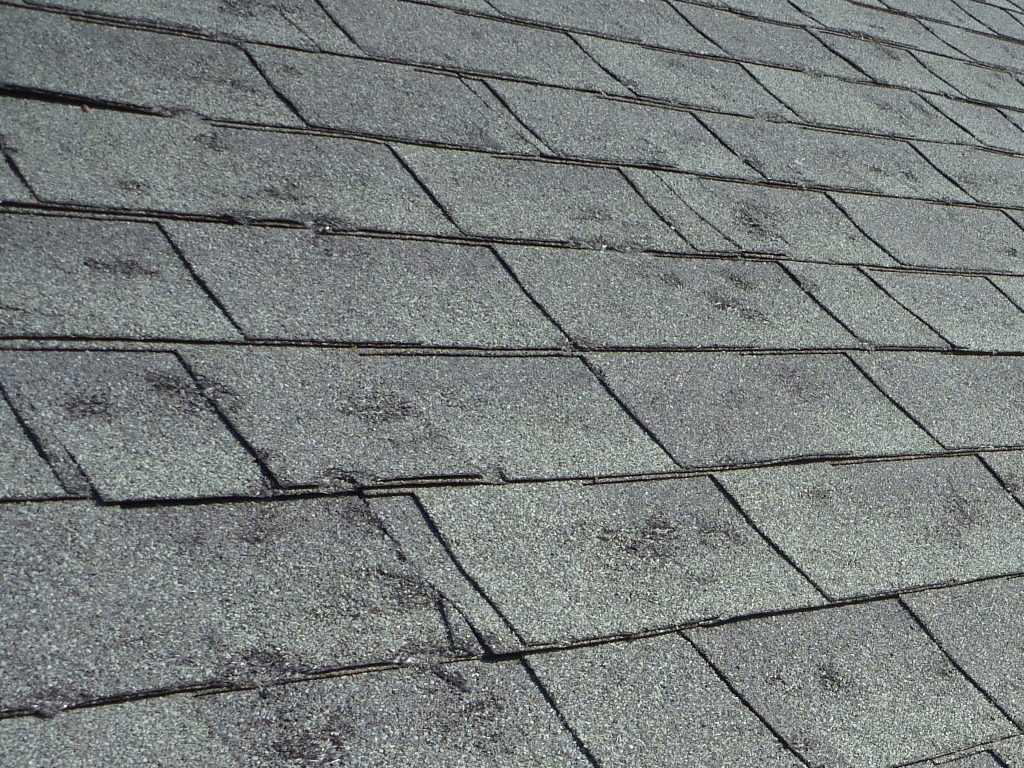
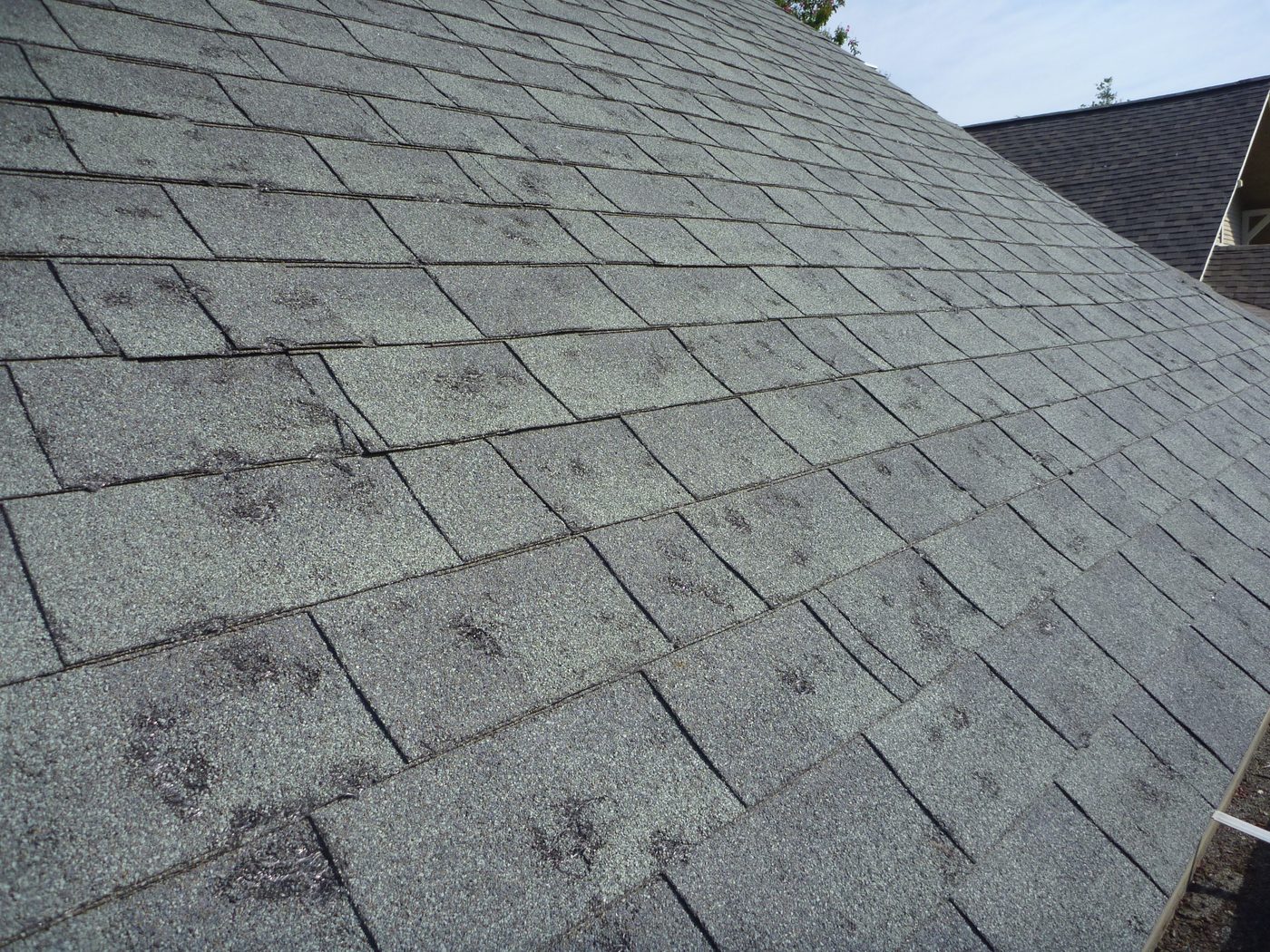
The damage that matters is not on the surface. An asphalt shingle is a fiberglass mat coated in asphalt and surfaced with mineral granules. Hail knocks granules loose, which is cosmetic, and it fractures the mat underneath, which is not. A fractured mat is a leak with a delay on it - UV exposure and freeze-thaw cycling open the fracture over the following two to five years. This is why a roof can pass a casual look and fail three winters later, and it is why hail claims are filed on damage that is not yet leaking.
The inspection timeline
Inspect after any event with hail three quarters of an inch or larger, and inspect before winter rather than after it. This matters most in the northern half of the region, where a fractured mat that goes into a Minnesota or Wisconsin winter comes out substantially worse. It matters everywhere for a different reason: policies carry filing deadlines measured from the date of loss, and evidence degrades. A six-month-old hail bruise documents cleanly. A three-year-old one is an argument.
How claims work, in short
Document the roof first, then file with a specific date of loss. Have your contractor meet the adjuster on the roof. Read the scope line by line against the documentation and supplement anything missing before work starts. Pay your deductible - it is owed, and any offer to waive it is fraud. Understand whether your policy pays replacement cost or actual cash value on the roof, and whether your wind-and-hail deductible is a flat amount or a percentage of dwelling coverage, because in the high-frequency Plains markets a percentage deductible can be five or six thousand dollars.
How to avoid getting taken
After a large hail event, a metro fills with out-of-state crews within forty-eight hours. Some are legitimate and many are not. The reliable signals: a permanent local address you can drive to, a company history measured in decades rather than storms, a willingness to inspect and photograph before any contract discussion, no pressure to sign on the first visit, no offer to handle your deductible, and a workmanship warranty from an entity that will still exist in five years when a flashing detail needs attention. John Beal Roofing has been doing this since 1947 out of St. Louis, and that is the whole argument.
Written from seventy-nine years of Midwest roofs
This guide is not assembled from other websites. It is what a company that has been repairing storm damage out of St. Louis since 1947 has learned about how hail behaves in this region, what carriers do with claims, and which mistakes cost homeowners the most money. If something here saves you from filing a claim you did not need, that is a good outcome as far as we are concerned.
Frequently asked
When is Midwest hail season?
How soon after a storm should I get inspected?
Does hail damage get worse over time?
What size hail damages a roof?
Should I file a claim for minor damage?
How do I spot a storm chaser?
Related
- Free Hail Damage Roof Inspection
- Hail Damage Roof Replacement
- 24/7 Emergency Roof Tarping After Hail
- Hail Damage Insurance Claim Help
- Storm Damage Roof Repair
- Commercial Hail Damage Roofing
- Siding, Gutter and Window Hail Damage
- What Hail Damage Looks Like on a Roof
- Class 4 Impact-Resistant Shingles for Midwest Hail
- How to Avoid Storm Chasers After a Hail Event
- ACV vs RCV On A Hail Damage Roof Claim
- Roof Claim Supplements Explained
- How Long You Have To File A Hail Claim
- Why Deductible Waiving Is Insurance Fraud
- Does A Hail Claim Raise Your Rate?
- Shingle And Siding Matching Rules By State
Free Hail Damage Inspection
No cost, no obligation, and you get the photographs either way.
Free inspection, documented for your claim.
One number reaches dispatch for all forty Midwest metros, answered live 24 hours a day.