
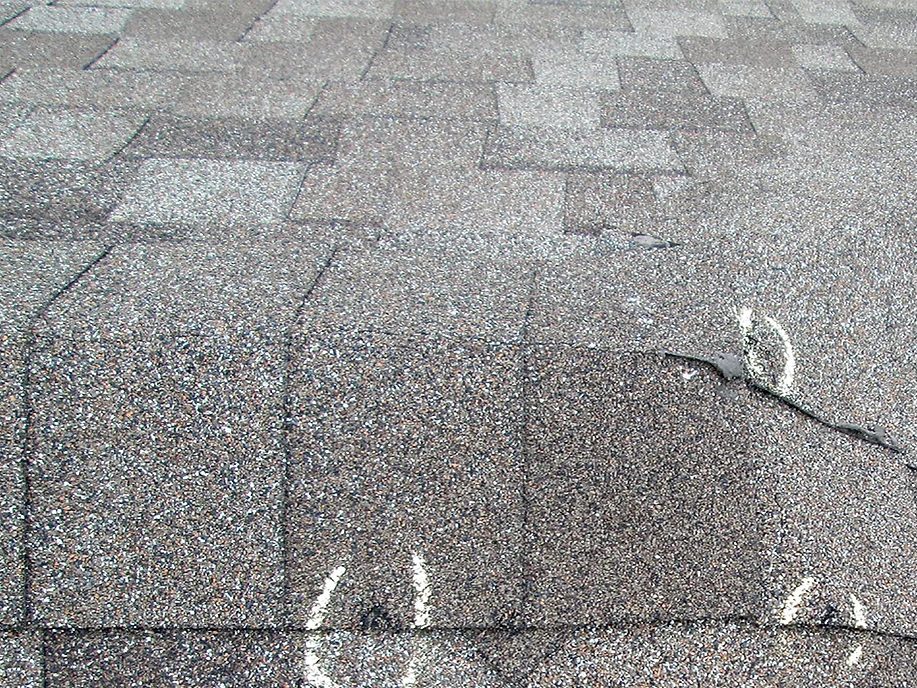
Midwest hail damage · John Beal Roofing since 1947
Synthetic Underlayment: The Layer Under a Hail Roof That Nobody Sees
It goes down in the morning and it's buried by lunch. That's exactly why it's the first thing a cheap bid trims, and the last thing a homeowner thinks to ask about.
Short answer
Synthetic underlayment is a woven or spun polypropylene sheet fastened over the roof deck before the shingles go on. It has replaced asphalt felt on most reroofs because it's much lighter and far harder to tear, and it tolerates sun and rain longer if weather interrupts the job. On a hail replacement it isn't an extra: building codes require an approved underlayment beneath asphalt shingles, and shingle manufacturers expect one for their warranty. What varies is the grade and how it's fastened, and that's where corners get cut.
The second line of defense
Shingles shed water. They don't seal. Wind-driven rain gets pushed up under the laps, ice backs meltwater under the courses at the eaves, and every nail is a small hole in the roof. The underlayment catches whatever gets past the shingles and walks it down to the gutter instead of into the decking.
It also protects the deck while the job is underway. On a big spring hail replacement, a crew might strip a slope at eight in the morning and catch a thunderstorm by two. A papered deck can ride that out. Bare plywood soaks it up and swells.
Felt against synthetic, honestly
Asphalt felt, the old 15- and 30-pound paper, still works. Plenty of roofs in older Midwest neighborhoods have it under them right now. It's also heavy, it wrinkles when it gets wet, and it rips when a boot slides on a steep pitch. Wrinkled felt telegraphs through new shingles as ridges you can spot from the curb.
Synthetic rolls weigh a fraction as much, so a crew hauls fewer of them up the ladder and covers more deck per roll. The sheet doesn't absorb water, so it doesn't buckle. Most are printed with lap lines and a fastener pattern, which keeps courses straight. Many carry an ultraviolet exposure rating measured in weeks or months, so a roof left papered over a rainy weekend isn't a crisis.
It has drawbacks too. Some bargain sheets get slick when they're wet or dusty, and that's a safety issue on a steep roof. Synthetic is also less permeable than felt, so attic ventilation has to be right or moisture from the house has nowhere to go. That's one more reason we climb into the attic on every replacement.
Where a low bid hides the savings
Underlayment is invisible the day the crew leaves, which makes it the easiest line to shave. Two shortcuts show up most. One is the thinnest synthetic on the supply yard shelf, light enough that you can see daylight through it, held down with staples. The other is skipping it on part of the roof, laying new shingles straight onto a section of bare deck where the old felt tore away.
Fasteners matter more than people guess. A synthetic sheet held with plain staples can tear loose around each one in a gust before the shingles are on, and once it's flapping it does nothing. Most manufacturers specify plastic or metal cap fasteners. Ask which your crew uses.
How it shows up on an insurance estimate
A hail replacement estimate should carry its own underlayment line covering the full roof area, separate from the shingle line. Sometimes it's priced as felt when the shingle manufacturer's instructions call for something better. Sometimes it's missing altogether, especially on estimates written fast after a big storm when one adjuster is juggling dozens of houses.
An absent or undersized line is a normal thing to add through a roof claim supplement. Whether the carrier pays for a higher grade that local code demands depends on the ordinance or law coverage in your policy, if it has any. We go over every line item with you before work starts. Our hail damage insurance claim page covers the rest of the process.
Where it meets the other layers
Underlayment never works alone. Along the eaves in cold country, a self-adhering membrane goes down first and the synthetic laps over it; our page on ice and water shield explains that membrane. At valleys, sidewalls and chimneys, each piece has to lap under the flashing in the right order, upper over lower, so water runs across a seam instead of into it. Most leaks we chase on newer roofs start at those transitions, not out in the open field.
Two things we refuse to do
We won't lay new shingles over old felt left on the deck. And we won't skip checking the wood just because the underlayment would hide it. If a sheet of decking has gone soft or started to delaminate, paper on top only buries the problem. We replace bad wood first, photograph it for the claim, then cover the roof. To see how that fits into a whole job, read our hail damage roof replacement page.
Questions to put to anyone bidding your roof
Ask for the underlayment product by name. Ask whether it goes down with cap nails or staples, whether the whole deck gets covered, and what the crew does if rain rolls in halfway through. A crew that installs it right answers all of that in about ten seconds. Our workmanship warranty covers what's under the shingles as much as what's on top, and a third-generation family business has every reason to stand behind both.
Underlayment questions from hail replacements
Does code require synthetic underlayment specifically?
Codes require an approved underlayment under asphalt shingles, and both felt and synthetic products can qualify depending on their listing. Local amendments vary. The shingle manufacturer's installation instructions also name what's acceptable for its warranty.
Can my old underlayment stay if only the shingles were hit?
Not on a full replacement. Tearing off shingles shreds the felt below, and new shingles over torn felt void most manufacturer warranties. On a small repair, the existing underlayment around the patch is normally left alone.
Does hail damage the underlayment itself?
Rarely, since the shingle takes the blow. The harm comes later, when a fractured shingle lets water reach the underlayment season after season. By the time a stain appears on a ceiling, the felt under that spot is often rotted through.
How long can synthetic underlayment sit uncovered?
It depends on the product, and most print an exposure limit on the roll or data sheet. We never plan to leave a roof papered longer than weather forces us to, and we tarp or shingle well before that window closes.
Will a better underlayment cut my insurance premium?
Generally not. Premium credits in the Midwest tend to follow Class 4 impact-rated shingles rather than what sits beneath them. A better underlayment pays you back in fewer leaks. Ask your agent what credits your carrier actually offers.
More on what goes under the shingles
Free Hail Damage Inspection
No cost, no obligation, and you get the photographs either way.
Free inspection, documented for your claim.
Call one number from any of our forty Midwest metros and a live dispatcher answers, day or night.