
Midwest hail damage · John Beal Roofing since 1947
Why a Roof Leak Shows Up Years After the Hail
The stone breaks the mat under the granules and the shingle keeps shedding water anyway. Two to five winters later it stops.
Short answer
A hail-bruised asphalt roof typically does not leak right away. The stone fractures the fiberglass mat under the granules without opening a hole, so the shingle is structurally broken while it still sheds water normally. Two to five years of UV exposure and Midwest freeze-thaw cycling widen that fracture until it finally opens. By then the storm is old news, the notice window on most policies has closed, and the homeowner pays for a roof the carrier would have covered.
What the stone actually does
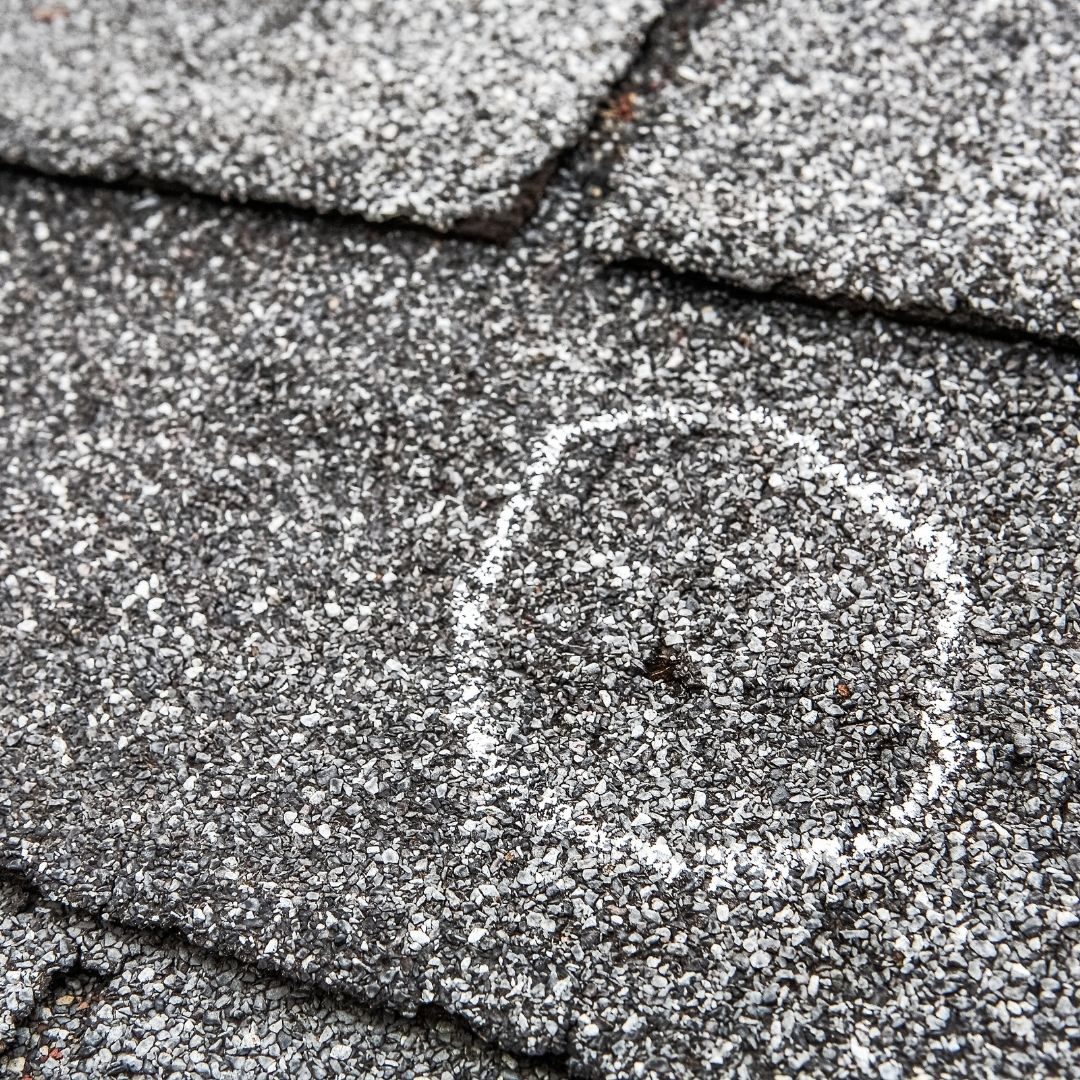
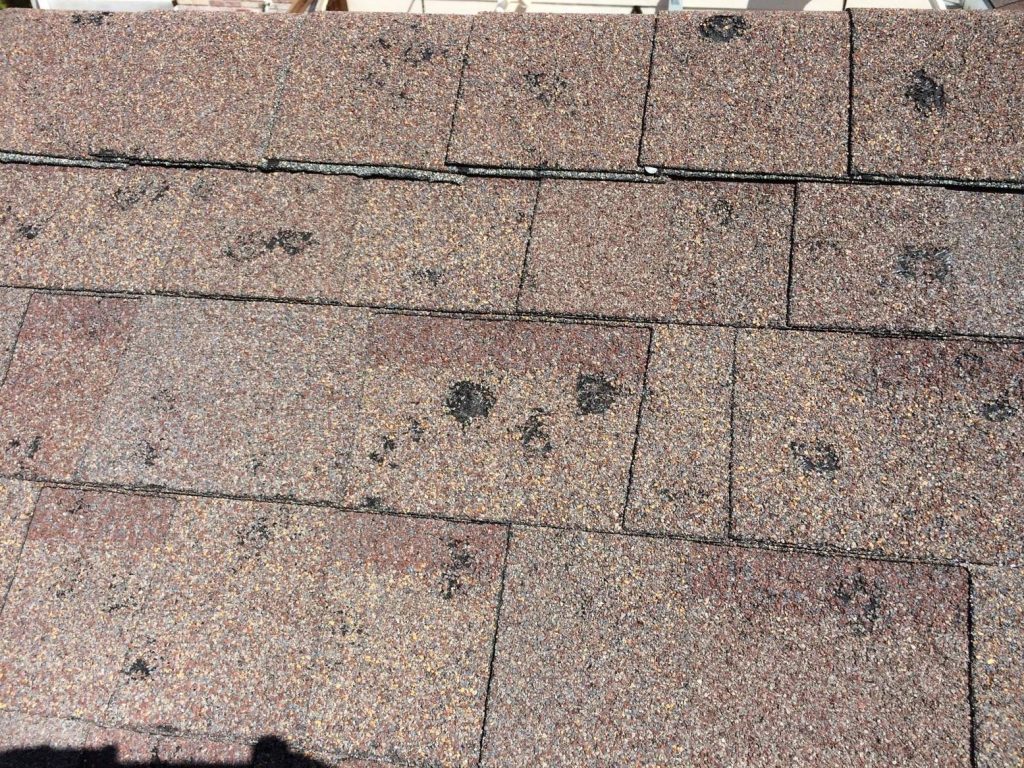
An asphalt shingle is a fiberglass mat saturated in asphalt and surfaced with ceramic granules. The granules are armor. When hail strikes hard enough it knocks granules loose at the point of impact and flexes the mat underneath past what the mat will take, and the mat cracks. Nothing is open yet. The asphalt is still continuous across the fracture, so water runs off the way it always did and the roof looks fine from the driveway. Up close a bruise has a distinct look: a soft, slightly depressed circle with a darker center where the mat has given up. Press it with a thumb and it gives, a little like a bruise on fruit.
Then the Midwest weather gets to work
UV degrades exposed asphalt wherever the granule cover has thinned, and the thinnest spot on the whole slope is now the impact crater. Water works into the fracture. In January it freezes and expands, in February it thaws, and the Midwest runs through dozens of those cycles a year, with Minnesota and the Dakotas taking far more than that. Each cycle widens the crack slightly. Wind lifts the tab and flexes the same weakened spot again. Somewhere between the second and the fifth winter the fracture opens clean through the mat and there's a path to the underlayment.
Why the stain is never under the hole
Water entering at a fracture doesn't fall straight down. It runs along the top of the underlayment, then along the deck, then down a rafter, and it can travel fifteen or twenty feet sideways before it finds a seam or a nail hole and drips. The stain on your ceiling is almost never beneath the actual entry point. That's why chasing a leak from inside the house is a poor way to find it, and why a proper diagnosis starts on the roof, working upslope in sections with a hose if that's what it takes, until the water shows itself.
The claim timing problem
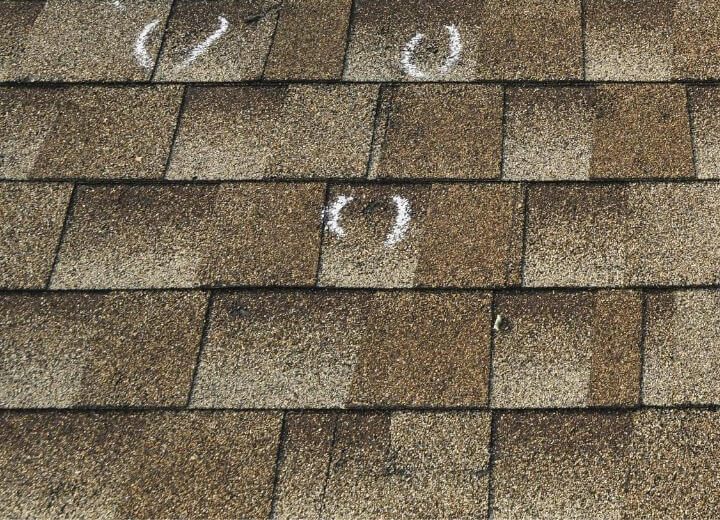
Most homeowners policies require notice of a loss within a defined period, and many now state a specific limit for wind and hail. One year is common across the Midwest and some run to two. A leak that begins in year three from a storm in year one is still hail damage, but you have to establish the storm date and you have to account for the delay in reporting. That's doable and it is not automatic. Weather data pulled for the address, photographs of dated soft-metal dents, and a roofer's written opinion that the fracture pattern reads as impact rather than wear are what carry the argument. All of it is far easier when the roof was inspected right after the storm and a file already exists.
A bruised roof is damaged the day it happens
Coverage on an asphalt roof turns on whether the functional life of the shingle has been shortened, not on whether water is coming through the ceiling. That distinction is the whole ballgame, and it's the one most homeowners learn about too late. A slope with mat fracture scattered across it has lost years off its service life the afternoon the storm passed. Waiting for a leak to confirm what a test square already showed is how a covered loss turns into an out-of-pocket roof.
Wear looks different from a bruise
Age shows up as uniform granule loss across the whole slope, heaviest in the drainage paths and along the bottom edge where water runs longest. Hail shows up as scattered circular impacts with no relationship to drainage, usually concentrated on the elevations that faced the storm. Thermal cracking runs in straight or branched lines rather than circles. Blistering leaves small round craters too, but a blister is hollow underneath and its edges are sharp, where a hail bruise is soft. An honest inspector will tell you when what you've got is wear, because filing on wear gets denied and a denial sits on your claim history for nothing.
What to do if you're leaking right now
Stop the water first. We tarp around the clock and it's the one call that jumps the queue during storm season, because a slow leak into insulation turns into a mold remediation bill faster than most people expect. Once the house is dry, the diagnosis matters more than the repair does. If the roof turns out to carry widespread mat fracture, patching the one spot that's leaking is money spent on a roof that will leak somewhere else next spring. If the fracture is isolated to a single slope, a slope repair is honest work and we'll price it that way.
The case for inspecting after every real storm
A free inspection after a hail event costs you an hour and leaves you with a dated file. If the roof is sound, that file becomes the baseline proving the next storm did the damage. If the roof is bruised, you file inside the notice window with documentation instead of arguing four years later with a ceiling stain as your only evidence. John Beal Roofing has been working Midwest storms out of St. Louis since 1947, and the most expensive mistake we watch homeowners make is waiting because nothing was leaking yet.
Frequently asked
How long after hail does a roof usually start leaking?
Two to five years is the typical range on asphalt. The mat fractures during the storm, then UV exposure and freeze-thaw cycling open the fracture over the following winters.
Can a roof be totaled by hail and still not leak?
Routinely. Coverage turns on whether the shingle's functional life was shortened, not on whether water is coming in yet. A roof with widespread mat fracture is damaged the day of the storm.
My ceiling stain is nowhere near a damaged shingle. Is that normal?
It's the usual case. Water travels along the underlayment and the framing before it drips, sometimes fifteen or twenty feet from the point where it entered the roof.
Is it too late to file if the storm was three years ago?
Maybe not, but it's harder, and it turns on your policy's notice and suit-limitation language. Get the roof documented and the storm date established before you call the carrier. Call 1-800-564-6232 and we'll look at the dates with you.
Should I just patch the spot that's leaking?
Only if the rest of the roof inspects clean. Patching one spot on a slope with widespread bruising means you'll be back up there next year for the next one, and the year after that for another.
Related reading
Free Hail Damage Inspection
No cost, no obligation, and you get the photographs either way.
Free inspection, documented for your claim.
One number reaches dispatch for all forty Midwest metros, answered live 24 hours a day.