
Midwest hail damage · John Beal Roofing since 1947
Winter Roof Damage After Midwest Hail
A hail-bruised roof can look fine going into November. By March that same roof may have ice built up at the eaves, cracked tabs and a brown ring on the bedroom ceiling.
Short answer
Midwest winters damage roofs in three main ways: ice dams that back meltwater under the shingles at the eaves, freeze-thaw cycles that widen cracks and fractures, and snow load on spots that were already weak. A roof bruised by hail the summer before is the most exposed, because water gets into the fractured mat, freezes, expands and opens the break further. Get late-season hail damage inspected and photographed before the first hard freeze, and treat heavy icicles and attic frost as early warnings.
How an ice dam builds up
Heat leaking out of the living space warms the deck over the attic. Snow sitting on that warm section melts, runs downhill and refreezes once it reaches the cold overhang past the outside wall. Day after day the ridge of ice grows taller, and the meltwater behind it pools. Shingles are built to shed water moving downhill. They aren't built to hold back a puddle, so the water creeps up under the courses, past the nails and into the wood. In the attic it shows as damp sheathing near the eaves. Downstairs you'll see it as a stain along the top of an exterior wall.
Why hail damage and ice feed each other
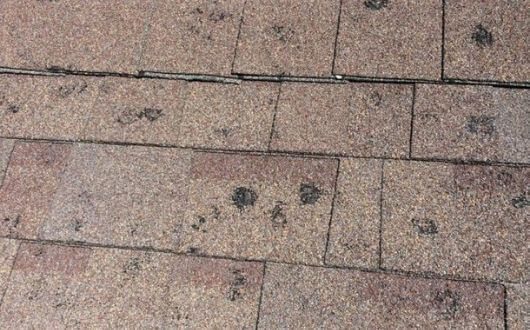
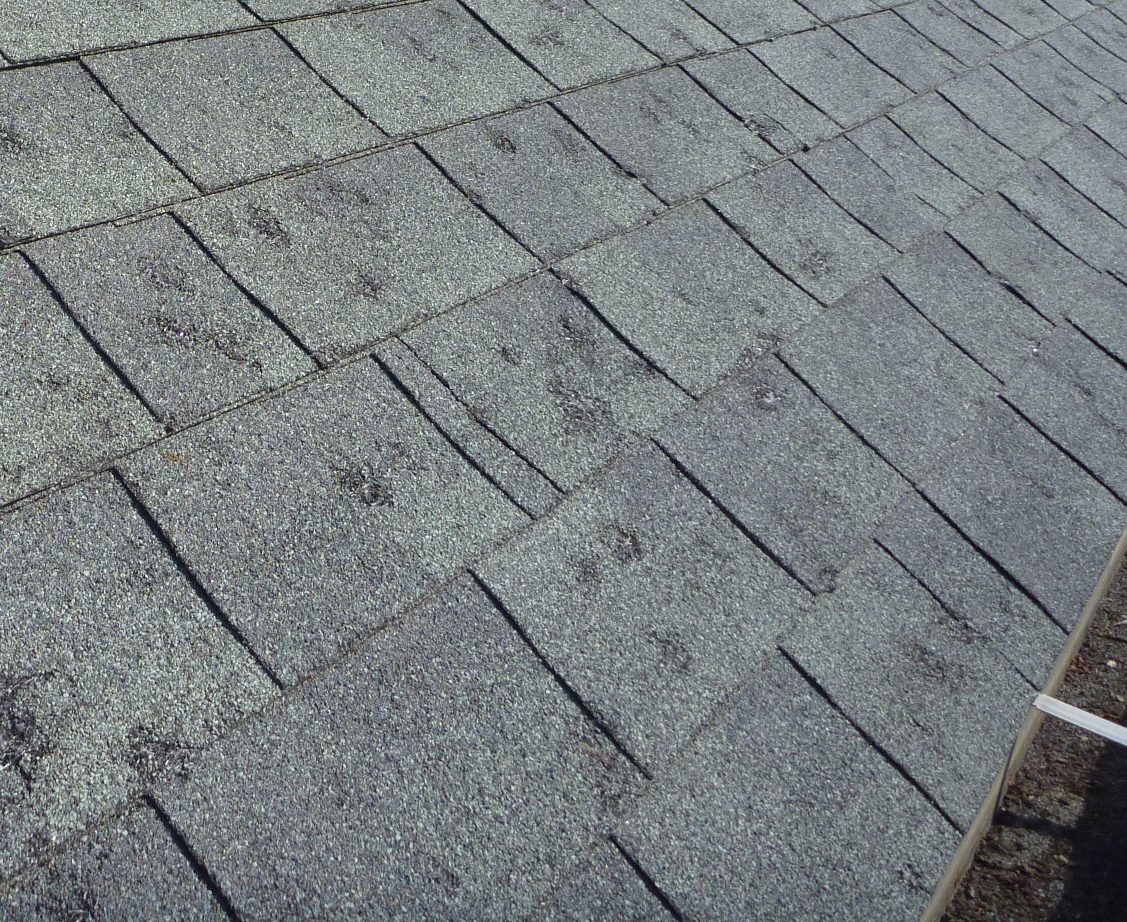
Hail fractures the fiberglass mat underneath the granules. On a July afternoon that break is a hairline you can't see. Fall rain soaks into it, a cold night freezes it, and the ice expands. The next afternoon it thaws, and that night it freezes again. A Midwest winter runs that cycle over and over, and each round pries the break a little wider and loosens more granules around it, which leaves bare asphalt for the sun to cook once spring comes. That's why a bruised roof that stayed dry for a season or two can start leaking all at once. Our page on roofs that leak years after hail walks through the slower version of the same failure.
Winter warning signs worth watching
Thick icicles hanging off the gutters are the easiest tell, since they mean meltwater is reaching the cold edge and refreezing. Frost on the underside of the roof deck, seen from the attic hatch, points to warm, damp air getting up there. Bare stripes on an otherwise snow-covered roof show where heat is escaping. Granules washing out of the downspouts during a January thaw are worth a photo, and our page on granules in gutters explains what they can tell you. None of this requires climbing onto a frozen roof. Please don't. Snow hides the edges and ice hides everything else.
Late-season hail and the first hard freeze
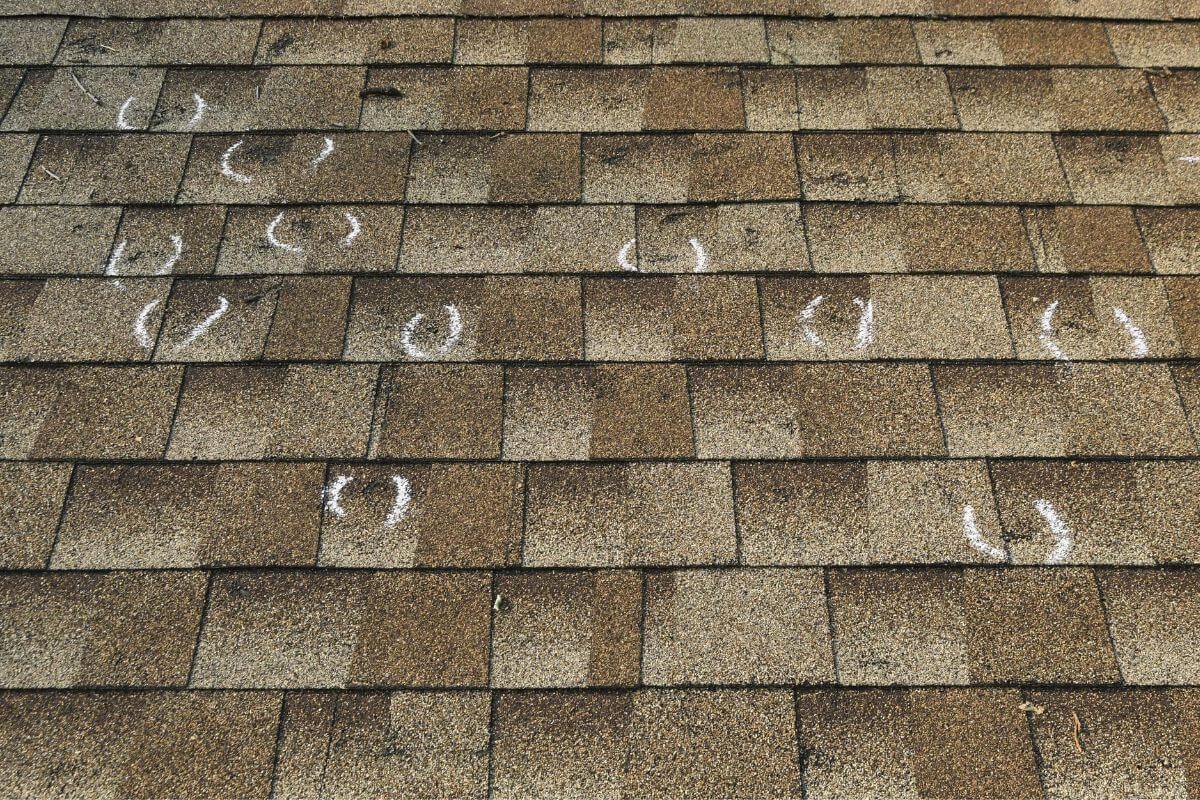
September and October storms cause a particular headache. The damage is fresh, the family is thinking about the holidays, and the inspection gets pushed to spring. By April the freeze-thaw cycles have muddied the evidence. Dented soft metals still date the storm, but an adjuster studying shingles in spring can fairly ask whether the cracks came from the stones or the cold. Get the roof inspected and the photos dated before the ground freezes. Most policies also expect prompt notice, so sitting on it until spring can run you into trouble with the claim deadline as well.
Roofing work in cold weather
Repairs can happen on most winter days. Shingle sealant needs warmth to bond, so a cold-weather repair gets hand-sealed and sometimes extra fasteners, and the tabs finish sealing when the spring sun hits them. Full replacements run in winter too whenever the forecast gives a dry stretch, though crews work shorter days and won't install over ice or snow. If water is coming in right now, the emergency comes first. Emergency tarping keeps the house dry until a proper hail damage repair or replacement can be scheduled.
Frozen gutters and the meltwater path
Ice in the gutters makes an ice dam worse, because the trough freezes solid and the meltwater has nowhere left to go. Hail-dented gutters hold ice longer, since a crushed run drains slowly and pools. Before the cold sets in, clear the leaves and make sure each downspout runs free to the ground instead of into a frozen splash block. If the gutters took a beating in a summer storm, they belong on the same claim as the roof, and swapping them out in October beats chipping ice from a sagging run in February. Heat cable can help on a stubborn north-facing eave. It isn't a cure, and it should never be fastened through the shingles.
Ice and water barrier at the eaves
When we replace a roof here, the first few feet up from the eave get a self-adhering ice and water barrier under the shingles, and cold-climate building codes across much of the Midwest call for it. It seals around nail shanks and holds back the water trapped behind an ice dam. It doesn't fix the cause. Attic insulation and ventilation do that by keeping the deck cold, and we check both while the roof is open.
Snow load and an older roof
Most Midwest roofs carry ordinary snow without complaint. Trouble starts where something was already weak: a patch of deck softened by a slow leak, rafters notched during an old remodel, or a low-slope porch roof where drifts pile against the wall. Hail doesn't weaken framing directly. The leak it eventually causes can rot the decking that has to hold the snow, though. A sagging line in the roof after a heavy snowfall means call us now. So does a ceiling crack that grows overnight.
Frequently asked
Should I rake snow off my roof?
On a single-story section, pulling the bottom few feet of snow down with a roof rake from the ground can cut down on ice dams. Don't climb up, and don't chip at ice with anything sharp. That does more harm to the shingles than the dam does.
Does homeowners insurance cover ice dam leaks?
Many policies cover the interior water damage from an ice dam leak while treating the dam itself as maintenance. Wording varies a lot, so read the policy or ask your agent. Photograph the stain, the icicles and the date.
Can winter damage be mistaken for hail damage?
After a few months, freeze-thaw cracking and granule loss can resemble aged hail hits. The difference often comes down to dented soft metals and dated photos, which is why late-season storms should be documented before winter. Our guide to what hail damage looks like shows the fresh pattern.
Will a roof installed in January seal properly?
The shingles seal once the sun warms them, usually during the first mild spells of spring. Until then the installer should hand-seal tabs in exposed spots. A properly fastened winter roof holds fine through the wait.
I found hail damage in November. Should I wait until spring?
No. Report it and get it inspected now, while the evidence is clean. If the repair can't happen right away, we can secure the worst spots so winter doesn't add to it. Call 1-800-564-6232 any time, day or night.
Related reading
Free Hail Damage Inspection
No cost, no obligation, and you get the photographs either way.
Free inspection, documented for your claim.
Call one number from any of our forty Midwest metros and a live dispatcher answers, day or night.