
Midwest hail damage · John Beal Roofing since 1947
How Long You Have To File A Hail Damage Claim
Two clocks start the day the storm hits, and only one of them is printed in your policy. Here is how the timing actually works, and what waiting costs you.
Short answer
Most Midwest homeowner policies require you to give notice of a hail loss promptly after the storm, and many add an outer limit stated in months or years from the date of loss. The deadline that decides your claim, though, is usually earlier than anything printed in the policy. Once a bruised roof has sat through another season of sun and freeze-thaw, tying the damage to one specific storm gets difficult, and carriers deny what nobody can date. Get the roof documented within weeks of a storm, even if you are not sure you want to file.
Your policy asks for notice, not a lawsuit
Two separate clocks run after a hail storm and homeowners mix them up constantly. The first is the notice requirement in your own policy, which is usually worded as prompt notice or immediate notice rather than a hard number of days. The second is your state's limitation period for actually suing a carrier over a denied or underpaid claim, which is set by statute and is generally much longer. Those two things get conflated in conversation, often by contractors who should know better. Notice is what you owe the carrier in the weeks after the storm. The statute is a backstop that only matters if the claim goes badly and you end up in front of a lawyer.
Because prompt is a word and not a date, carriers interpret it against the facts. A homeowner who reports a July hail storm in September, with dated photographs and a written inspection, is on solid ground. A homeowner who reports the same storm nineteen months later, with no documentation and a roof that has weathered since, is asking the adjuster to take their word for the timeline. Same policy language, wildly different outcome.
Everything hinges on the date of loss
When a claim gets filed, the first field on the form is the date the damage happened. Not the date you noticed it. Carriers cross-reference that date against radar and hail-swath reporting for your address, and if there was no qualifying storm on the day you named, the file starts out sideways. This is the single most common self-inflicted wound we see. A homeowner picks a date from memory, the date is wrong by three weeks, and now the carrier is looking at a mismatch instead of at a damaged roof.
Write down storm dates when they happen. A note on your phone is enough. If hail hits your neighborhood and you hear it on the windows, that is a date worth keeping, whether or not you plan to do anything about it.
Three deadlines, and only one of them is soft
Policy notice clause
Usually worded as prompt or immediate. Interpreted against your documentation, not a calendar. Weeks is safe. A year invites an argument you did not need to have.
Suit limitation period
Set by state law and sometimes shortened by policy language. Longer than the notice window in every Midwest state we work in. Check the exact number for your state rather than taking anyone's word for it.
Proof window
The real one. It closes as the roof weathers and the storm evidence on the soft metals oxidizes. Nobody writes this deadline down, and it is the one that kills claims.
What a year of weather does to your evidence
Hail damage does not sit still. A fresh dent in an aluminum gutter apron or a vent hood shows bright, unweathered metal at the bottom of the impact, and that brightness is what dates the storm for an adjuster. Give it twelve months of Midwest humidity and that bright metal dulls to the same gray as everything around it. The dent is still there. The proof of when it happened is gone.
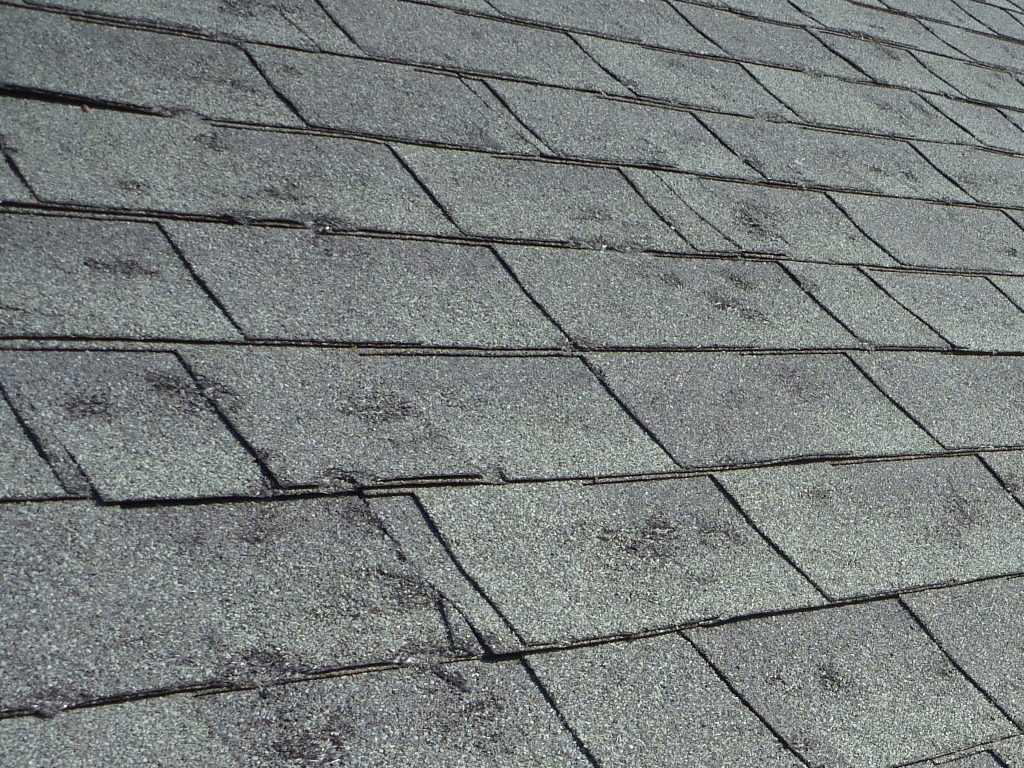
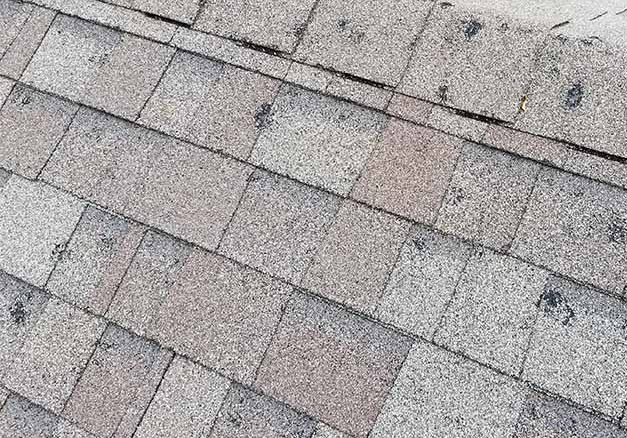
The shingles change too. A hail bruise is a fracture in the fiberglass mat under the granules, and it usually does not leak for two to five years while UV and freeze-thaw cycles work the fracture open. That delay is the reason people call late. It is also the reason a late claim is hard: by the time the roof leaks, the granule loss around the impact has spread, the edges have softened, and a skeptical adjuster can reasonably call it age.
How we date a storm we did not inspect at the time
It is not hopeless. We start with the soft metals, because gutter faces, downspout elbows, vent caps and condenser fins hold impact patterns longer than shingles do and the direction of the strikes tells us which way the storm came from. Then we look at the elevations: hail from a single storm hits the exposed slopes hardest and leaves the sheltered ones comparatively clean, and that pattern is hard to fake with age. If the pattern lines up with a documented storm date for your address, you have an argument. If it does not, you have our honest read on why.
If the storm was already a year ago
Call anyway, and be straight with us about the timeline. Late claims do get paid, particularly where the roof still carries clean, countable impacts and the soft metals cooperate. What changes is the burden. You need better documentation than a homeowner filing three weeks out, because the adjuster is going to lead with the delay. Have the storm date, any photographs you took at the time, and any repair invoices from the same period ready before anyone calls the carrier.
Understand that a carrier can also deny a late claim purely on the notice clause, without ever arguing about the shingles. That is more common when the delay ran long enough that the insurer can say the wait made the loss worse, which is exactly what happens when a fractured mat is left to open up and let water into the deck.
Filing sooner also protects the rest of the house
The roof is what gets the attention, but a hail storm that bruises shingles also dents gutters, splits window screens, chews up siding on the storm-facing wall and flattens condenser fins. Those items belong in the same claim as the roof, under the same date of loss and the same deductible. Wait two years and half of them have been replaced, painted over or forgotten, and you are leaving covered money on the table.
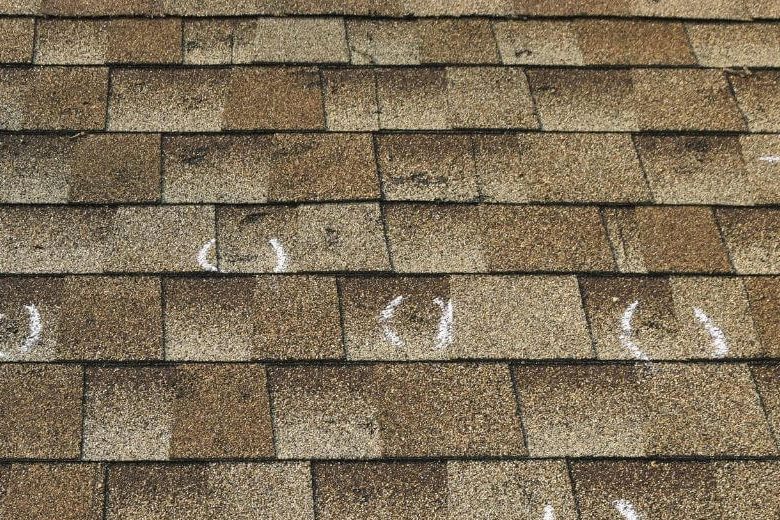
We photograph all of it during an inspection, roof and elevations together. It costs you nothing, and the file is yours whether you hire us or not.
Documented now, decided later
The best position to be in after a storm is documented but undecided. You have dated photographs, a test-square count on every elevation and a written summary, and you can sit on all of it while you think, get a second opinion, or watch whether the roof starts acting up. Nothing about having a file obligates you to file a claim. John Beal Roofing has been working Midwest storm damage out of St. Louis since 1947, and a documented roof with no claim on it is a perfectly good outcome.
Questions we get asked
Is there a hard deadline to file a hail claim in the Midwest?
Not usually a single number. Your policy asks for prompt notice and may add an outer limit, while your state sets a separate, longer period for suing the carrier. Because prompt is interpreted against your documentation, weeks is safe and a year invites an argument.
Can a carrier deny my claim just because I waited?
Yes. Late notice is its own denial reason, separate from anything to do with the shingles, and it is easier for a carrier to use when the delay let a fractured mat open up and admit water into the deck.
What if I do not know the exact storm date?
Give us your best window and we will work the roof for the storm's direction and elevation pattern, then compare it against documented hail reporting for your address. Do not guess a date on a claim form.
Does having an inspection start the claim clock?
No. An inspection is documentation, not a claim. You can hold dated photographs and test-square counts for as long as you like and never contact your carrier at all.
Should I file if my roof is not leaking yet?
If the mat is fractured, the leak is coming. It typically takes two to five years for UV and freeze-thaw to open the fracture. That is exactly the period in which the notice clause and the evidence both go against you, so document it now.
Related reading
Free Hail Damage Inspection
No cost, no obligation, and you get the photographs either way.
Free inspection, documented for your claim.
One number reaches dispatch for all forty Midwest metros, answered live 24 hours a day.