
Midwest hail damage · John Beal Roofing since 1947
Hail Claim Denied? What To Do Next
A denial letter is a first position, not a verdict. Here is the order of operations that reopens a Midwest hail damage claim, and the point where fighting it stops making sense.
Short answer
A denied hail claim can be reopened, and many are. Ask your carrier for the denial in writing with the field adjuster's report and photo set attached, then read the stated reason. Most Midwest denials come down to one of three findings: too few impacts counted inside the test square, damage the adjuster attributed to age rather than hail, or a date of loss that does not match a storm the carrier has on record. Each has a different remedy. A miscount is answered with a reinspection, an age finding with mat-fracture evidence and dated soft-metal photographs, and a date problem with corrected storm data. You generally have years, not days, to pursue it.
Get the denial in writing before you argue with anything
Phone calls are not documentation. Ask the carrier to send the denial in writing along with the field adjuster's report, the photo set and the estimate worksheet, even a zero-dollar one. That packet is the whole case against your roof, and until you have read it you are guessing at what you need to disprove. Ask for the file in a short email and keep the reply. Homeowners who skip this step spend six weeks arguing about the wrong thing.
Read the reason line by line. There is usually one sentence that carries the entire decision, and it is rarely the summary paragraph. Look at the photo captions too. If the adjuster shot eight pictures of a north slope and none of the gutter faces, that tells you where the inspection ended.
The three findings behind most Midwest denials
First: impact count. Carriers set a threshold, commonly somewhere around eight to ten strikes inside a ten-by-ten test square per elevation, and a slope that comes in under it gets marked undamaged. Second: the age finding, where the adjuster writes that granule loss is thermal aging or blistering rather than hail. Third: date of loss. If you report a storm date that does not appear in the carrier's weather data for your address, the file can close before anyone climbs a ladder.
A fourth shows up less often and hurts more: a policy exclusion. Some Plains-state policies carry a cosmetic damage exclusion on metal roofing and accessories. That is a coverage argument, not a damage argument, and it is fought on the declarations page instead of the roof.
Request a reinspection and be on the roof at the same time
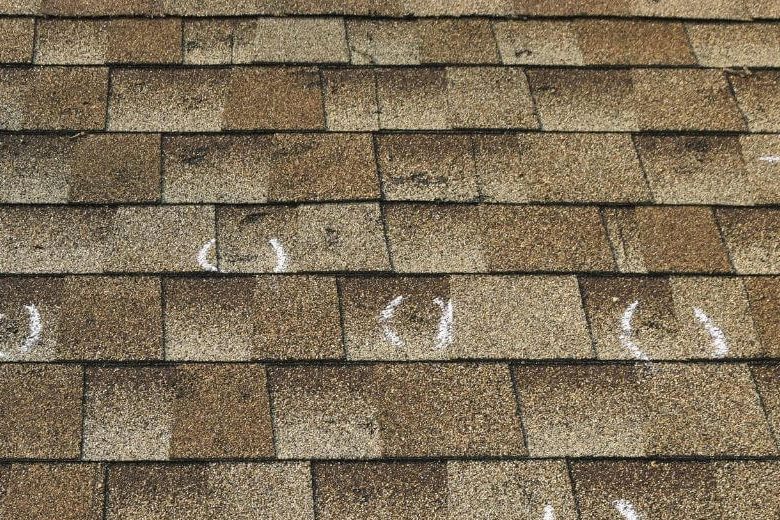
The most productive next move costs nothing. Ask for a reinspection, and ask that your roofer be present at the same time. Both people on the same slope, looking at the same chalk square, resolves in twenty minutes what three weeks of emails will not. When the adjuster's count and the roofer's count differ, they differ because they marked squares in different places or because one of them counted only obvious strikes. Standing there together fixes that.
Bring the elevations that were skipped. It is common for a first inspection to cover two slopes and skip the two hardest to reach, and those are often the ones facing the storm's approach. Ask for all four. A denial that rests on a partial inspection is the easiest kind to reopen.
Mat fracture is the argument that changes minds
Granule loss on its own is cosmetic and a carrier is right to say so. A fractured fiberglass mat is not cosmetic. When hail hits hard enough, it breaks the mat under the granules, and the shingle stays watertight for a while as ultraviolet exposure and Midwest freeze-thaw cycles open that fracture. Two to five years later it leaks. That is the mechanism worth writing down in your response, because it is the difference between a roof that looks worn and a roof that has a shortened service life.
You show it with photographs. A bruise that gives under thumb pressure like a soft spot on fruit, a strike with a shiny black bruise where granules have been driven into the mat, and the same pattern repeated across an elevation. Alongside it, dented gutter aprons, vent hoods and downspout elbows. Those soft metals date the storm and they are hard to explain away as age.
Appraisal is the clause most homeowners never read
Almost every homeowner policy has an appraisal provision. Either side can invoke it when the dispute is over the amount of loss rather than over whether the peril is covered. You hire an appraiser, the carrier hires one, the two of them pick an umpire, and the decision binds. It is faster and far cheaper than litigation, and it is the right tool when the carrier agrees you have hail damage but scoped one slope and you have four.
It is the wrong tool for a flat coverage denial. If the carrier says no hail occurred, or points to an exclusion, appraisal cannot help you because that is a coverage question. Read your policy language before invoking, and understand that you pay your own appraiser and half the umpire.
The state complaint, and what it actually does
Every Midwest state runs a department of insurance that takes consumer complaints. Filing one does not overturn a denial by itself. What it does is force a written, documented response from the carrier inside a set timeframe, and it puts a regulator's file number on a claim that has been drifting. Adjusters and their supervisors handle complaint files differently than routine ones. Keep the tone factual, attach your documentation, and state the specific relief you want.
When we tell homeowners to stop
Some denials are correct. We have walked roofs after a denial and found normal granule loss on a twenty-two-year-old three-tab roof with no mat fracture anywhere, and we said so. Pushing that claim wastes months and puts a second closed claim on the property record with nothing to show for it. The better conversation is what that roof has left and how to budget for it.
We also will not tell you your deductible can disappear. A contractor offering to absorb it is committing insurance fraud in most Midwest states, and the homeowner who accepts is part of it. If somebody knocking on your door after a storm leads with that, close the door.
Three fixes matched to three denial reasons
Low impact count
Reinspection with your roofer present, all elevations chalked, counts written by slope. Photograph each square with the count visible.
Called age, not hail
Mat-fracture photos, thumb-pressure bruising, and dated soft-metal dents on gutters, vents and the condenser fins.
Wrong date of loss
Corrected storm date supported by public weather records for your address, then a request to reopen under the right event.
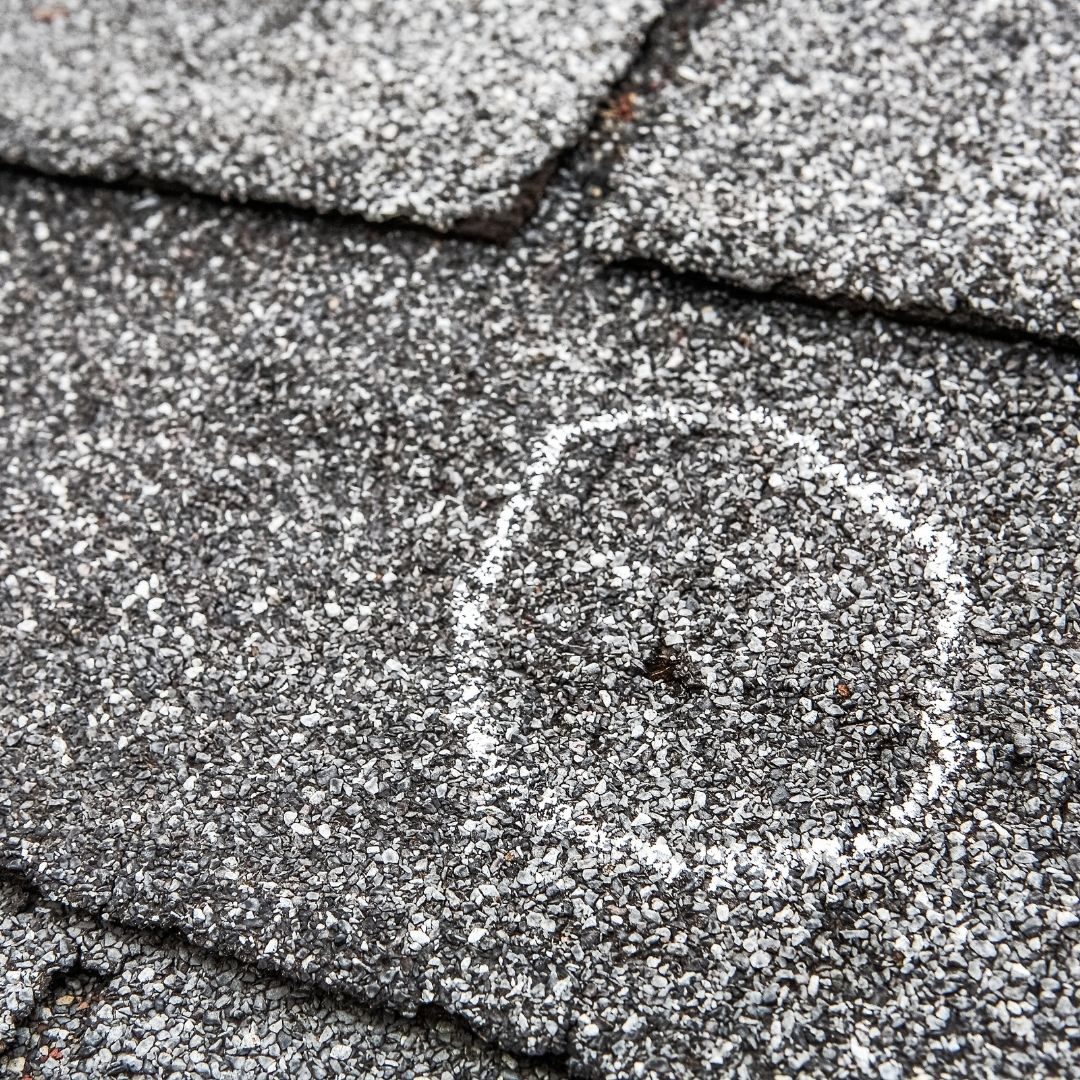
What our reinspection file looks like
Chalk squares on every elevation with the count written beside them, close photographs of bruising with a scale reference, the soft metals shot separately, and the date carried in the image data. We hand you that file whether you hire us or not. Family-run out of St. Louis since 1947, third generation now. That documentation habit is the reason a second look often lands differently than the first.
Questions homeowners ask after a denial
How long do I have to dispute a denied hail claim?
Does asking for a reinspection cost me anything?
Can you deal with my adjuster for me?
Will pushing back on a denial raise my premium?
The letter says my damage is cosmetic. Is that the end?
Related reading
Free Hail Damage Inspection
No cost, no obligation, and you get the photographs either way.
Free inspection, documented for your claim.
One number reaches dispatch for all forty Midwest metros, answered live 24 hours a day.