
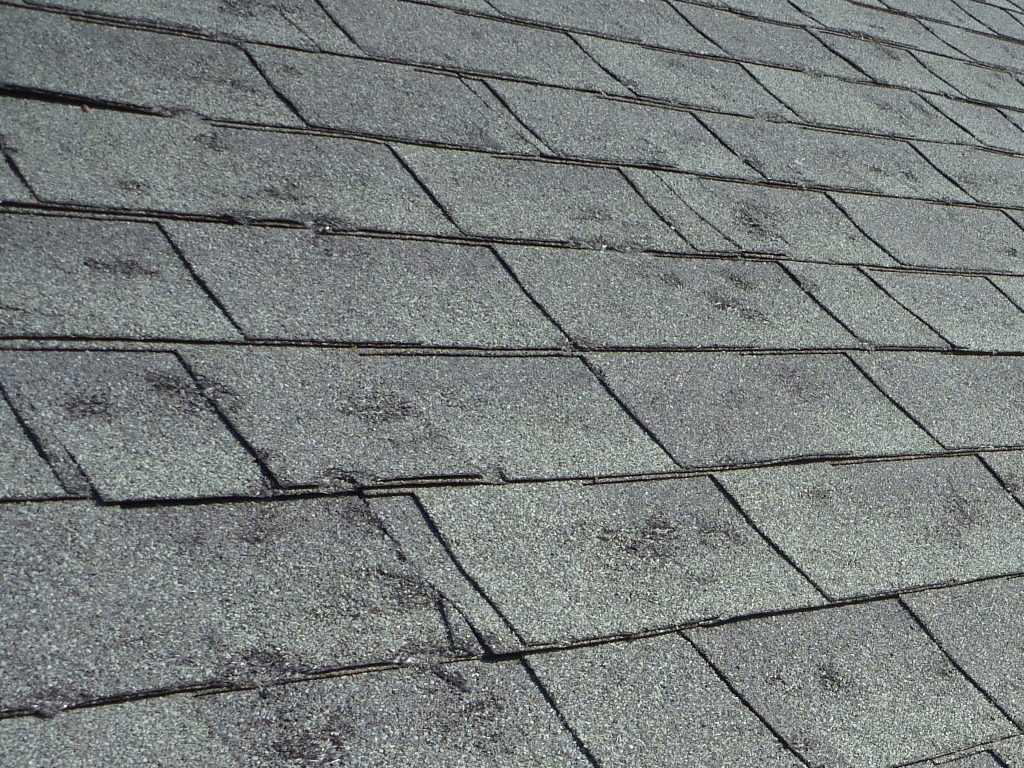
Midwest hail damage · John Beal Roofing since 1947
How To Prepare For The Adjuster's Roof Inspection
The adjuster is on your roof for about half an hour. What you have ready before they arrive decides most of what goes in their report.
Short answer
Have three things ready before the adjuster arrives: your policy declarations page with the deductible, a written list of every storm-related item you have noticed with the date you noticed it, and your roofing contractor on site at the same appointment. The adjuster will chalk a ten-by-ten test square on each elevation and count hail impacts inside it, photograph soft metals like gutter aprons and vent caps, and check collateral damage on screens, siding and the air conditioning fins. Walk the ground with them before anybody climbs. The whole visit usually runs thirty to sixty minutes on an average Midwest home.
What the adjuster is actually there to decide
Two questions, in this order. Did a covered peril damage this property, and what does it cost to repair. Everything they do on your roof serves the first question, and everything they type afterward serves the second. They are not there to argue with you and most of them are not looking for a reason to say no. They are working a file with a threshold in it, and their job is to document what they see well enough that a desk reviewer three states away agrees with them.
Knowing that changes how you behave. Your job is to make the damage easy to find and easy to defend, not to sell it.
Get your roofer to the same appointment
This is the single highest-value thing you can do, and it costs nothing. Two trained people on the same slope, chalking the same squares, comparing counts in real time. Disagreements get settled on the roof instead of by email six weeks later. Our estimators do this every week across the Midwest and it is a normal, expected part of the process. Adjusters are used to it.
Schedule it deliberately. When the carrier calls with a time, tell them your contractor will be present and give them our number so the two can coordinate. If the adjuster has already been out alone and the result was thin, you can ask for a reinspection with both parties there.
The paperwork to have on the table
Your declarations page, so the deductible is not a surprise. A one-page list of what you have seen and when: granules collecting at the downspout outlet, a dent in the gutter face on the west side, a torn window screen, marks on the deck rail. Any photographs you took right after the storm, with the dates intact. Prior repair invoices if the roof has been worked on. Nothing needs to be formal. A page of notes in your own handwriting is fine and it beats trying to remember while somebody is standing in your kitchen.
If you have a neighbor whose claim was already approved for the same storm date, mention it. It does not decide your claim, but it establishes that the event reached your street.
Walk the ground before anyone gets on a ladder
Start at the air conditioning condenser and look straight down at the fin surface for dimples. Move to the downspout elbows and gutter faces, then the vent hoods and any painted metal like a mailbox or a light fixture. These soft surfaces dent under hail and the metal at the bottom of a fresh dent is bright and unweathered, which is why they date the storm better than shingles do. Point them out. Do not press the case, just show them.
Look at the window screens and the wraps on the window frames on the storm-facing elevation. Screens tear in a pattern that hail makes and almost nothing else does. A garage door with a row of dents at the same height across several panels tells the same story.
Inside the test square
On the roof, the adjuster chalks a square, usually ten feet by ten feet, on each elevation and counts strikes inside it. Carriers set an internal number of impacts per square that separates a repairable slope from a replaceable one. Counts differ between two honest people because squares get placed in different spots and because a fresh bruise can read as a smudge from a standing height. That is why your roofer being there matters more than any argument you can make.
Ask that all four elevations get squared, including the ones that need a taller ladder. Storm-facing slopes take the most hits, and those are frequently the least convenient to reach.
Things homeowners say that quietly hurt the file
Guessing at a storm date. If you are not sure, say you are not sure and let the weather data set it. Volunteering that the roof is old, that it leaked once in 2019, or that a previous owner patched something, when nobody asked, puts an age argument in the adjuster's head for free. Answer the questions asked, honestly and completely. Do not narrate.
Also, do not clean anything up first. The granules in the downspout splash block and the dented gutter section you were going to replace are evidence. Leave them.
After the adjuster leaves
Ask for a copy of the estimate and the photo report, and ask when it will arrive. Read the scope line by line when it comes: shingles, underlayment, drip edge, ridge, pipe boots, ventilation, gutters, and any code-required items in your jurisdiction. Missing line items are normal on a first estimate and are handled with a supplement rather than a fight.
If the estimate looks short next to what your contractor documented, that gap is a conversation about scope, not a denial. Most claims that end well go through this step.
A short list for the day of
Have ready
Declarations page, your dated notes, storm photos, prior invoices, and a clear path to the attic access if there is any interior staining.
Have present
Your roofing estimator, at the same appointment, with a ladder and chalk of their own.
Have unclean
Downspout splash areas, dented gutter sections, torn screens. Do not tidy the evidence before the visit.
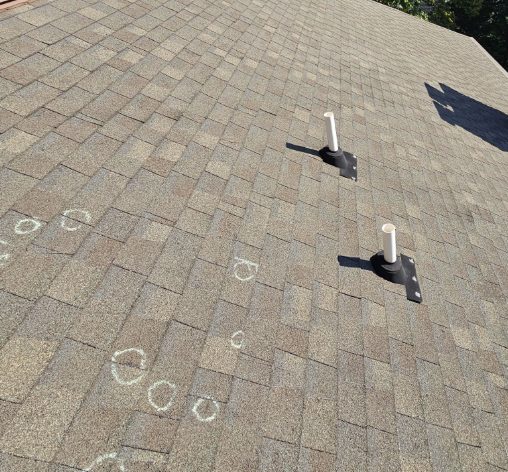
What our estimator carries to an adjuster meeting
Chalk, a tape, a moisture meter for interior staining, and a camera. Counts get written on the shingle beside the square so the photograph carries its own caption. Soft metals get shot close and wide so a reviewer can place them on the house. John Beal Roofing has worked Midwest storm seasons since 1947, and this documentation habit is why our estimators and adjusters usually leave a roof agreeing on the number.
Common questions about the adjuster visit
Do I need to be home when the adjuster comes?
Should I get on the roof with the adjuster?
Can the adjuster approve or deny the claim while standing there?
How long does the inspection take?
What if my roofer and the adjuster count different numbers of hits?
Related reading
Free Hail Damage Inspection
No cost, no obligation, and you get the photographs either way.
Free inspection, documented for your claim.
One number reaches dispatch for all forty Midwest metros, answered live 24 hours a day.