
Midwest hail damage claims · family-run since 1947
Public Adjuster vs Roofing Contractor After Hail
One represents your claim and takes a percentage of it. The other builds the roof and defends the scope. Here is which one a Midwest hail claim actually needs, and when that answer changes.
Short answer
A public adjuster represents you in the claim and is paid a percentage of the settlement, generally between five and fifteen percent depending on the state and the size of the loss. A roofing contractor represents the repair: the scope, the line items, the code requirements and the workmanship warranty. On a straightforward Midwest hail damage claim on a single-family home, a well-documented roofer and an adjuster who gets on roofs settle it without a third party. A public adjuster earns the fee on the hard files - large commercial losses, disputed causation, or a claim that has already gone sideways.
Two different licenses, two different jobs
The person who shows up in a polo with a clipboard could be either one, and both of them will say they are here to help with your claim. A public adjuster holds a license from the state insurance department. They work for policyholders, they read policy language for a living, and the negotiation is the entire product. They do not own ladders. Most have never chalked a test square or lifted a shingle to look at the mat underneath. A roofing contractor is licensed to build. We measure, write scope, pull the permit, install the material and warranty the labor for years afterward. The two roles overlap in exactly one place, and that place is documentation.
What the percentage actually buys
Public adjusters work on contingency. The fee is a share of what the carrier pays, and across the Midwest that share usually falls between five and fifteen percent, higher on small losses and lower on large ones. On a mid-size residential roof, ten percent is a four-figure number, and it comes out of the same money that is supposed to buy the roof. Sometimes that is a fair trade. You are paying for somebody who tracks the deadlines in your policy, knows what the appraisal clause is and will invoke it, finds endorsements you did not know you had, and does not get tired on the fourth phone call. Nobody else on your side of a claim is doing that work for free.
Where a roofer's paperwork carries more weight
Carriers do not settle on arguments. They settle on scope - line items, quantities, and the building code that forces some of them. Ridge cap, starter course, drip edge, ice and water shield where the municipality requires it, ventilation, deck replacement counted by the sheet. Those numbers get defended by the company that has to install them and stand behind the result. We have sat in on plenty of calls where a public adjuster made a strong coverage argument and then went quiet the moment the carrier's estimator asked why the valley metal had to be replaced instead of reset. That question has a roofing answer, not a claims answer.
The files where a public adjuster earns the fee
A large commercial or multifamily loss
Several buildings, business interruption, coinsurance language, membrane core samples. The dollars justify a professional negotiator and the policy forms are genuinely harder than a homeowner form.
Causation is actually in dispute
The carrier's engineer has written that your shingles failed from age, foot traffic or a manufacturing defect. Now somebody has to argue a report, not a roof.
The file already went bad
Two denials, an inspection nobody from your side attended, or a scope that skipped two elevations. Untangling that is claims work, and it takes patience most homeowners have already spent.
The policy is unusual
A percentage wind and hail deductible stacked with endorsements, a cosmetic damage exclusion, or scheduled roof surfacing. If the declarations page confuses your agent, get someone who reads them daily.
Distance or capacity
An out-of-state owner, an estate, a landlord with eleven doors, or a homeowner dealing with something far worse than a roof that week.
The files where it is money you do not need to spend
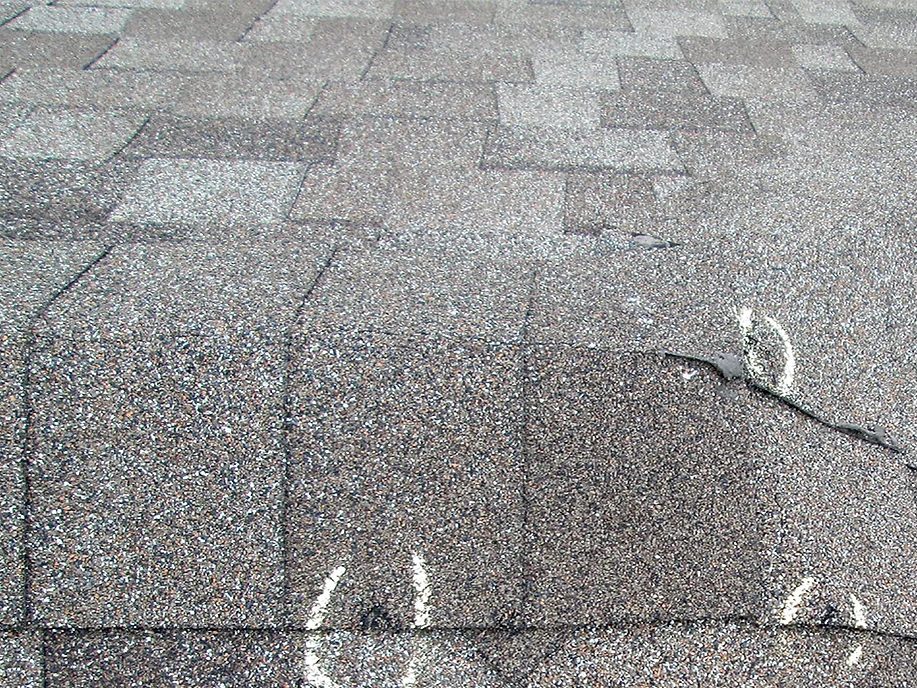
Single-family home. Hail on the ground that half the street can confirm. Dents in the gutter apron that photograph in five minutes, an replacement-cost policy with a flat deductible, and a carrier who sends a field adjuster willing to climb. That claim does not need a third party taking a slice of it. It needs a documented inspection, a scope written to what is actually up there, and a roofer standing on the roof at the adjuster appointment. We do all three as part of the job and we do not charge for any of it, because the roof is the thing we sell.
How the three-way conversation actually goes
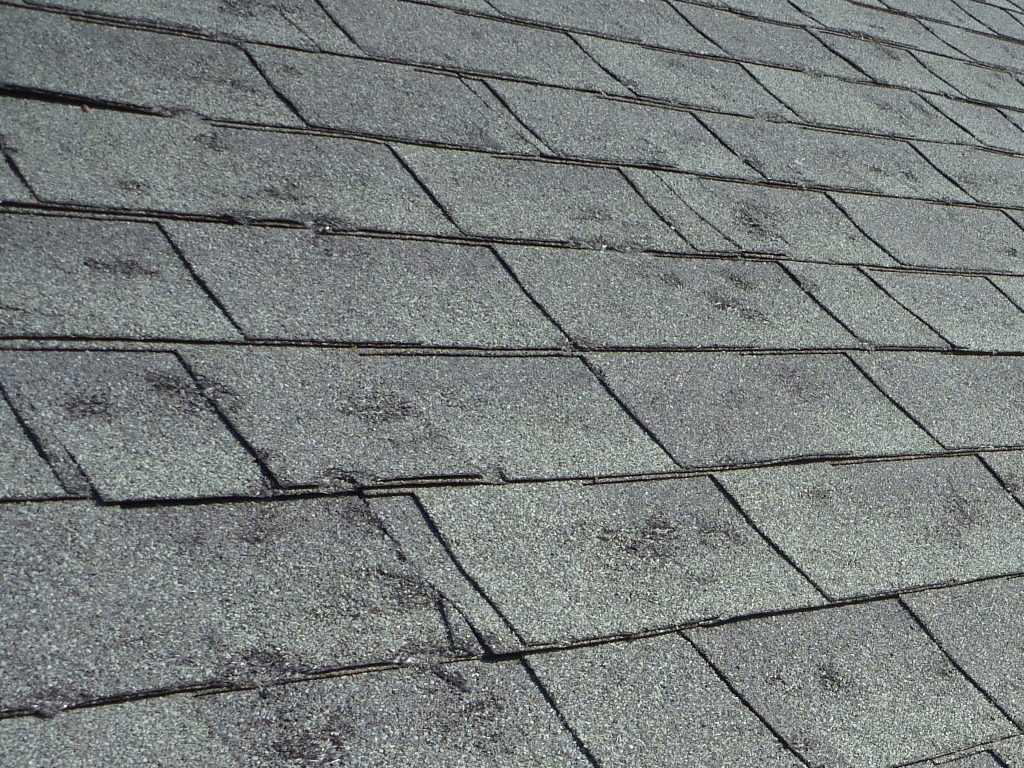
When a homeowner already has a public adjuster, we stay in our lane and it works well. They own the coverage argument and the correspondence. We own the roof - test square counts by elevation, the photographs, the scope, the code items, and the supplements once the deck is open. The carrier gets one file instead of two versions of the same story, which is the whole point of having help. Trouble only starts when a public adjuster begins writing roofing scope, or a roofer starts interpreting policy language. Neither of us is any good at the other one's job.
Questions we get on this one
How much does a public adjuster charge on a hail claim?
It is a percentage of the settlement, and in most Midwest states it lands between five and fifteen percent, with the smallest claims sitting at the top of that range. Read the contract closely for whether the fee applies to the entire settlement or only to money recovered above the carrier's first offer. Those are very different numbers on the same roof.
Can a roofer legally negotiate my claim for me?
No, and be careful with any roofer who says otherwise. Several Midwest states specifically bar contractors from adjusting claims or acting as your representative on coverage. What we can do is document the damage, write and defend the scope, meet your adjuster on the roof, and file supplements for what the approved scope missed. That is construction work, not adjusting.
Does hiring a public adjuster slow the roof down?
Sometimes it does. Another party in the chain means another review before anything gets signed, and a negotiation that runs long keeps the roof on hold unless water is coming in. We tarp active leaks the day we hear about them no matter where the claim stands. Ask for a realistic timeline before you agree to wait.
If a public adjuster gets more money, who does the extra go to?
The settlement is yours, less their fee. Money added by a supplement almost always corresponds to real work that has to be paid for, so most of it goes into the roof rather than your pocket. Anyone selling a public adjuster as a way to come out ahead on a roof claim is describing something other than a roof claim.
Can I cancel a public adjuster contract after I sign it?
Most states give you a short cancellation window, often a few business days, and the contract is required to say so. After that you are generally bound, and the fee can still apply even if the carrier was already going to pay. Read the termination clause before you sign it, the same way you should read ours.
Keep reading
Free Hail Damage Inspection, Documented
We put the roof on paper. What you do with the claim after that is your call.
Get the roof documented before you hire anyone.
One number reaches storm dispatch for every Midwest metro we cover, answered by a person at any hour.