
Midwest hail damage claims · documented since 1947
Hail Damage Claim Paperwork Checklist
A claim moves at the speed of the slowest missing document. Here is the folder we tell Midwest homeowners to build before they call the claims line.
Short answer
Before you file a hail damage claim, put six things in one folder: your policy declarations page, the date of the storm, dated photographs of the damage, a roofer's inspection report with test square counts by elevation, a written scope or estimate for the repair, and receipts for anything you paid to stop water in the meantime. Add your mortgage lender's name and loan number, because on an escrowed loan the insurance check is usually issued to you and the lender together. That folder is the difference between a Midwest hail damage claim that moves and one that sits.
The declarations page is the document nobody can find
It is the two or three pages at the front of your policy that list what you actually bought. Dwelling limit. Deductible, and whether it is a flat dollar figure or a percentage of the dwelling limit. Whether roof surfacing settles at replacement cost or actual cash value. Any endorsement that changes the roof math. Plenty of Plains-state policies carry a separate percentage wind and hail deductible, which on a larger home can run several times the flat amount people assume they have. Download it as a PDF from the carrier's portal, and call your agent if the portal fights you. Do this before you dial the claims line, not after.
Pinning down the date of loss
Carriers index the entire file to a date. If you slept through the storm you can still get there. Local storm reports, the day your neighbors' claims went in, a photo on somebody's phone with ice on the driveway, a text message about the noise. Soft metals help more than homeowners expect: a fresh dent in a gutter apron or a vent hood shows bright, unweathered metal at the bottom of the impact, and that appearance narrows the window even when nobody wrote anything down. Guessing badly can cost you. If two storms came through six weeks apart, the wrong date puts your damage outside the period the adjuster is looking at.
Photographs worth having in the file
Each elevation, wide, from the ground
Four corners of the house. These establish the roof's overall condition and give every close-up a place to belong.
Gutter faces, aprons and downspout elbows
The dents that date the storm. Shoot them at an angle so the light catches the deformation instead of flattening it.
Furnace and plumbing vent hoods
Thin galvanized caps take a visible strike from stones that leave a shingle looking untouched.
The air conditioning condenser
Flattened fins on the storm-facing side are hard for anyone to argue with, and the unit is usually a covered item on its own.
Window screens, wraps and deck boards
Torn screen mesh and fresh splintering on horizontal wood surfaces put hail on your property, not just on your roof.
Interior stains, with the date
If water came in, photograph the ceiling before anybody paints. Keep the phone's timestamp intact and do not crop it out.
The roof's own history
Age and product matter to a settlement. If you still have the permit, the old contract, the install date or even a photo of the shingle wrapper from the last roof, put it in the folder. Carriers depreciate roof surfacing by age on an actual cash value settlement, and an install date you can prove beats one somebody estimates off a satellite image. Prior claims on the same roof count too. If a previous owner filed for hail and the roof never got replaced, that history exists whether you know about it or not, and it is better to find it yourself than to hear it from an adjuster.
The paperwork that shows up after approval
Approval is the middle of the process, not the end. Your lender will need to endorse the claim check on most escrowed loans, and on larger losses they may hold funds and release them in draws against inspections. Your municipality may issue a permit and a final inspection card. Your contractor owes you a final invoice that matches the approved scope, a certificate of completion with a real completion date, and a written workmanship warranty. Every one of those becomes part of the request that releases the depreciation the carrier held back.
What we add to the folder
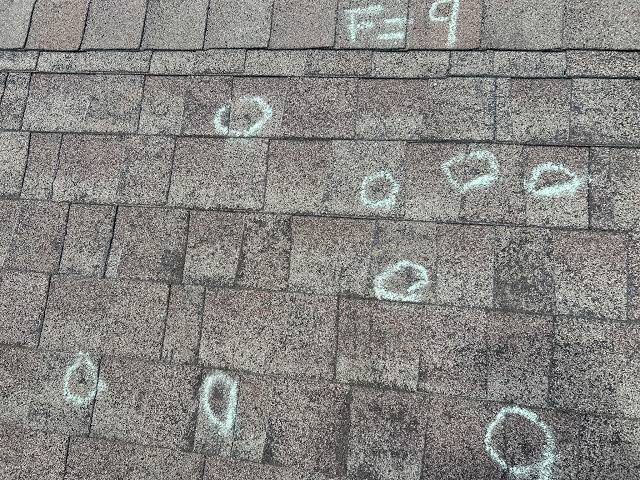
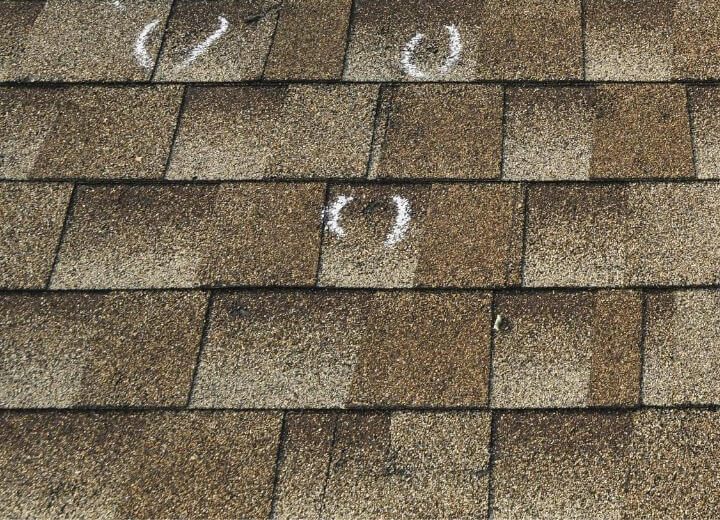
Our inspection file is built to be handed to somebody skeptical. Chalked ten-by-ten test squares on every elevation with the strike count written on the shingle inside the photo. Close-ups of mat fracture where we find it. Soft metals shot separately from the field of the roof. A scope written line by line, with quantities that tie back to the measurements. If we do not think you have a claim, that goes in the file too, in writing, and you keep it as a dated baseline for whatever the next storm does.
Questions we get on this one
What if I cannot find my policy at all?
Call your agent or log into the carrier's portal and ask for the declarations page and the policy number. Most carriers can email both the same day. You can technically open a claim with just your name and address, but going in without knowing your deductible type is how homeowners get surprised by a settlement that never had a chance of covering the work.
Does my mortgage company really have to sign the insurance check?
On most escrowed loans, yes. The lender holds an interest in the property and is named on the draft. Endorsement usually takes one to three weeks and larger losses may be released in stages tied to progress inspections. Call your loan servicer's insurance loss department early and ask for their exact packet, because every servicer wants something slightly different.
Should I send my contractor's estimate to the carrier before the adjuster comes out?
We do not recommend it. An estimate that arrives first frames the whole conversation as a price negotiation. It works better to have the scope in hand at the meeting so the counts and line items can be walked through on the roof, then submit it in writing afterward with the photographs attached.
Do I need receipts for a tarp I installed myself?
Keep them. Emergency measures to stop further damage are typically payable, and the way you get paid is a receipt plus photos taken before and after. Note the date and how many hours you spent. Homeowners who mitigate quickly and document it get reimbursed far more often than homeowners who just mention it on a phone call.
How long should I keep the claim file once the roof is finished?
Indefinitely. It supports your workmanship warranty, it gets disclosed when you sell, it settles any argument about what was replaced and when, and it becomes the baseline the next adjuster compares against. The file is small and digital. There is no good reason to throw it away.
Keep reading
Start The File With A Free Inspection
We photograph the roof, count the strikes and hand you the documentation to keep.
Bring us in before the adjuster is scheduled.
Storm dispatch answers live around the clock for every Midwest metro on our map.