
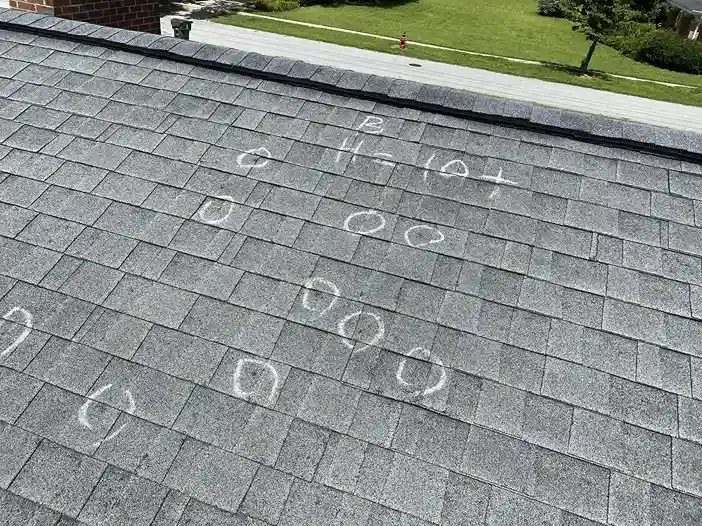
Midwest hail damage · John Beal Roofing since 1947
Midwest Hail Season, State by State
The hail calendar slides north as spring turns to summer. Here's how the months fall in the states we work, and what the timing means for your roof and your claim.
Short answer
Midwest hail season generally opens in March or April across southern Missouri, southern Illinois and the lower Ohio valley, peaks over most of the region in May and June, and shrinks to a June-through-August window in the Dakotas, northern Minnesota and upper Wisconsin. Damaging storms still hit in July, August and September, so the right time to have a roof checked is after any storm with three-quarter-inch stones or larger, and always before the first hard freeze.
Why the storm track drifts north
Hail needs two ingredients stacked on top of each other: warm, wet air near the ground and cold air high up. Early in the year the meeting point between Gulf moisture and the cold air sliding off the Rockies sits across Oklahoma, southern Kansas and the lower Missouri valley. As the ground heats up through May and June, that boundary climbs. By July the most active storm days usually belong to Nebraska, the Dakotas and Minnesota. It's a moving target. A homeowner in Springfield, Missouri and one in Fargo are really living on two different calendars.
Kansas, Nebraska and the high Plains
This is the longest season we deal with and the busiest. Storms tend to fire off the higher ground to the west in the late afternoon, organize, and roll into Wichita, Lincoln and Omaha after dinner. April storms happen. May and June carry most of the damage, July is still active, and a September hailstorm out here doesn't surprise anybody who has lived through a few. The western Midwest also sits closest to the country's hail corridor, which we cover on our Hail Alley page. If you own a home here, assume the roof will see more than one claim-grade storm in its working life and choose materials with that in mind.
Missouri, Illinois, Indiana and Ohio
The season opens earliest in the southern half of these states. Southern Missouri, southern Illinois and the Evansville area can take damaging hail in March, well before most people have put the snow shovel away. Activity builds through April and usually peaks in May. St. Louis, where we've been based since 1947, sits right in that early window. Farther north and east, around Columbus, Cleveland and Fort Wayne, the peak runs a little later and big storms come less often. Less often isn't never. Ohio still has its bad afternoons, and a roof doesn't care how rare the storm was.
Iowa and the upper Mississippi
Iowa straddles both calendars. The southern counties behave like Missouri, the northern counties more like Minnesota, and the whole state sits under the long summer squall lines that cross it in June and July. Those lines sometimes carry more wind than hail, and the worst of them are derechos, which tear roofs apart in a completely different way than stones do. Des Moines, Cedar Rapids and the Quad Cities all sit in the path.
Minnesota, Wisconsin, Michigan and the Dakotas
Up north the season is compressed into roughly June through August. Fewer months, not gentler storms. A short season also means a short repair window. A Fargo or Duluth homeowner who finds damage in late August may have eight or ten weeks of dependable roofing weather left before temperatures fall off. We'd rather inspect that roof in September than in April, when the claim is older, the shingles have spent a winter cracking open, and every contractor in town is booked solid.
A storm on the news isn't a storm on your roof
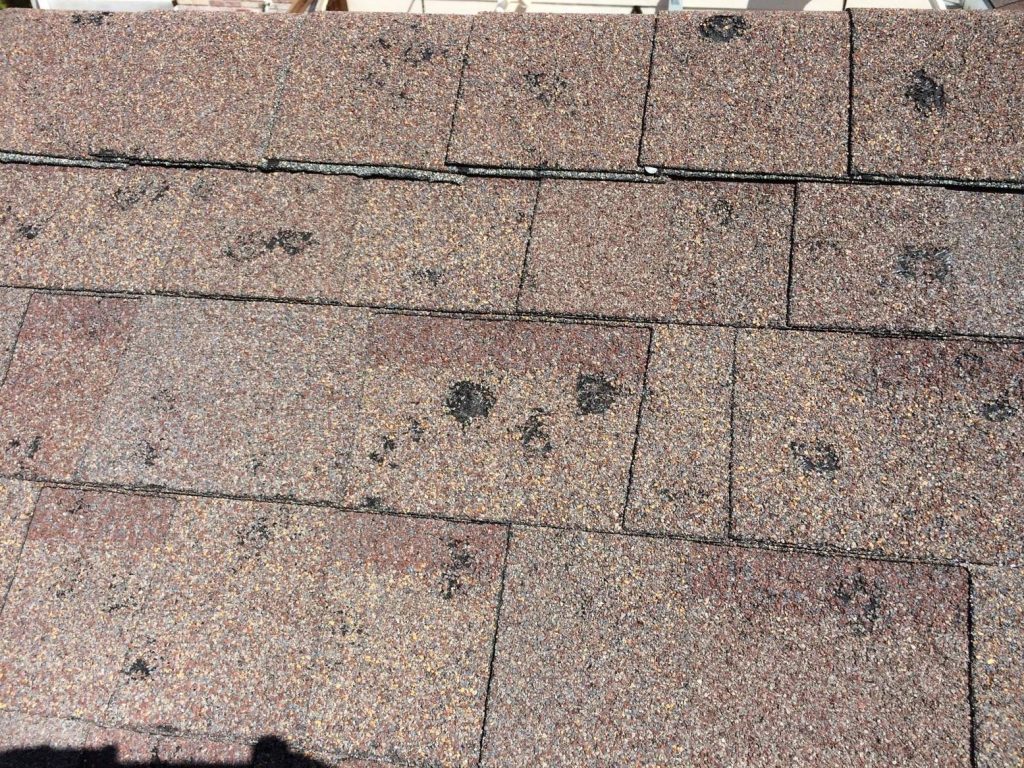
Every spring somebody calls because the evening news showed hail in their county. That's a reason to look, not a reason to file. Hail swaths inside a storm can be a few blocks wide, and one side of a subdivision can take golf balls while the other side gets rain. Before anyone files, we want to see evidence on your house specifically: bruised shingles, dented vent caps, spatter marks on the siding or the deck rail. If it isn't there, we'll say so and leave you with a dated record of a clean roof.
Timing changes the install, too
Asphalt shingles carry a strip of sealant on the back that bonds to the course below once the sun warms it. Below roughly forty degrees that bond won't form by itself. A roof installed in late fall in the northern states either gets hand-sealed at the tabs or sits unsealed until spring, and unsealed shingles are exactly what a November wind likes to lift. We'll tell you plainly if your replacement should wait for warmer weather. Sometimes the honest answer is a tarp or a small repair now and the full job in April.
Late storms count just as much
Carriers don't pay less because a storm came in August or October. A date of loss is a date of loss. What does hurt late-season claims is delay: homeowners assume the season is over, put off the inspection, and then winter goes to work on the fractured mat. Freeze-thaw cycling pries those cracks open a little more with every cold snap. The damage was always there. It just gets easier to see and harder to tie back to one particular storm.
Planning around the calendar
A few habits pay off. Check the roof after any storm that dropped stones three-quarters of an inch or larger, and don't wait for a leak to tell you, because hail-bruised roofs usually stay dry for a couple of years. Write down storm dates as they happen; a timestamped phone photo of hail piled on the patio is worth more than you'd think. And get any late-summer damage looked at before the first hard freeze. Our free inspection covers all of it, and our after-storm checklist walks through what you can safely look at yourself from the ground.
Frequently asked
Does hail season really end in September?
Not in any way your insurance policy recognizes. September and even October storms drop damaging hail in Kansas, Missouri and Nebraska. The peak is late spring, but a claim from a fall storm is handled exactly like one from June.
Is a March hailstorm worth getting inspected for?
Yes, especially in southern Missouri, southern Illinois and southern Indiana, where the season starts early. Early storms are easy to forget by summer, and the notice window on your policy starts running on the storm date, not the day you spot a problem.
Do hailstorms happen at night?
They do. Plains storms often fire in the afternoon farther west and roll into the metros during the evening and overnight. Look over the soft metals and the yard the next morning, and note the storm date even if you slept through it.
Can a roof be replaced in winter after a fall hailstorm?
It can, with limits. Below about forty degrees the shingle sealant won't bond on its own, so the crew hand-seals the tabs or we schedule the full replacement for spring and protect the roof in the meantime. We'll recommend whichever leaves you with the sounder roof.
Does the time of year change how my claim is handled?
The coverage doesn't change. What changes is how busy everybody is. After a big May storm, adjusters and contractors are stretched thin, so expect a longer wait for the adjuster visit and file promptly so your place in line starts early.
Related reading
Free Hail Damage Inspection
No cost, no obligation, and you get the photographs either way.
Free inspection, documented for your claim.
Call one number from any of our forty Midwest metros and a live dispatcher answers, day or night.