
Midwest hail damage · John Beal Roofing since 1947
How to Check Your Roof After a Storm Without Climbing It
Leave the ladder where it is. Most of what tells you whether hail did real damage can be found from the yard, the driveway and the attic.
Short answer
To check your roof after a hail storm, stay on the ground. Walk the house looking for dents in the gutters, downspouts, window wraps and the fins of the outdoor air conditioner, then check the siding on the side that faced the storm for cracks and chips. Scan the shingles with binoculars for dark, scattered spots. Look in the attic with a flashlight for wet decking or daylight. Photograph everything with the date showing, and if you find dented metal, book a hands-on roof inspection before you call your insurance company.
Before you step outside
Wait until the storm has fully passed and the lightning has moved off. Then, if hail is still on the ground, pick up a few of the biggest stones and photograph them next to a coin or a tape measure. Hail melts fast. Its size is one of the first things an adjuster asks about, and a picture beats a guess. Write down when the storm hit and roughly how long it lasted, plus anything else that happened, like the power dropping or a limb coming down. It all seems minor that afternoon. Three weeks later, across the table from an adjuster, it's the first page of your file.
Why the ladder stays in the garage
A roof after a storm is slick, a hail-covered one is worse, and pounded asphalt sheds loose granules that roll under a boot like ball bearings. Every storm season puts homeowners in the emergency room after falls from ladders and roofs, and nothing up there needs your personal eyes. Walking a damaged slope can also crack shingles that were only bruised, which muddies the picture for whoever inspects it next. Leave the climbing to someone with fall protection and liability coverage who does it every day. The ground has more to tell you than you'd expect.
Start with the metal
Soft metal is the best storm witness on your property. It dents at hail sizes that barely mark a shingle, and it doesn't heal. Walk the perimeter slowly and look at the gutter faces with the light coming across them at a low angle, which makes small dents pop. Check the downspout elbows, the aluminum wrapped around the window frames, the mailbox and any metal chimney cap you can see from below. The thin aluminum fins on the outdoor air conditioner flatten into a visible pattern. Dents on several of these, all on one side of the house, tell you which way the storm was moving.
Siding, screens and the yard
Vinyl siding cracks or punches through, especially on a cold day when the plastic is brittle. Aluminum siding dents and painted wood chips. Look at window screens for small tears or stretched mesh, and at deck boards and fence pickets for pale spatter marks where stones knocked off dirt and oxidation. Patio furniture, grills and cars parked outside fill in the rest. None of that is the roof, but it proves hail of a certain size fell at your address on a certain day, and the roof sits higher and more exposed than any of it. Our page on siding and gutter hail damage covers repairs to those parts of the house.
Reading the shingles from the yard
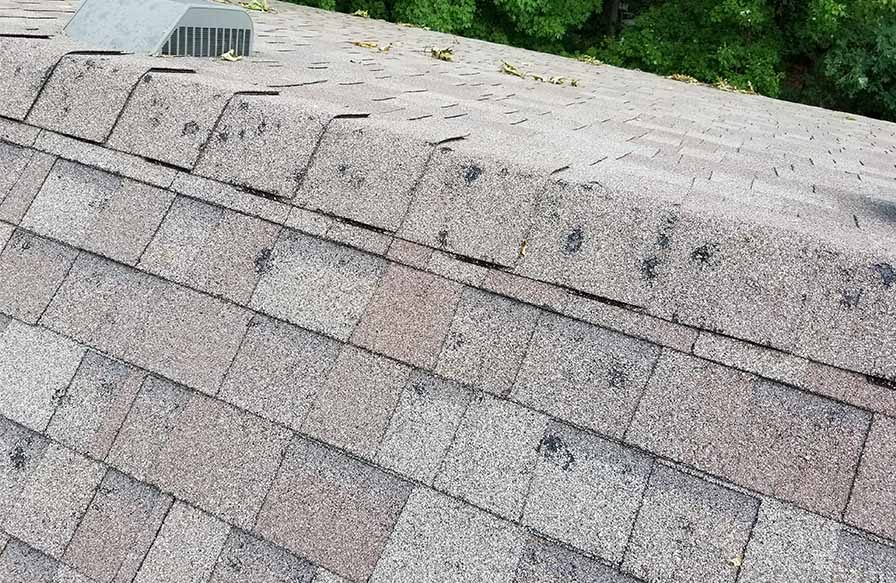
Binoculars on a bright day show more than you'd guess. Stand back far enough to see each slope at a shallow angle and look for dark round spots scattered with no pattern, where granules were knocked loose and black asphalt shows through. Give the ridge caps along the peak a long look. They're bent over the top, fully exposed, and tend to take the worst of it. Missing shingles, lifted tabs or a creased edge point more toward wind than hail. Write down what you see and where. What you can't judge from down here is whether the mat underneath cracked. That takes a hand on the shingle.
Ten minutes in the attic
If you have attic access and can move safely across the framing, take a flashlight up and look at the underside of the roof deck. Fresh water stains, damp insulation or a drip line down a rafter mean water is already getting in, and that calls for a tarp today rather than an inspection next week. Daylight showing anywhere other than the vents is the same story. Most hail-damaged roofs show nothing in the attic for a long while, so a dry attic doesn't clear the roof. A wet one convicts it. If you are leaking, our emergency tarping crews take calls around the clock.
Photograph like someone will doubt you
Take wide shots that show which side of the house you're standing on, then close shots of each dent, crack or tear. Leave the date and time stamp on in your phone's camera settings. Shoot the hailstones, the splash areas under the downspouts and any granules piled there, and the neighbors' dented cars if they'll let you. Don't edit or crop the originals. Put them in one folder with your notes about when the storm came through. That folder goes to the roofer first and the adjuster later, and a claim built on dated photographs is far easier to support than one built on memory.
What not to do the first week
Don't sign anything with a contractor who knocks the day after the storm. Don't file a claim before a roofer has actually confirmed damage, because a claim filed on a sound roof still lands on your record. Don't tear off damaged material or make permanent repairs before the adjuster sees it, beyond whatever it takes to stop water coming in, and keep the receipts for any tarping. And don't assume you're fine because the neighbor's adjuster found nothing on his roof. Storm cells change block by block, and roofs of different ages take the same hail very differently.
When it's time for a professional
If you found dents in your soft metals, it's time. If you found nothing but the stones were bigger than a quarter, it's still worth a look. Our inspections cost nothing and come with photographs whether we find damage or not. We chalk a test square on every slope, count the impacts, press each one to check for mat fracture and document every dented vent and gutter run. Then we tell you what we found, including when the honest answer is that your roof came through fine and there's nothing to file. The number is 1-800-564-6232, any hour of the day.
Frequently asked
What size hail usually damages a roof?
On standard asphalt shingles, roofers start finding functional damage at roughly one inch, about the size of a quarter. Roof age, shingle type, wind and the angle of the slope all move that line up or down.
Is it safe to go on my roof to look after hail?
We don't recommend it. Wet, granule-covered shingles are slippery, and walking on bruised shingles can crack them. Nearly everything a homeowner needs to check can be seen from the ground or the attic.
My gutters are dented but the roof looks fine. Do I have roof damage?
Possibly. Gutters dent at hail sizes that may or may not fracture shingles, so dented gutters are a reason to have the roof inspected rather than proof the roof is damaged. A test square settles it.
How soon after a storm should I check my house?
As soon as it's safe, ideally while hail is still on the ground so you can photograph it. Dents stay put, but the stones, fresh granule piles and your memory of the storm time fade quickly.
Should I call my insurance company first or a roofer?
A roofer first, for a free inspection. If there's functional damage you file with documentation in hand. If there isn't, you've kept a claim off your record for nothing.
Related reading
Free Hail Damage Inspection
No cost, no obligation, and you get the photographs either way.
Free inspection, documented for your claim.
Call one number from any of our forty Midwest metros and a live dispatcher answers, day or night.