
Midwest hail damage · John Beal Roofing since 1947
Hail Size Damage Chart: What Each Size Does to a Roof
Pea, quarter, golf ball, hen egg. Here is what each one does to an asphalt roof, what it does to the metal around it, and where the chart stops being useful.
Short answer
Hail smaller than three quarters of an inch rarely damages an asphalt shingle roof. Functional damage starts showing up around one inch, becomes likely at an inch and a quarter, and is the normal finding at an inch and a half or larger. Soft metals like gutter aprons and vent caps dent at sizes well below the point where a shingle mat fractures, which is why they are the best evidence that a storm happened at all.
The sizes that actually change an estimate
Stones get measured against coins and sporting goods because nobody carries calipers into a thunderstorm. The comparison is rough. It is also what every storm report and every adjuster's file uses, so it pays to know where the breakpoints sit and what happens on either side of them.
Quarter inch to half inch — pea to marble
This size bounces. It will carry off a little loose granule from a roof that was already shedding, and it can rattle hard enough on a skylight to convince a homeowner the roof is finished. On a shingle in reasonable condition there is usually nothing to find. We still come out when somebody asks, because the inspection costs nothing and a dated baseline of the roof is worth having before the next storm.
Three quarters of an inch — penny
The National Weather Service once called this size severe, then moved the line up to an inch. Penny-size stones dent thin aluminum and pockmark window screens. Mat fracture at this size is uncommon on a roof under ten years old and not unusual on one past twenty. Age is doing most of the work at three quarters of an inch, not the ice.
One inch — quarter
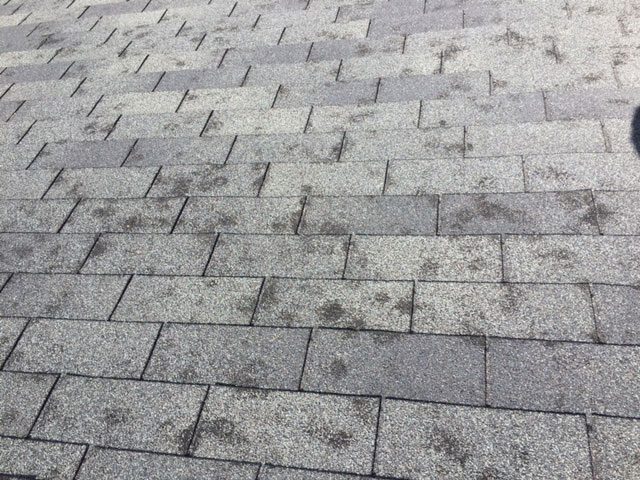
Here is where it starts. An inch of ice falling at roughly seventy feet per second carries enough energy to break the fiberglass mat beneath the granules, and on a stiff older shingle it does. Counts inside a test square at this size tend to be scattered and very slope-dependent. The windward elevation scores a dozen hits and the back of the house comes back clean.
An inch and a quarter to an inch and three quarters — half dollar to golf ball
Mat fracture on two or more elevations is the normal outcome in this band. Ridge caps split along the fold, pipe boots crack, and the soft metals stop being subtle about it. Most of the roofs we write up over a Midwest hail season were hit by stones this size, not by the spectacular ones that end up on the news.
Two inches and up — hen egg to tennis ball
Nobody needs a chalk square to see this. Shingles get punched rather than bruised, decking can crack under the impact, skylight domes break, and the siding on the strike elevation comes apart along with the roof. The argument with a carrier at this size is almost never about whether damage exists. It is about scope.
Why two houses on the same block come out different
Stone size gets all the attention and it explains maybe half of what we find on a roof. Wind is the other half. Ice falling straight down onto an average Midwest pitch strikes the shingle at a glancing angle and skips off it. The same ice driven sideways at forty miles an hour hits square and breaks the mat. That is the honest reason one side of a street gets approved on a storm and the other side gets denied, and it is a real finding rather than an adjuster being difficult.
Shingle age and type matter just as much. A six-year-old laminated shingle flexes under an impact and often survives it intact. The same stone landing on a twenty-two-year-old three-tab, sun-baked and brittle, cracks it through. Roof pitch changes the strike geometry, a dark roof runs hotter and softer in a June storm than a light one, and a slope shaded by mature oaks takes fewer clean hits than the one over the driveway. Five variables, one storm, five different answers on the same cul-de-sac.
Soft metals dent long before shingles fracture
A gutter apron will show a fresh dent from a three-quarter-inch stone that left the shingles completely alone. The gap between those two thresholds is the most useful thing on the property. It says the storm was real, it says roughly which direction the ice came from based on which faces took it, and it gives a rough date, because a fresh dent in aluminum exposes bright unweathered metal at the bottom of the dish and that brightness dulls over a few months outdoors.
So we shoot the metals as their own photo set on every inspection: gutter faces, downspout elbows, furnace and plumbing vent caps, valley metal, roof-mounted flashings, and the fins on the air conditioning condenser. A homeowner can check most of that from the ground in ten minutes without a ladder. If the gutter faces are smooth and the condenser fins are straight, a large-hail claim is going to be a hard sell no matter what the radar map showed.
Reading a hail report against your own roof
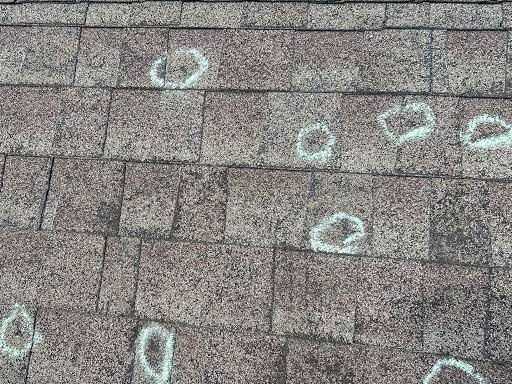
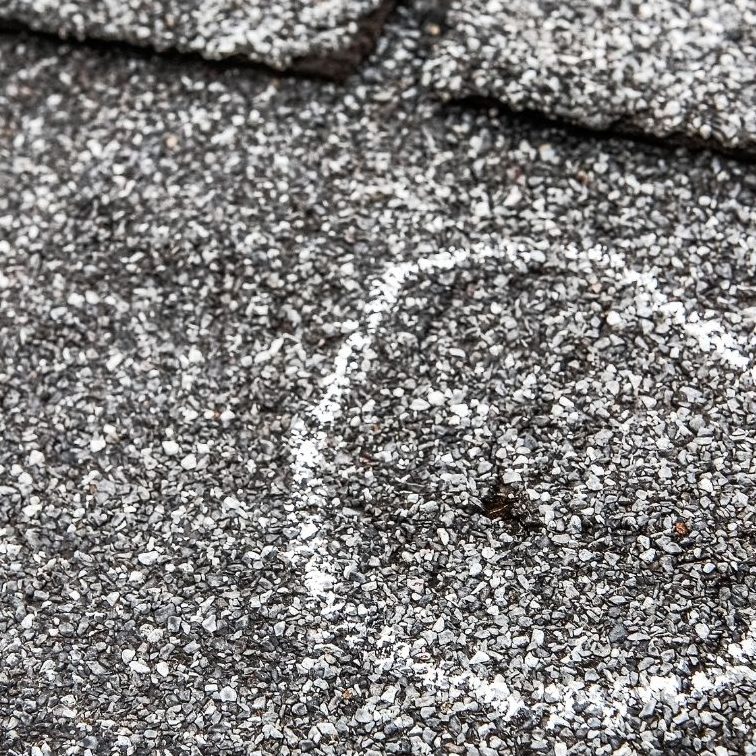
Storm reports are estimates assembled from radar returns and from whatever people phoned in that night. A report saying inch-and-a-quarter hail hit your ZIP code is a starting point, not a finding about your house. Hail cores run narrow. A swath two miles wide routinely carries golf-ball stones down the middle and nickel-size stones along both edges, and your address sits somewhere on that gradient. What settles it is a count inside a chalked ten-by-ten square on each elevation, photographed, with the metals shot alongside.
Where a size chart stops being useful
The chart orients you and then it runs out of road. It cannot tell you whether the granule loss on your south slope came from ice or from twenty summers of ultraviolet, and that single distinction decides most claims, which is why we put up a separate page on separating storm damage from normal roof wear. It cannot tell you what an inch-and-a-half stone does to a standing seam panel, because metal behaves nothing like asphalt under impact. It says nothing about tile or slate, which crack instead of bruising.
It also cannot predict the timeline, and the timeline is what catches people. A bruised roof usually will not leak for two to five years while ultraviolet exposure and freeze-thaw cycling work the fracture in the mat open from a hairline to a hole. So the homeowner with no water stain on the ceiling and a roof full of broken mat has a genuine problem and no symptom, and the window for proving what caused it closes well before the leak arrives.
Questions we get about hail size
Is there a minimum hail size for a roof insurance claim?
Carriers do not publish a size minimum. They decide on impact counts inside a test square on each elevation, so a one-inch storm that scored a dozen hits on the west slope can be approved while an inch-and-a-half storm that glanced off everything gets denied.
How do I find out what size hail hit my address?
Start with the date, then check National Weather Service storm event records for your county along with any radar-derived hail swath report. Treat the result as a range rather than a measurement of your yard, and pair it with dated photographs of your own gutters and vent caps.
Can small hail damage a roof that is already old?
Yes, and it is the most argued finding in the trade. A stiff, sun-aged shingle fractures at a size that would bounce off a newer one. What makes it a storm claim instead of a wear claim is matching fresh damage on metals, since aluminum does not age into dents on its own.
Does hail size decide whether I get a repair or a full replacement?
Spread decides that, not size. Damage confined to a single slope on an otherwise sound roof can sometimes be repaired, while counts above the carrier's threshold on several elevations point to replacement. We cover the middle ground on our page about a carrier approving only part of a roof.
Will Class 4 shingles survive the sizes that total a normal roof?
They survive more of them. A UL 2218 Class 4 rating means the shingle took a two-inch steel ball dropped from twenty feet without cracking the mat. Real field performance is meaningfully better than a standard shingle and well short of immune.
More on reading hail damage
Free Hail Damage Inspection
No cost, no obligation, and you get the photographs either way.
Free inspection, documented for your claim.
One number reaches dispatch for all forty Midwest metros, answered live 24 hours a day.