
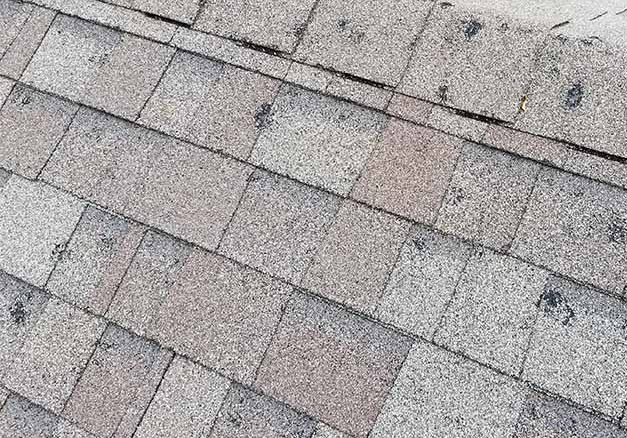
Midwest hail damage · John Beal Roofing since 1947
Derecho Roof Damage Across the Midwest
A derecho isn't just a bad thunderstorm. It's a wall of straight-line wind that can cross several states in an afternoon, and it takes a roof apart differently than hail does.
Short answer
A derecho is a long-lived line of thunderstorms that drives damaging straight-line wind along a track hundreds of miles long. On a roof it causes wind damage rather than impact damage: broken seal strips, creased and lifted shingles, torn-off tabs and ridge caps, peeled flashing, and trees or limbs dropped onto the deck. Many derechos carry hail too, so the inspection has to separate the two, because carriers scope wind and hail damage differently.
What makes a storm a derecho
The word describes a line of storms that keeps going for hours and produces widespread straight-line wind along its whole track. On radar it often looks like a bow bending forward in the middle. On the ground the wind arrives first, sometimes before a drop of rain, and it keeps blowing hard for several minutes instead of the short burst a normal storm brings. Everything gets pushed the same direction. Trees go down in parallel rows, which is the signature that separates it from a tornado, where debris gets thrown in from different angles.
How straight-line wind breaks a shingle
Wind doesn't hit a roof so much as pull on it. Air racing over the ridge and around the eaves creates suction, and that suction concentrates at edges, corners and rakes. The first thing to fail is the sealant strip holding each tab down. Once it lets go, the tab flaps, bending back over the nail line again and again until the shingle creases. A creased shingle has a fractured mat along that fold. It may settle back down and look normal from the street, but it won't reseal, and the next strong wind takes it off.
Damage hiding in plain sight
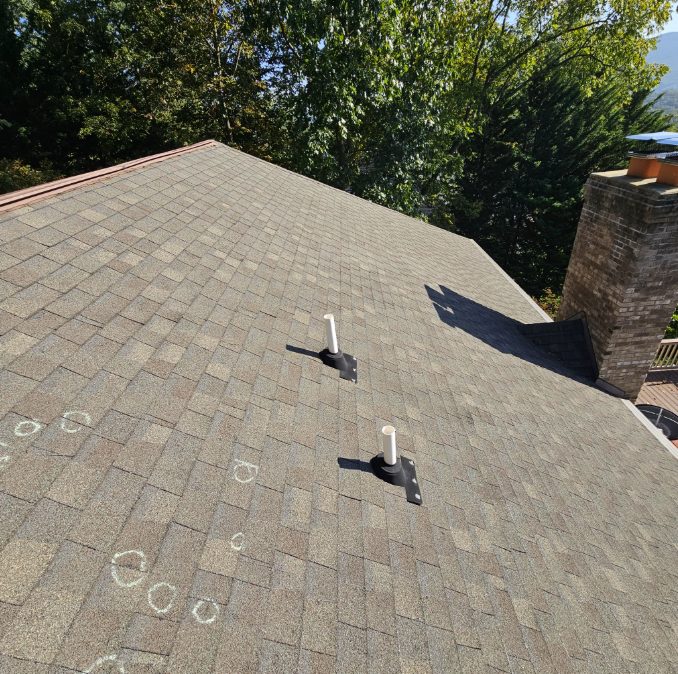
After a derecho we find more unsealed and creased shingles than missing ones. A tab that lifted and dropped back leaves clues: a straight crease line roughly where the nails sit, a clean band where the sealant tore, granules scuffed off the course above, sometimes a nail head pushed up through the mat. You can't see any of that from a ladder at the gutter. It takes walking every slope and gently lifting tabs on the windward side, then the leeward side, because wind wraps around a house in ways that aren't always obvious.
Trees, limbs and a punctured deck
Derechos drop a lot of trees, and a large limb through the roof deck is a structural repair, not a shingle repair. If something big came through, stay out of the attic and the rooms under it until somebody has looked, and keep people away from sagging ceilings that are holding water. Get the opening covered fast. Our emergency tarping crews can dry-in the hole so the house stops taking water while the claim catches up. Photograph the tree on the roof before it's removed; the carrier will want to see it.
Older roofs and brittle shingles
Age changes how a roof handles wind. A shingle that has spent fifteen or twenty summers in the sun loses flexibility, and its sealant strip has been baked and chilled through countless cycles. Those roofs lose tabs in winds a five-year-old roof would barely notice. Carriers know this and sometimes argue the damage is wear. The answer is evidence: dated photos showing fresh tears, clean exposed asphalt where a tab used to be, debris in the yard that wasn't there before the storm. Old roofs still get wind claims paid when the documentation is solid.
When every metro gets hit on the same day
A derecho rarely damages one city. It hits a whole string of them in a few hours, which means every roofer, tree service and adjuster in the region is overloaded by morning. That's also when crews nobody has heard of show up with clipboards, so read our storm chaser warning before signing anything. We take calls in the order they come in, live, day or night, and anything open to the sky gets handled first.
When the line brings hail along
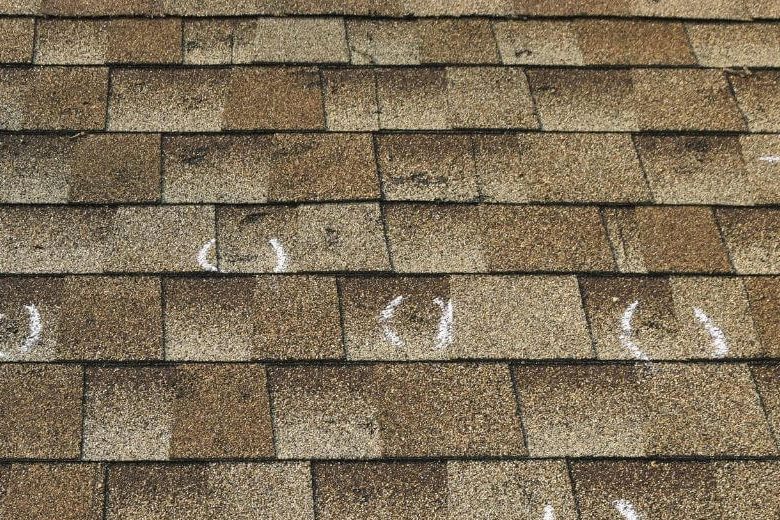
Plenty of derechos carry hail inside the strongest cells, so one storm can leave both kinds of damage on one roof. They're documented separately. Hail shows as random impacts and dented soft metals across the slopes that faced the storm. Wind shows as lifted, creased and missing shingles organized by the shape of the roof. Our page on telling wind damage from hail damage goes deeper. Most homeowner policies put both under the same wind and hail coverage with one date of loss, but check your declarations page for how your deductible applies.
Getting the claim right the first time
Wind claims get underpaid in a particular way. The adjuster counts the missing shingles, writes up a few bundles, and misses the creased and unsealed tabs that'll fail next spring. If the inspection doesn't document those, they aren't in the scope. We photograph and mark each creased shingle, and we meet the adjuster on the roof so the count gets made together. If a repair is the right answer, that's what we'll write up. Our insurance claim page lays out the rest of the process.
Frequently asked
How do I know if my storm was officially a derecho?
The National Weather Service classifies events after the fact, and local news usually reports it within a day or two. For your claim it hardly matters. What matters is the date, the wind damage on the roof and the photos proving it.
Will shingles that blew back down flat still be covered?
If they're creased or the seal is broken, they're damaged, even lying flat. A creased shingle has a fractured mat and won't reseal. Each one has to be documented individually, which is why we lift tabs instead of judging from the ground.
Is a derecho filed as a wind claim or a hail claim?
It's filed as one loss on the storm date. If hail fell too, both kinds of damage go in the scope. Most policies group wind and hail under a single coverage, so you're generally looking at one deductible for the event, but your declarations page is the final word.
Can I tarp the roof myself after a derecho?
We'd rather you stayed off a wind-damaged roof, especially with limbs still on it or a soft deck underfoot. If water is coming in, call 1-800-564-6232 at any hour and a crew will dry it in. Keep receipts for anything you buy to protect the house.
Why is one side of my roof torn up and the other side fine?
Straight-line wind comes from one direction, so the windward slopes and the edges facing it take the worst of it. The leeward side still deserves a look, since suction lifts tabs there too, but a lopsided pattern is normal after a derecho.
Related reading
Free Hail Damage Inspection
No cost, no obligation, and you get the photographs either way.
Free inspection, documented for your claim.
Call one number from any of our forty Midwest metros and a live dispatcher answers, day or night.