
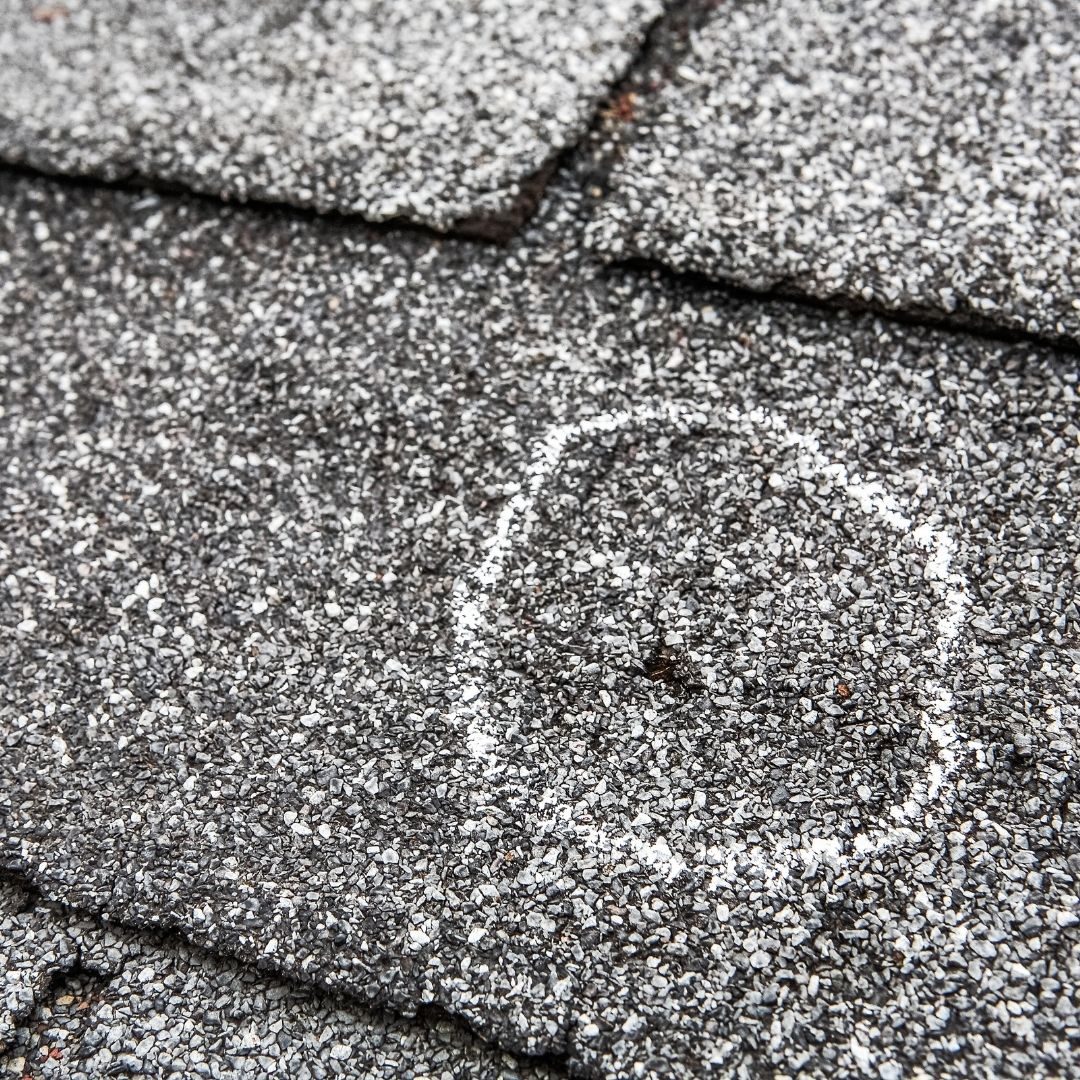
Midwest hail damage · John Beal Roofing since 1947
Freeze-Thaw Shingle Damage: How Winter Finishes What Hail Starts
A hailstone leaves a crack in the shingle mat that you can't see from the ground. Every freeze after that puts a sliver of ice in the crack and pries.
Short answer
Freeze-thaw damage happens when water soaks into a crack in a shingle, freezes, expands by roughly nine percent and forces the crack wider; the next thaw lets in more water and the cycle repeats. On a roof bruised by hail, those cycles turn invisible fractures in the fiberglass mat into split shingles, shed granules and eventually leaks. That's why hail damage that looked minor in July often shows up two to five winters later.
The mechanics, slowed down
A shingle is a fiberglass mat soaked in asphalt with granules pressed into the top. When a hailstone lands hard enough, the granules stay mostly put but the mat underneath breaks, the way a windshield can crack under a sticker that still looks fine. The asphalt over that break develops hairline splits of its own.
Now add weather. Rain finds those splits and wicks in. Overnight the temperature drops, the water turns to ice and takes up more room than it did as liquid. Asphalt that's below freezing has lost most of its give, so instead of stretching, it splits a little further. Morning sun thaws everything and the crack drinks again.
One cycle does almost nothing. A winter full of them does a lot.
Why St. Louis can be rougher on a bruised roof than Fargo
Cold alone isn't the enemy. Crossing the freezing line is. In Fargo or Duluth a roof often freezes in December and stays frozen for weeks under snow, which is hard on gutters but fairly gentle on a cracked shingle. In St. Louis, Kansas City, Columbia or Springfield, a typical January bounces above and below thirty-two over and over. Forty-five and sunny on a Tuesday, eighteen on Wednesday night, rain on Friday.
Each of those swings is another round of soak, freeze and pry. So a southern-tier Midwest roof that took a moderate hailstorm can deteriorate faster over its first couple of winters than a northern roof that took the same storm. It's one reason we push homeowners in the lower Midwest to get a summer or fall storm inspected before the holidays instead of after.
The spots that crack first
North-facing slopes are usually first in line. They get the least sun, stay damp the longest after a rain and sit below freezing for more hours of the day. Slopes shaded by trees behave the same way.
Valleys come next because they carry the meltwater from two planes of roof at once. The bottom three or four feet of every slope above the gutter is another trouble zone, since that's where melting snow from higher up refreezes at night.
Then there are the parts that were bent before the hail ever hit. Ridge caps are folded over the peak during installation, so a strike there starts a crack along a line that's already stressed. Rubber collars around plumbing vents get stiff in the cold too, and a hail-split boot lets water run straight down the pipe into the attic. That last one we see every spring.
What it looks like by March
The first clue usually isn't on the roof at all. After a thaw, a dark gritty fan at the bottom of a downspout means granules are coming loose in volume, and our page on granule loss in gutters explains how to read it.
On the shingles themselves, look from the ground with binoculars for short dark lines radiating from a point, small corners missing off the tabs, or edges that have started to curl where they used to lie flat. In the attic, nail tips that are frosty on a cold morning and stained around the shank point to moisture getting through above them. By the time there's a brown ring on a ceiling, the shingle has usually been failing for a while. See our page on roof leaks that start long after the hail for the slower version of this story.
Winter wear versus hail that winter widened
This distinction decides claims. Every asphalt roof weathers, and a twenty-year-old roof will crack in the cold with no help from hail at all. An adjuster is right to deny that. Age-related cracking runs in patterns: along the tab edges, across whole courses, worst on the sunniest slope.
Hail-started cracks look different. They center on an impact point, they land randomly across the slope, and they appear alongside dented gutter aprons, dinged vent caps and spatter marks that tie them to a storm date. When we find cracks with no hail signature, we tell the homeowner it's wear and that a claim would likely be denied. The side-by-side comparison on our hail damage versus normal wear page is worth five minutes.
The clock keeps running while the roof looks fine
Here's the trap. Your policy counts time from the date of the storm. The roof doesn't care about that calendar. It can keep its secrets through one winter or two, and by the time the cracks are obvious, the window to report the loss may be closing or already shut. Some Midwest policies allow a year, some allow more. Read yours, or check our page on hail claim deadlines before assuming you've got time.
The fix is boring. Get the roof looked at soon after any storm that dented your gutters, and keep the dated photographs even if the verdict is that nothing needs doing yet.
How we inspect a roof in cold weather
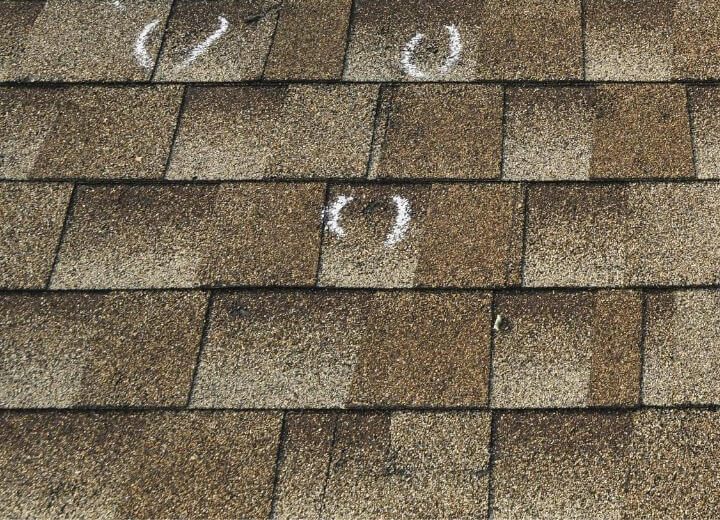
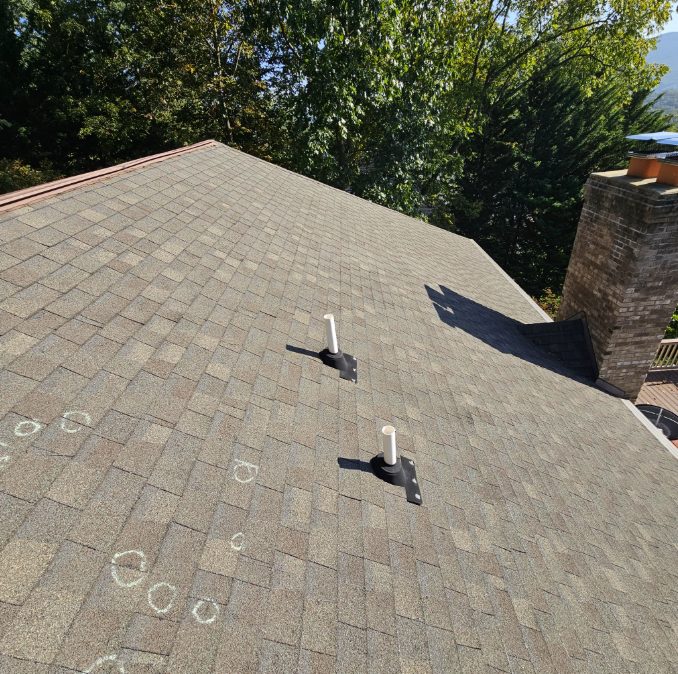
In July we can lift a tab and flex it to check the mat. In January that same tab might snap, so we work differently: thumb pressure on suspected bruises, close photos under raking light, a careful look at the attic deck from below, and counts inside a marked test square on each slope. We don't walk an icy roof, ever. If the surface isn't safe, we document what we can and come back on the first dry day.
Products we'd steer you away from
Every winter somebody sells a spray-on sealant or roof coating as protection against freeze-thaw cracking on asphalt shingles. It doesn't rebuild a fractured mat, it can trap moisture, and some shingle manufacturers treat coatings as grounds to void their warranty. Save the money. A bruised shingle gets replaced. A healthy one needs nothing sprayed on it.
Freeze-thaw questions we get every winter
Can shingles crack from freeze-thaw without any hail?
Yes, especially on older or poorly ventilated roofs where the asphalt has dried out. That's normal wear rather than storm damage, and insurance generally won't pay for it. The difference shows in the pattern and in whether the soft metals around the roof carry hail dents.
The hail hit last summer. Is it too late to file?
Possibly not. Policies set their own reporting windows, measured from the storm date, and many give a year or longer. Find the deadline in your policy or ask your agent, then get the roof inspected so the claim has dated evidence behind it.
Will a roof coating stop winter cracking?
Not on asphalt shingles. A coating can't repair a broken mat underneath the granules, and it can create warranty problems with the manufacturer. Damaged shingles need replacing; sound ones don't need a coating.
Can a cracked shingle be replaced in the middle of winter?
Yes, on a dry day with no ice on the roof. Because the factory sealant strip won't bond in the cold, we hand-seal the replacement shingles and they finish sealing on their own once warm weather returns. Call 1-800-564-6232 for a winter repair.
How many winters before a hail-bruised roof starts leaking?
Two to five is typical, though shaded north slopes and roofs in the lower Midwest, where temperatures cross freezing more often, tend toward the short end. A heavily fractured roof can leak the first spring.
Keep reading before the next freeze
Free Hail Damage Inspection
No cost, no obligation, and you get the photographs either way.
Free inspection, documented for your claim.
Call one number from any of our forty Midwest metros and a live dispatcher answers, day or night.