
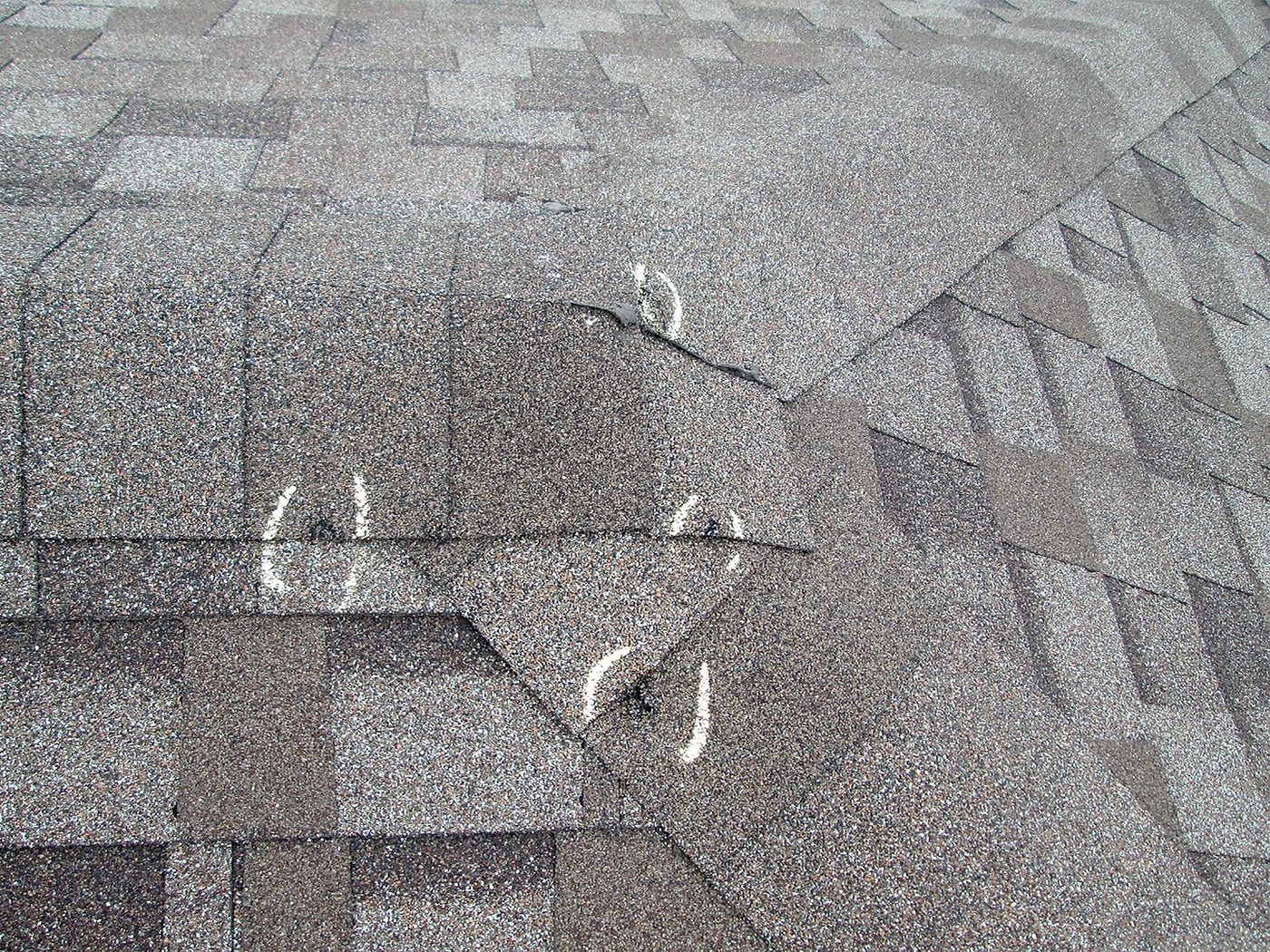
Midwest hail damage · John Beal Roofing since 1947
Hail Damage on a Flat Roof: TPO, EPDM and Modified Bitumen
Membrane roofs hide hail damage better than shingles do. The strike crushes the insulation underneath and the sheet looks fine from a ladder, sometimes for years.
Short answer
Hail damages a flat roof from the inside out. On TPO and EPDM the stone drives the membrane down into the insulation board underneath and fractures the foam, leaving a soft depression that can hold for a year or more before it opens and leaks. On modified bitumen the granulated cap sheet loses surface and the asphalt below cracks in a short star pattern around each strike. None of that is reliably visible from a ladder, which is why a low-slope hail inspection is walked in a grid by hand and confirmed with cut test cores rather than judged from photographs.
The three membranes and how each one fails
TPO is a thermoplastic sheet, usually 45 or 60 mil, heat-welded at the seams. Hail rarely punches through it outright. What it does is deform the sheet into the insulation, and if the board underneath is polyiso, the foam cell structure crushes and does not come back. You get a dish. Water sits in the dish, the sheet flexes there every time the temperature swings, and eventually the weld line nearest the depression starts to work. EPDM is rubber and it stretches, which sounds like an advantage and mostly isn't. A rubber membrane over a soft substrate absorbs the strike and hides it completely. Over a hard substrate, like a concrete deck or a gypsum cover board, the same stone will split it. Modified bitumen behaves more like a shingle: the granules come off at the impact, the cap sheet fractures, and once the asphalt is open UV starts on it immediately.
Why a core sample settles the argument
A core is a two-inch plug cut clean through the membrane, the insulation and down to the deck, then patched the same day. It shows three things a photograph can't. Whether the foam under the strike is crushed. Whether there's trapped moisture sitting in the layers. And what the assembly actually is, because plenty of low-slope roofs in the Midwest are a second or third layer over something older and nobody knows that until a plug comes out. Carriers take cores seriously because they are physical evidence rather than interpretation. We pull them from the areas that felt soft underfoot during the grid walk, not at random, and each plug gets photographed with a tape next to it and a mark showing where on the roof it came from.
Hail size that matters on a low slope
Steep-slope asphalt generally needs around an inch of stone before mat fracture starts showing up. Low slope is different, and it cuts both ways. A 60-mil sheet over a hard deck can shrug off inch-and-a-quarter hail with nothing worse than scuffing. The same storm over saturated, twelve-year-old polyiso will leave depressions from three-quarter-inch stone, because the substrate has no fight left in it. Age of the assembly matters more than the number on the hail report. That's also why two buildings in the same office park can get very different answers out of the same adjuster, and why the different answer isn't automatically wrong.
Ponding water finishes what hail starts
Low slope means a quarter-inch of fall per foot if you're lucky, and a lot of older Midwest buildings have less than that. Every crushed spot is now a birdbath. Standing water does three separate things to a damaged membrane. It adds weight and deepens the dish. It drives freeze-thaw cycling straight into the weakest point of the assembly through a Missouri or Iowa winter. And it grows enough algae to make the next inspection harder to read. If the roof already had ponding before the storm, get the pre-loss condition documented early, because otherwise a carrier will attribute the whole depression to drainage and close the file.
What a low-slope inspection costs you
Nothing, and that's the point of doing it properly. A grid walk on a mid-size building takes a couple of hours, the cores get cut and welded shut the same visit, and you keep the photographs and the plug images whether you hire us or not. We've been putting Midwest roofs back together out of Maryland Heights since 1947, and a fair share of the low-slope roofs we look at turn out to have nothing claimable on them. We write that down too. A dated file showing the roof was sound is worth having the next time a storm rolls through the property.
What the adjuster wants to see on a membrane roof
Not a test square. That's a steep-slope method and it doesn't transfer. The useful documentation on a membrane roof is a marked field grid with soft spots flagged and numbered, core photos tied to those numbers, and dented soft metals around the perimeter: coping cap, counterflashing, gutter and scupper faces, condenser fins, and the housing on any rooftop unit. Moisture readings help when the assembly holds enough water to justify them. Infrared scanning helps on some roofs and proves nothing on others, since it reads temperature differential and needs a clear night after a warm day. It will not see through wet ballast.
Coat it, patch it, or tear it off
A silicone or acrylic coating over a hail-bruised membrane is the most common bad decision made on a commercial roof, and it's usually sold by somebody who never cut a core. Coating locks moisture into insulation that's already wet and buys about eighteen months. If the foam is crushed and saturated, the honest fix is a tear-off to deck with new insulation and new membrane. If the strikes are isolated to one elevation and the cores come back dry, targeted welded patching is real work and we'll quote it that way. What we won't do is coat a wet roof, and we'll say so plainly if that's what somebody else put in front of you.
Percentage deductibles change the math
Plenty of Plains and upper-Midwest commercial policies carry a percentage wind and hail deductible rather than a flat dollar figure. On a building insured for two million, a two percent hail deductible is forty thousand out of pocket before the policy pays anything, which changes whether a partial-scope claim is worth filing at all. Read the declarations page before anyone climbs a ladder. Be careful with a contractor who offers to make that deductible disappear, too. Waiving a deductible is insurance fraud in most Midwest states, and it lands on the building owner every bit as hard as on the contractor who suggested it.
Frequently asked
Can hail total a flat roof that isn't leaking?
Yes, and that's the normal case. Crushed insulation under an intact membrane is damage whether or not water is coming in yet. The leak arrives when the sheet finally splits over the depression, which is often two or three winters later.
Do you have to cut holes in my roof to inspect it?
Cores are small, usually two inches across, and they get patched and welded shut on the same visit. We take the fewest that will document the assembly, typically two to four on a mid-size building, and we get written approval before cutting anything.
Will an infrared scan find hail damage?
It finds trapped moisture, which is related but not the same thing. Infrared needs a warm day followed by a clear night, and it reads nothing useful on a ballasted or very wet roof. We treat it as a supplement to cores, never a replacement for them.
Is a roof coating a legitimate hail repair?
Only over a dry, sound membrane with isolated surface damage. Over crushed, wet insulation a coating hides the problem and shortens the roof's life. If a company quoted a coating without pulling a single core, get a second opinion before you sign.
How long after the storm can I still file on a commercial building?
That depends on your policy language and your state, and commercial policies often run tighter than residential ones. Some carry a one-year suit limitation. Pull the declarations page and call 1-800-564-6232 and we'll look at the dates with you before you spend money on a scope.
Related reading
Free Hail Damage Inspection
No cost, no obligation, and you get the photographs either way.
Free inspection, documented for your claim.
One number reaches dispatch for all forty Midwest metros, answered live 24 hours a day.