
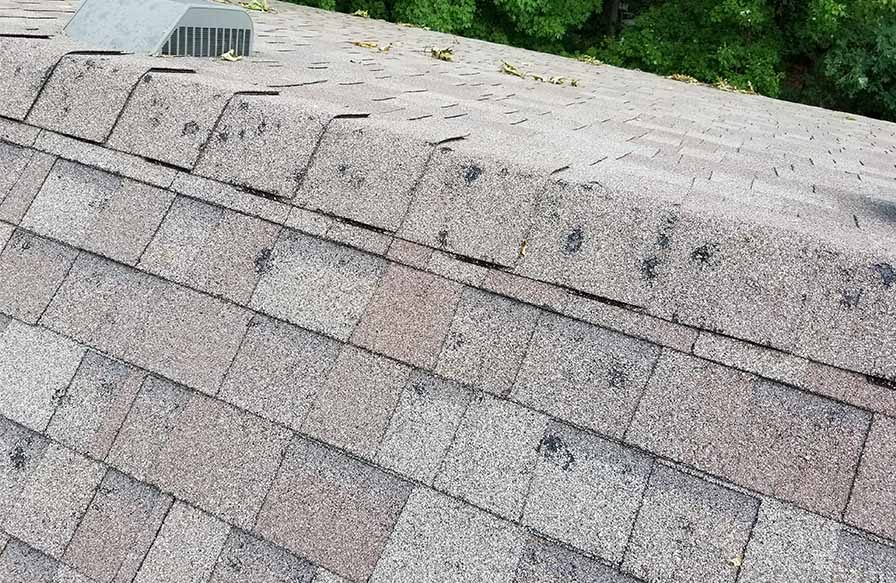
Midwest hail damage · Tile, slate and composite
Hail Damage on Tile and Slate Roofs
Tile and slate crack instead of bruising. The broken piece stays put and leaks underneath it, which is why this damage gets found a year late and costs more to put right.
Short answer
Hail damages tile and slate by cracking and chipping individual pieces rather than bruising a surface. A hit shows up as a fresh spall, a corner chip, or a hairline crack radiating out from a light-colored impact point, and the broken piece keeps sitting in place while water gets past it. Because walking a tile or slate roof breaks more of it, both inspection and repair take a different method and a far higher per-piece cost than asphalt.
Concrete tile, clay tile and slate each fail their own way
Lumping these together is the mistake that produces bad scopes. They are three different materials with three different failure modes, and a fourth product on the market imitates the look of all of them while behaving like none. What the inspection is looking for changes with each one.
Concrete tile
Concrete is strong in compression and brittle at the edges. Hail typically spalls it, knocking a shallow flake of cement paste off the surface and exposing the lighter aggregate underneath. That fresh light spot against a weathered surface is the tell, and it is obvious for a season before it dirties down and disappears. Worse hits crack the tile across its width, and a cracked concrete tile frequently stays in place held by its own overlap and the batten, so nothing looks wrong from the ground.
Clay tile
Clay is harder and more brittle than concrete and it does not spall so much as shatter. An impact on a barrel or S-tile tends to punch a hole or take a corner off along a clean fracture, and the broken fragment often slides down into the pan below where nobody sees it. Older clay from the pre-war housing stock around St. Louis and Kansas City is more fragile still, and it tends to crack from an impact several tiles away from the strike because the load transfers through the overlap.
Natural slate
Slate splits along its cleavage plane. Hail hitting a slate leaves a bright chip at the point of impact and frequently drives a hairline crack from that point toward the nail holes, because that is the weakest path through the stone. Sound slate rings when tapped; a cracked one gives a dull click, and tapping is a real part of inspecting a slate roof. Slate at the end of its life delaminates into flakes on its own, and separating that from impact damage takes someone who has seen both.
Synthetic and composite slate
Polymer and rubber composite products have gone in on a lot of Midwest roofs over the last twenty years, and they take hail far better than the real thing. They flex under an impact and mostly recover. What they do show is surface marring and, at larger sizes, a torn nail hole or a piece knocked off the exposed corner. They also carry their own manufacturer warranties with impact provisions worth reading before a claim gets filed.
Why this damage hides for a year or more
An asphalt roof with hail damage looks visibly mottled from the yard once you know what to look for. A tile roof with thirty cracked tiles looks perfect. The pieces do not fall off. They sit in the courses they were laid in, held by a nail at the head and by the tile above, and the crack running across the middle is invisible from any angle except straight down from a few feet away.
Water still gets through. Tile and slate roofs shed water on the surface and depend on the underlayment beneath as the real waterproofing layer, so a cracked tile puts water onto felt or synthetic underlayment that was never meant to take direct flow. That layer holds for a while and then it does not, and the first symptom is a stain on a bedroom ceiling eighteen months after a storm nobody connected it to. By then, dating the loss is a paperwork problem and the notice window on the policy may already have closed.
The secondary damage is the expensive part. Water sitting on underlayment rots battens and deck sheathing, and on a tile roof the deck is under a heavy assembly that has to come off in sections to reach it. A claim filed promptly replaces cracked tiles. The same claim found two winters later replaces tiles, underlayment, battens and a section of decking.
Walking the roof is part of the problem
Here is the part that makes tile and slate genuinely different from every other inspection we do. The act of inspecting causes damage. Concrete and clay tile break under a misplaced boot, and old slate breaks under a well-placed one. A crew that walks a hundred-year-old slate roof the way they walk asphalt will leave more broken stone behind them than the hail did, and we have been called to quote repairs that were created by the last inspection.
So the method changes. Access comes from a ladder at the eave and from the valleys and hips where the assembly is best supported, weight goes on the headlap of the piece rather than the middle of the span, and on brittle slate we work off foam pads or a chicken ladder rather than standing directly on the field. Anything we can document from the ground with a long lens, we document from the ground. A documented inspection of a tile roof takes longer than the same inspection on asphalt for exactly this reason, and it should.
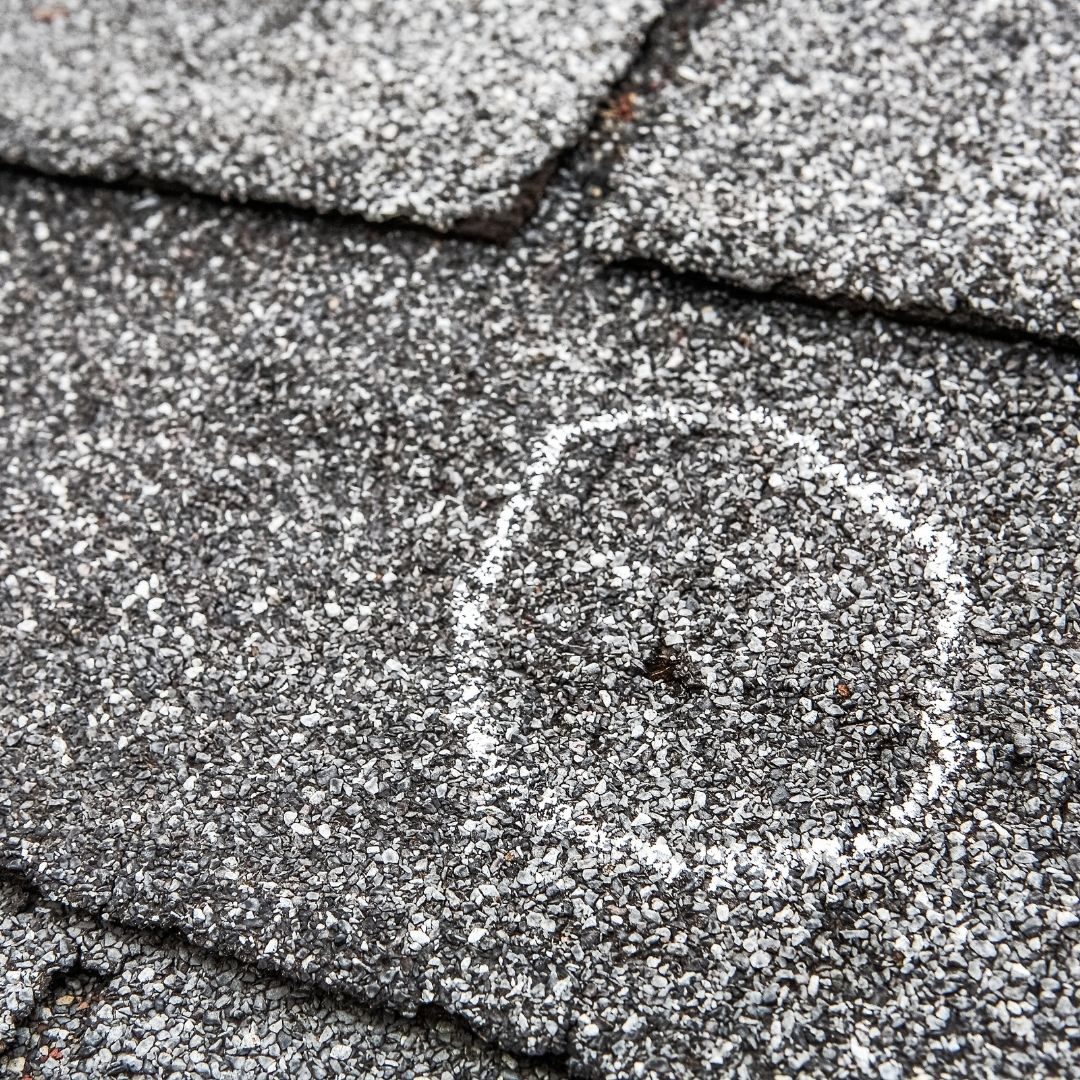
Matching a tile nobody makes anymore
Replacing forty cracked tiles on a sixty-year-old clay roof means finding forty tiles in that profile, and profiles get discontinued. Salvage yards carry some. Occasionally a manufacturer still runs a compatible shape. Often the closest available piece differs in profile or color enough to read as a patch. That is a documentable condition, and the scope should carry the extra cost of sourcing salvage or the labor to relocate sound tiles from a low-visibility elevation into the visible field and put the mismatched new pieces where nobody sees them.
Cost drivers, in honest ranges
We are not going to print a price for your roof. Any figure quoted without seeing the property is a guess dressed up as a quote. What drives it is worth knowing before an adjuster hands you a scope.
Per-piece material cost is the smallest part. Labor is higher because the work is slower and access is harder, breakage allowance has to be real rather than optimistic, and sourcing discontinued pieces can cost more than the labor to install them. If the underlayment is being replaced, the whole assembly comes off and goes back on, and on tile that is a large share of the job. Steep pitch and two-story access add charges that belong on the scope as their own lines. Where the carrier's first estimate falls short on those, the remedy is a documented supplement rather than an argument.
One thing worth hearing early: a tile or slate roof is usually worth restoring rather than converting. Replacing an intact eighty-year-old slate roof with asphalt trades a fifty-year assembly for a twenty-year one, and it rarely pencils out unless the deck below is failing anyway. We have talked more than one homeowner out of that conversion.
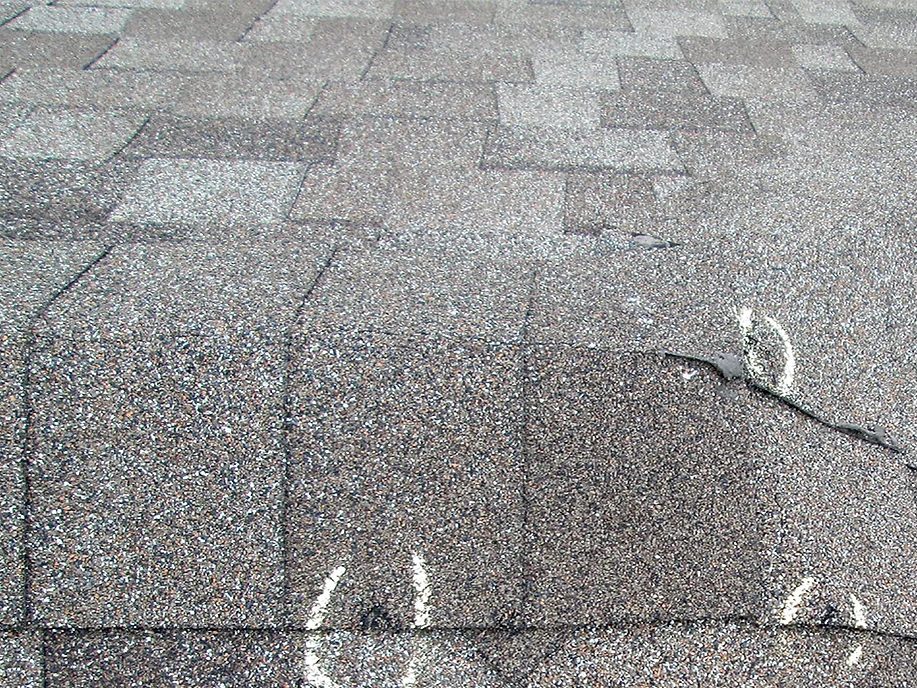
Tile and slate hail questions
How can I tell if my tile roof was damaged without going up there?
Look for fresh light-colored spots against a weathered surface with binoculars, and check the ground and gutters for fragments after a storm. Then check the soft metals you can reach, since dented gutter faces and vent caps confirm the storm even when the tile field looks fine.
Will insurance replace my whole tile roof or just the broken pieces?
Most tile claims are scoped as piece replacement plus any underlayment and decking that water reached. A full replacement enters the picture when breakage is widespread across several elevations or when the underlayment has reached the end of its life and has to come off anyway.
Is cracked slate dangerous to leave alone?
It is a leak on a delay rather than an immediate hazard, though loose fragments can slide off a steep slope and that is worth taking seriously. The real risk is the underlayment, battens and decking underneath, which is where a cheap repair becomes an expensive one over two winters.
Do you tap-test every slate on the roof?
Not every one, since that would take days on a large roof. We tap systematically through the areas the storm pattern points at, starting with the elevations that took the wind, then widen the sample if the hit rate is high. The method and the sample area go in the report.
Can a tile roof be walked at all during a repair?
Carefully and with technique, yes. Weight goes on the headlap where the piece is supported, access runs through valleys and hips, and pads or a chicken ladder spread the load on brittle material. Breakage during the work is expected and belongs in the scope as an allowance.
Other roof types after hail
Free Hail Damage Inspection
No cost, no obligation, and you get the photographs either way.
Free inspection, documented for your claim.
One number reaches dispatch for all forty Midwest metros, answered live 24 hours a day.