
Midwest hail damage · John Beal Roofing since 1947
Hail Damage to Skylights, Vents and Roof Penetrations
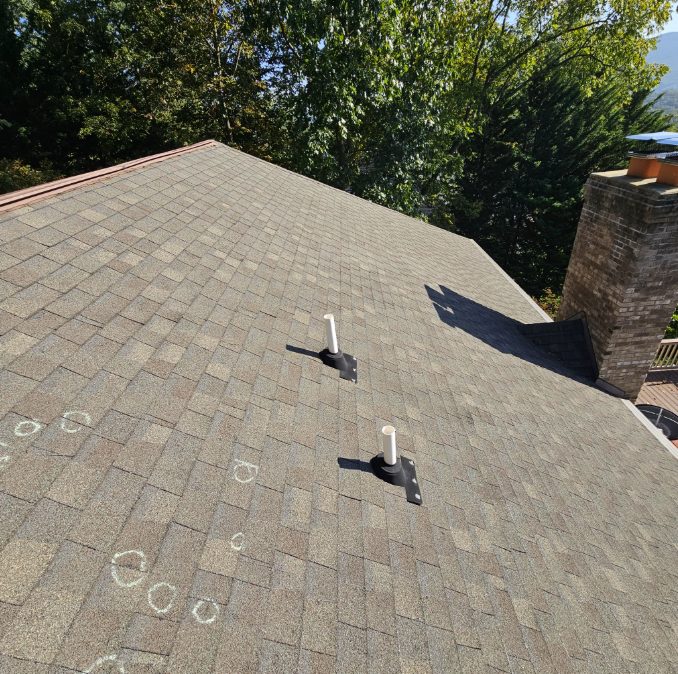
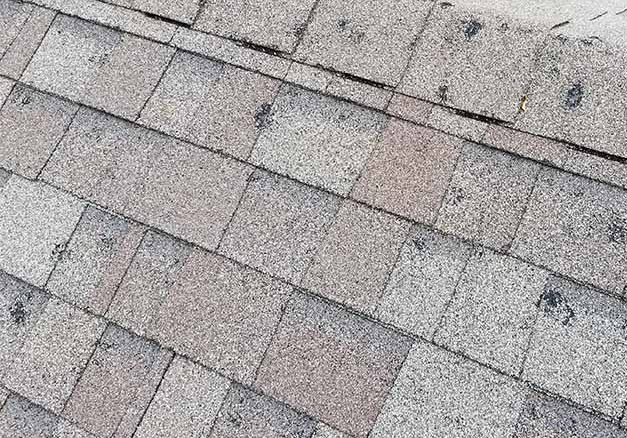
The things sticking up out of your roof take hail earlier and show it more plainly than the shingle field around them. They are the strongest evidence most claim files never include.
Short answer
Roof penetrations take hail damage earlier and more plainly than the shingle field around them, which makes them the best evidence on the roof. Aluminum and galvanized vent hoods dent on impact and show bright, unweathered metal at the bottom of the dent. Plastic turbine tops and ridge vent end caps crack instead of denting. Skylight domes craze or shatter, and the flashing kit around the curb bends. An inspector who photographs only the shingle field is leaving the strongest part of the file on the table.
Soft metals are the clock on the storm
A dent in an aluminum furnace vent is a dated artifact. Freshly struck aluminum shows a light, almost silver crater floor, and it oxidizes back to dull gray over a season or two in Midwest air. That gives an experienced inspector, and a fair adjuster, a rough read on whether the damage came from the storm being claimed or from one four years ago. Pipe boot collars, gutter aprons, drip edge, counterflashing and the fins on your air conditioning condenser all behave the same way. We photograph them with something in frame for scale, usually a quarter or a tape, and we note which elevation each one came from.
What happens to a pipe boot
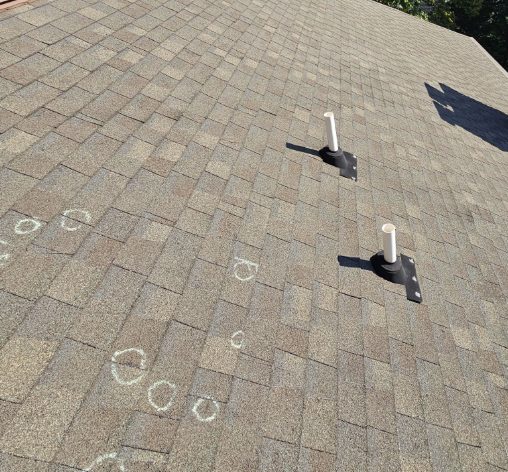
The rubber collar around a plumbing vent is the shortest-lived component on most roofs, and hail accelerates it hard. A strike splits the rubber where it's already thinning from UV, or it deforms the metal base so the collar no longer sits tight to the pipe. Neither one leaks immediately. It leaks the first time wind-driven rain pushes water sideways under the lifted edge, and then the water runs down the outside of the pipe into the ceiling below, which is why a boot failure so often gets misdiagnosed as a plumbing problem. On any full replacement after hail, every boot on the roof gets replaced. They cost almost nothing and they are the single most common source of a callback.
Turbines, box vents and ridge vent
Metal turbines dent on the housing and on the vanes, and a dented vane throws the bearing out of balance so the unit squeals in the wind afterward. The squeal is a symptom, not the damage. Plastic box vents and the end caps on ridge vent go brittle with age and crack rather than dent, and the crack is easy to miss because it usually runs along a molded seam. Ridge vent takes a beating because it sits at the highest point on the roof and the stone hits it closest to perpendicular. We pull a section of ridge cap when the ridge looks suspect, since the fracture shows from underneath long before it shows on top.
Skylights: the glass is the least of it
A tempered glass skylight either survives hail or it doesn't, and when it doesn't you know that afternoon. Acrylic and polycarbonate domes are the quieter problem. They craze, meaning a web of fine surface fractures that scatters the light and looks a little like frost, and once the surface is opened up UV works into the material until it yellows and goes brittle. That takes years. The other failure is the flashing kit. Step and head flashing around a curb-mounted unit can be dented or lifted by the same stone, and a lifted head flashing puts water straight into the curb. Most skylight leaks we get called out for turn out to be flashing rather than glazing.
Ask to see the vent photos
Here's a quick way to judge any inspection report you get handed, ours included. Scroll to the soft metals. If there are no close photographs of vent hoods, boots, flashings and the condenser, the inspector either didn't look or didn't think it mattered, and both answers should worry you. A file built only on shingle photos gives an adjuster room to call the whole thing wear. A file with dated metal in it does not. John Beal Roofing has been documenting Midwest storms since 1947 and this is the part of the report we'd defend hardest.
Do carriers pay for penetrations?
Usually yes, when they're part of the covered scope and damaged in the same event. Vents, boots, turbines and flashings are standard line items in the estimating software adjusters work from, and they get missed on a first estimate far more often than they get deliberately denied. That is what a supplement is for. Skylights are a harder conversation. A carrier will generally pay to replace glazing that's broken or clearly crazed and will push back on a dated unit that's simply old. If the skylight is an original builder-grade unit from the nineties, expect to argue the point, and expect the answer to depend partly on which adjuster shows up.
What we check that usually gets skipped
On a penetration walk we open the attic wherever there's access, because half of what hail does to vents shows from the inside first. Daylight around a boot collar. Staining on the sheathing under a ridge vent. Rust streaks below a box vent where the flashing has been working loose. We also look at the bathroom and kitchen exhaust hoods, which are usually thin painted steel and dent as readily as anything up there, and the chimney cap and chase cover if the house has a chimney. A dented chase cover holds water and rusts through from the top down, and by the time it shows up in the firebox it has become a masonry job.
Replacing the roof without replacing the penetrations
This is the shortcut that turns a good roof into a warranty argument. New shingles set around a nine-year-old pipe boot means the boot fails in three or four years, and somebody has to cut into nearly new work to fix it. Reusing dented flashing because it's still technically watertight is the same mistake with a different part. Our standard scope replaces boots, vent flashings and pipe collars on a full replacement, and we'll tell you before you sign if the estimate we're working from leaves them out. When a bid you've been handed is noticeably cheaper than ours, this is usually where the difference lives.
Frequently asked
Can hail crack a skylight without breaking it?
Yes. Acrylic and polycarbonate domes craze, which is a web of fine surface fractures that looks like frost and scatters the light. The unit keeps water out at first, then goes brittle and yellow as UV works into the opened surface.
My turbine vent started squeaking after the storm. Is that damage?
It usually is. A dented vane puts the turbine out of balance and the bearing complains about it. The noise is the symptom; the claimable item is the dented housing and vanes, so get it photographed before anyone swaps the unit out.
Should pipe boots be replaced during a hail roof replacement?
Every time. They're inexpensive, they're the most common leak source on a finished roof, and reusing an aged boot under new shingles means cutting into new work again in a few years.
Will insurance cover my skylights?
Broken or clearly crazed glazing damaged in the same storm is normally covered. A dated unit with no clear impact damage is where carriers push back. We document the glazing and the flashing separately so a denial on the dome doesn't take the flashing with it.
How do vent dents prove when the storm happened?
Freshly struck aluminum shows a bright, unoxidized crater floor that dulls over a season or two. That gives an inspector a rough age on the impact, which is why soft metals carry so much weight inside a claim file.
Related reading
Free Hail Damage Inspection
No cost, no obligation, and you get the photographs either way.
Free inspection, documented for your claim.
One number reaches dispatch for all forty Midwest metros, answered live 24 hours a day.