
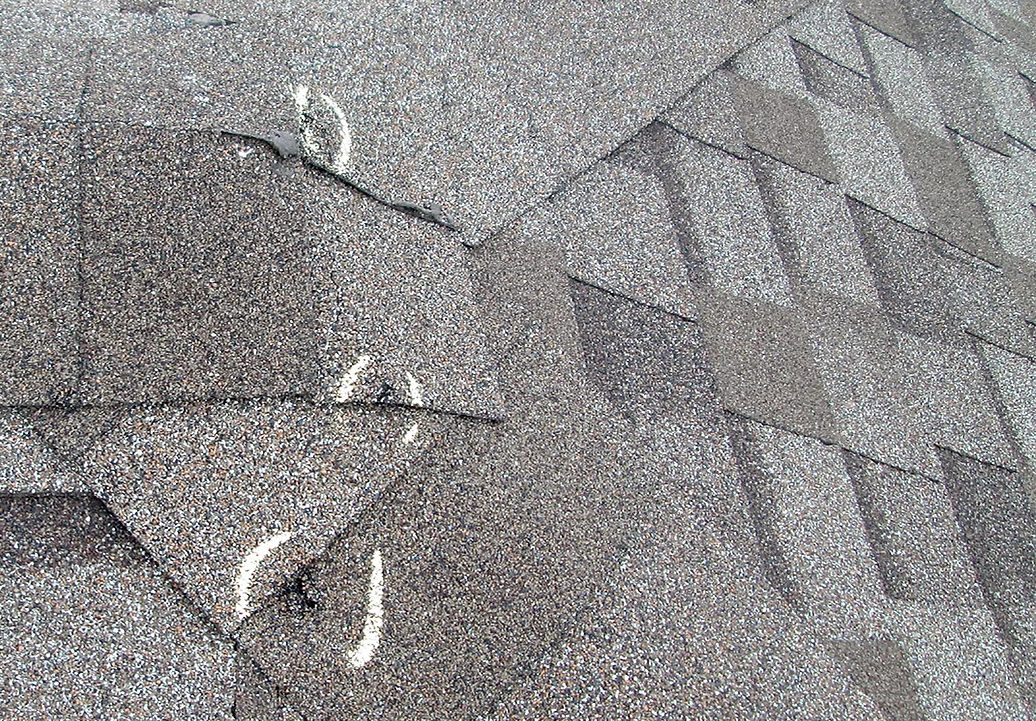
Midwest hail damage · John Beal Roofing since 1947
The Best Shingles for Hail, Judged From the Roof
Every manufacturer says its product handles hail. Walk a few neighborhoods the week after a storm and the differences between roofs are easy to see.
Short answer
For an asphalt roof in hail country, the best performers are polymer-modified (SBS) laminated shingles carrying a UL 2218 Class 4 impact rating, such as Owens Corning Duration FLEX, GAF Timberline AS II, CertainTeed Landmark ClimateFlex and IKO Nordic. Standard architectural laminates come next and 3-tab shingles hold up worst. Beyond asphalt, stone-coated steel and Class 4 composite shake or slate resist hail well, while standing-seam metal rarely leaks after hail but dents where you can see it.
Two ways a shingle earns an impact rating
Manufacturers get to Class 4 by one of two routes, and some products use both. The first is rubberized asphalt. Blending SBS polymer into the coating makes the shingle behave less like a cracker and more like a tire tread. A stone hits, the shingle gives, and it springs back with the mat intact. As a side benefit, that asphalt stays pliable in cold weather.
The second route is reinforcement. A tough fabric or scrim layer bonded to the back of the shingle holds the mat together under impact so a strike can't split it through.
Either way, the product has to pass UL 2218, which drops steel balls of rising size onto it. Some products also list FM 4473, which fires ice balls instead. The rating proves the mat survived the lab. It doesn't promise the roof survives every storm, and that difference is worth keeping in mind when reading a brochure.
Asphalt shingles, worst to best
Three-tab. One thin, flat layer with cutouts. There's not much material for a hailstone to get through, and the tabs catch wind as well. On a street of mixed roofs after a storm, three-tab houses are usually the ones with the most fractured mats. We rarely recommend them for a new roof anywhere in the Midwest.
Standard architectural laminate. Two layers bonded together, heavier and thicker, with more granule coverage. A real step up. Still, once stones get past about an inch, a standard laminate's mat will break, and that's the damage that turns into a leak a few winters later.
Class 4 SBS laminate. Same profile and look as a standard laminate, but rubberized or reinforced to take a much harder hit. For most homes in a high-hail market, this is where the money does the most good. Our page on impact-resistant shingles covers the rating itself in more depth, and the hail size chart shows what different stone sizes do to each type.
Roofing that isn't asphalt
Stone-coated steel. Steel panels pressed to look like shake or tile, with a granular coating baked on. Many carry a Class 4 rating, and the textured surface hides small dents that would show on bare metal. It costs more than asphalt and it needs a crew that knows the system.
Standing-seam metal. Almost never leaks after hail, because the stones can't break through the steel. It does dent, and on a smooth painted panel a field of dents is visible from the street. Several Plains carriers attach endorsements that exclude cosmetic denting on metal roofs. Read our page on hail on metal roofs before you commit.
Composite shake and slate. Molded polymer products made to look like cedar or stone. Many are Class 4, they're light enough for a standard frame, and they hold their looks well after impacts. Pricing sits well above asphalt.
Natural slate and clay tile. Very hard, but brittle. A big stone can crack a slate or snap a tile corner, and finding matching replacements for an older roof is its own project. Our tile and slate page goes into it.
Heavier and pricier isn't the same as impact-rated
This catches people. A thick designer shingle with deep shadow lines looks tougher than a regular laminate, and some of them are. Some aren't rated for impact at all. Weight and price tell you about appearance and wind performance. Only the Class 4 listing on the product data sheet tells you about hail. Check for it before you pay the premium for a heavier shingle on the assumption that heavier means harder.
What the installer controls
A Class 4 shingle nailed above its nail line will blow off in the next windstorm, and a premium product over rotten decking is still a bad roof. The parts nobody sees after the job matter just as much: fasteners in the right zone, starter strip at the eaves and rakes, ice and water barrier where cold-climate codes call for it, enough intake and exhaust ventilation to keep the attic from baking the shingles from below. John Beal Roofing is an Owens Corning Platinum Preferred contractor and has been named to Roofing Contractor Magazine's Top 100, and every roof we install carries our workmanship warranty on top of the manufacturer's coverage. Brand matters less than people think. Installation matters more.
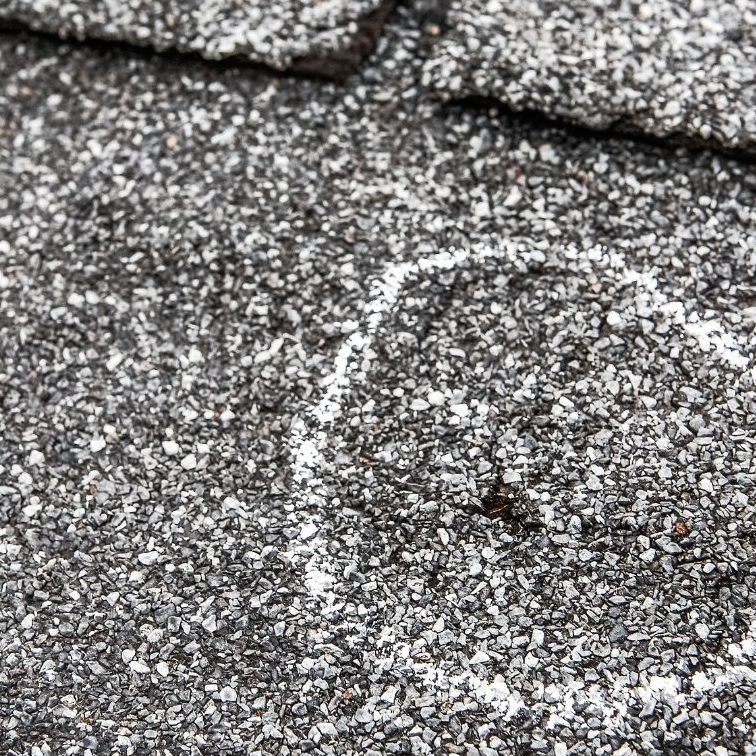
Reading a bundle before it goes on your roof
Ask to see a wrapper off the actual shingles delivered to your driveway. An impact-rated product carries the UL 2218 Class 4 listing on the packaging or its data sheet, along with the exact product name. Photograph it and keep one wrapper. Your insurance agent will want that proof to apply a premium credit, and it settles any question later about what was installed. Wondering if the upgrade pays off where you live? See whether Class 4 shingles are worth it.
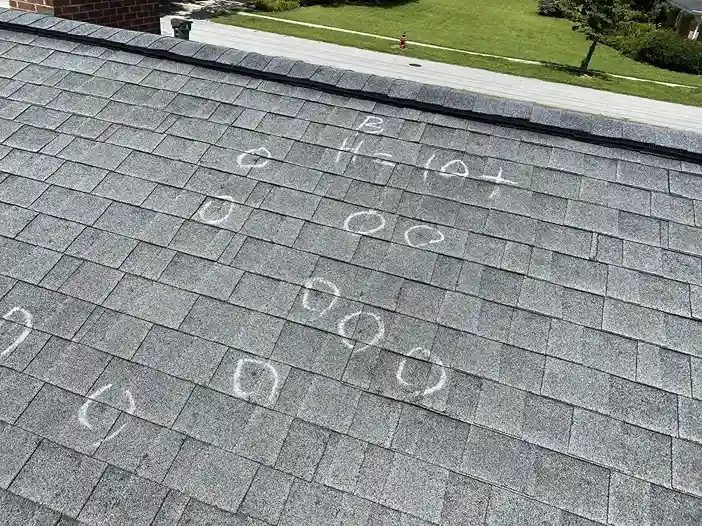
Shingle questions after a hailstorm
How much more do Class 4 shingles cost than standard architectural shingles?
There's a per-square premium that varies by product line, supplier and season. On a whole replacement it's usually a modest share of the total because labor, tear-off and underlayment don't change. We price both options on every estimate so you can compare.
Is a metal roof better than shingles in a hail area?
For leaks, yes, since hail almost never punctures steel. For appearance, not always, because smooth panels show dents. If your policy excludes cosmetic damage to metal, a dented roof that still sheds water won't be paid.
Do heavier shingles hold up better to hail?
Somewhat, since more material takes more to break, but weight is not an impact rating. A lighter SBS shingle with a Class 4 listing will usually outperform a heavier unrated designer shingle when hail hits.
Which matters more, the shingle brand or the installer?
The installer. Every major manufacturer makes a solid Class 4 product, and any of them can fail early when nailed wrong or laid over poor ventilation. Ask who will be on your roof and what workmanship warranty they put in writing.
Can I use Class 4 shingles for a repair on a standard roof?
You can, but the roof as a whole won't qualify as impact-rated and won't earn a premium credit. The new shingles may also look different from the old ones. Call 1-800-564-6232 and we'll talk through repair versus replacement.
More on roofing materials and hail
Free Hail Damage Inspection
No cost, no obligation, and you get the photographs either way.
Free inspection, documented for your claim.
Call one number from any of our forty Midwest metros and a live dispatcher answers, day or night.