
Midwest hail damage · John Beal Roofing since 1947
Hail Damage on a New Roof: Yes, It Can Be Totaled
Shingle age doesn't change what a big stone does to the mat. It does change how the claim, the warranty and the repair math play out.
Short answer
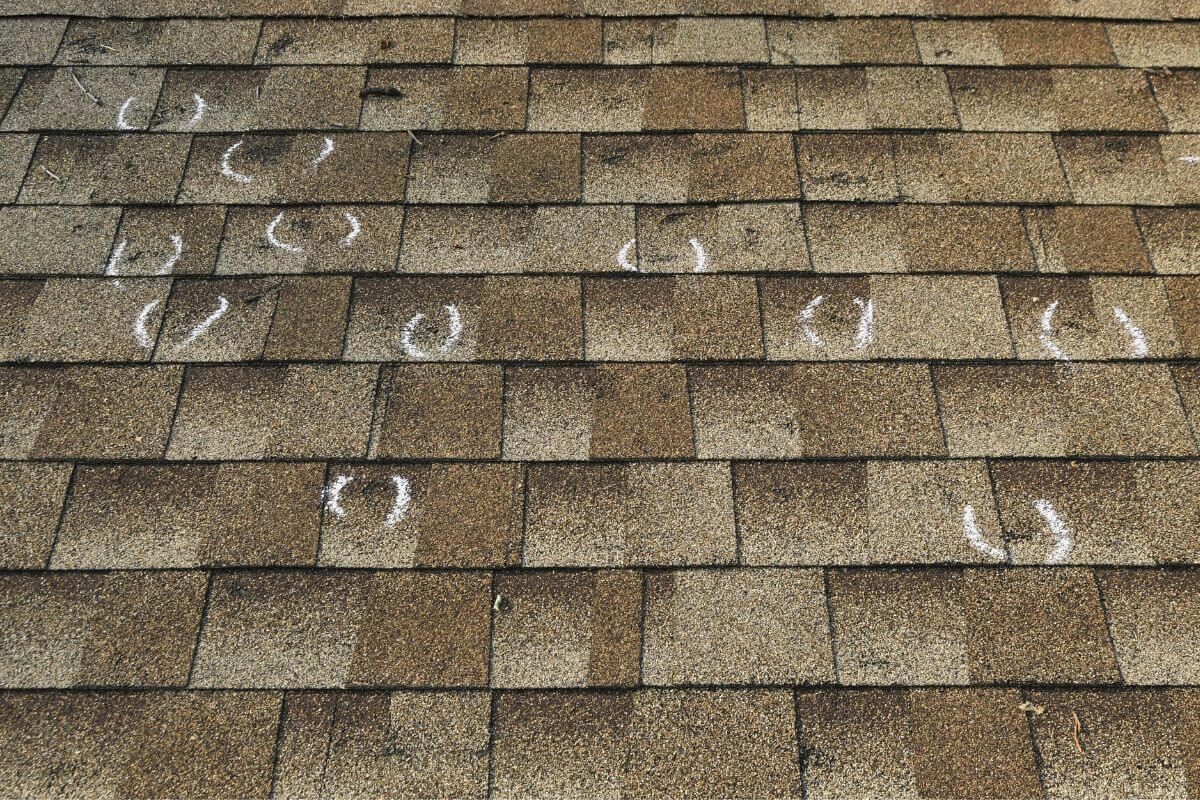
A new roof can be totaled by hail. Standard asphalt shingles, even in their first year, can have their fiberglass mat fractured by hail around an inch across or larger, and a fractured mat is functional damage no matter how old the roof is. Your homeowners policy covers hail on a new roof the same way it covers an old one, usually with little depreciation taken. The shingle manufacturer's warranty almost never covers hail, and a contractor's workmanship warranty doesn't either, so the claim goes through insurance.
Why age doesn't protect a shingle
People assume a new roof is tougher, and in one narrow way it is. The asphalt is still flexible and the granules are bonded tight, which buys some resistance against small hail. It doesn't change the physics of a big stone. A standard shingle is a thin fiberglass mat with asphalt and granules on top, and when a stone of real size and speed lands on it, the mat cracks. Fresh shingles crack the same way twenty-year-old ones do. Unless the roof went on with impact-rated shingles, it was never built to take that hit.
The warranty call that rarely pays
Most owners of a new roof call the installer or the manufacturer first. It makes sense, and it almost never helps. Shingle manufacturer warranties cover defects in the product, and they typically exclude hail and other storm events. A workmanship warranty, like the one we give, covers the installation itself: the flashing, the nailing, the way the system was put together. Neither pays for storm damage. That's what your homeowners policy is for. Our page on the hail damage insurance claim process covers the filing side.
Depreciation works in your favor here
On an older roof, the carrier subtracts depreciation from the replacement cost and holds it back, sometimes releasing it after the work is done and sometimes not, depending on the policy. On a roof that's two years old there's very little life to depreciate, so the first check usually lands close to the full replacement figure. That's one of the few parts of a new-roof claim that goes smoothly. Some newer policies, especially in the Plains states, pay roofs on an age schedule or at actual cash value only, so check the declarations page. Our page on ACV versus RCV explains the difference.
A repair might actually be possible
Here's the trade-off we'll be upfront about. When a slope on a fifteen-year-old roof takes hail, the shingle line has often been discontinued and the color has faded, so a patch never blends and a full replacement becomes the honest scope. On a two-year-old roof, the same product may still be in production in the same color, and the existing shingles haven't weathered much. If the damage is confined to one or two slopes, replacing those slopes can blend well. That's a smaller claim and a smaller job, and we'll recommend it when it fits. Widespread fracture on every elevation is another story.
Documenting damage on a fresh roof
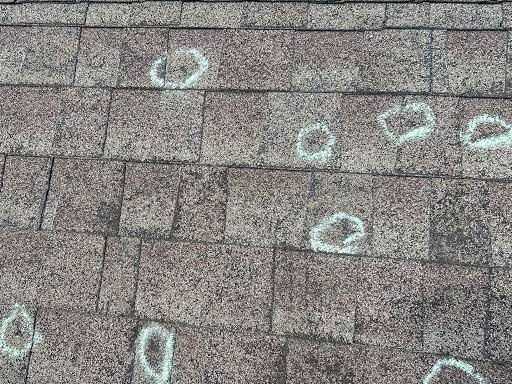
Adjusters look harder at new roofs, partly because a two-year-old roof getting totaled surprises them as much as it surprises the owner. The test-square counts carry the claim, so every impact needs to be marked, pressed for fracture and photographed with something for scale. Your installation paperwork helps as well. The contract, the invoice, the shingle product name and the install date show what was on the roof before the storm and how new it was. If the original crew left job photos, those make a clean baseline for showing what changed.
Your deductible doesn't shrink
This is where newer-roof claims get uncomfortable. Many Midwest policies, and most in the Plains, now carry a percentage wind and hail deductible tied to the dwelling coverage rather than a flat dollar figure, and on a home with a high dwelling limit it adds up. You owe it either way. A contractor who offers to waive or absorb it is asking you to take part in insurance fraud, which is what it is in most Midwest states. We won't do it, on a new roof or any other. Our page on deductible waiving explains why.
If you put on impact-resistant shingles
A roof installed with Class 4 shingles carries a UL 2218 impact rating, the top of that standard, and most carriers give a premium credit for it. Those shingles shrug off hail that would fracture a standard product. They aren't hail-proof, though, and a big enough storm still damages them. If yours took hits, file the same way. Some policies treat impact-rated roofs differently, with a cosmetic damage exclusion for dents and marks that don't affect function, so read that endorsement before you file. Our page on impact-resistant shingles covers the rating in more depth.
Waiting it out is the expensive move
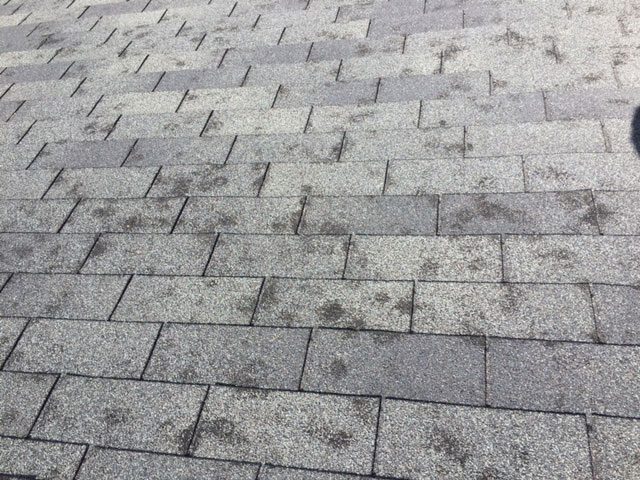
With a new roof the temptation is to assume it's fine and move on. Hail-bruised shingles usually keep water out for two to five years before the fracture opens, which sounds like plenty of time. Most policies, though, set a notice window for hail measured in a year or two. If the damage surfaces as a leak after that window closes, you'll be arguing about an old storm with a fresh ceiling stain as your evidence. The roof you just paid for deserves the same post-storm inspection an old one gets.
What we'd do if it were our house
Get a free inspection after any storm that dropped hail an inch or larger at your address. If we find functional damage, file with documentation in hand and the original installation paperwork attached. If we find cosmetic marks only, we'll tell you not to file. If the right scope is one slope instead of the whole roof, that's what we'll write up. John Beal Roofing is a third-generation family company, BBB A+ rated, and the storm line at 1-800-564-6232 is answered live around the clock.
Frequently asked
Can hail really total a roof that's only a year or two old?
Yes. Standard shingles of any age can have their mat fractured by large hail, and widespread fracture across the slopes supports full replacement regardless of how recently the roof went on.
Will my shingle manufacturer's warranty cover hail damage?
Almost never. Manufacturer warranties cover product defects and typically exclude hail and other storm damage. Hail on a new roof is an insurance claim.
Will my premium go up if I file on a new roof?
It can. Whether a weather claim affects your rate depends on the carrier and the state, and the roof's age doesn't change that much. Our page on premiums after a roof claim covers what drives it.
Does the original installer have to do the repair?
No. You can choose any qualified contractor. If the installation is still under a workmanship warranty, ask the installer how work by someone else affects that coverage before you decide.
My new roof has dented vents but the shingles look fine. Should I file?
Not until a roofer has checked the shingles by hand. Dented vents prove hail fell, but cosmetic metal dents alone may not clear your deductible. An inspection tells you whether there's a claim worth filing.
Related reading
Free Hail Damage Inspection
No cost, no obligation, and you get the photographs either way.
Free inspection, documented for your claim.
Call one number from any of our forty Midwest metros and a live dispatcher answers, day or night.