
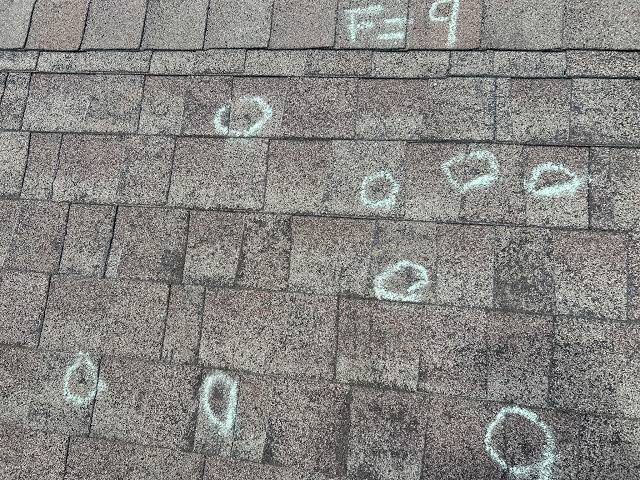
Midwest hail damage · John Beal Roofing since 1947
Does A Hail Claim Raise Your Homeowners Rate?
The honest answer involves your policy's deductible structure more than it involves your claim history. Here is how carriers actually price a hail loss.
Short answer
A hail claim is a weather loss, not a liability loss, and most Midwest carriers do not surcharge an individual policy for one. What usually moves your premium after a hail storm is the carrier re-rating the whole territory, because every home on your street filed in the same month. Two or more claims inside a few years is a different story and can affect renewal, and some carriers respond to heavy hail regions by shifting policies to a percentage wind and hail deductible rather than raising the base rate.
Weather losses and fault losses are priced differently
Insurers separate what you did from what happened to you. A dog bite, a kitchen fire started by a pan, a liability judgment: those tell an underwriter something about the risk of insuring you. Golf-ball hail falling on a subdivision tells them nothing about you at all, and the industry has priced it that way for decades. That is the reason a single hail claim behaves differently on a renewal than a single at-fault auto accident does.
The catch is that hail is not random enough. It comes in swaths, the same counties get hit repeatedly, and carriers watch loss ratios by ZIP code. So the money comes back, just not through your individual file.
Three ways your renewal actually changes
Territory re-rating
Your county's loss ratio goes up after a bad hail year and the carrier files a rate increase for everyone in it. Your neighbor who never filed pays the same increase you do.
Deductible restructuring
Many Plains and Midwest policies now carry a percentage wind and hail deductible, often one to two percent of the dwelling limit, instead of a flat dollar amount. Same premium, much larger share for you at claim time.
Non-renewal after repeat claims
Frequency is the trigger, not severity. Multiple claims in a short window, hail or otherwise, is what puts a policy on a non-renewal list.
The percentage deductible is the part people miss
Read your declarations page and look for a separate wind and hail line. If it says one percent, that is one percent of the dwelling coverage, not of the claim. On a home insured for four hundred thousand dollars, your hail deductible is four thousand, even if the flat deductible printed higher on the page is a thousand. Homeowners find this out on the day the first check arrives and it is a bad day.
This shift happened quietly across hail-prone Midwest markets and it is now common. It is also the strongest argument for not filing a small claim, because if your deductible is four thousand and the repair scope is fifty-two hundred, you have used a claim to collect twelve hundred dollars.
File or absorb, decided with numbers
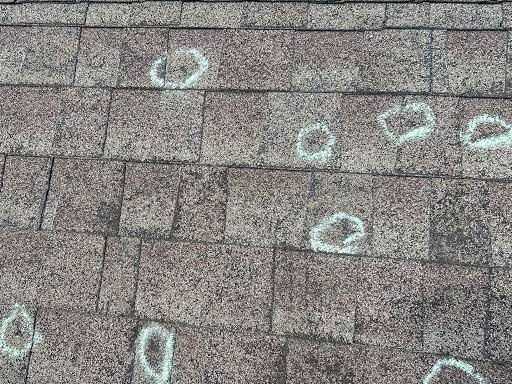
The decision comes down to four figures you can get in an afternoon. Your wind and hail deductible as it is actually written. The repair or replacement scope, which we will document at no charge. Any prior claims in the last five years, since frequency is what carriers act on. And whether the damage is mat fracture or surface wear, because a fractured mat is a roof with a failure date attached and a cosmetic roof is not. Run those four and the answer is usually obvious.
A claim record follows the property and the person
Carriers share loss history through industry databases, so a hail claim on your file is visible to the next insurer you shop, and claims attached to the address show up in the report a buyer's agent can pull. That sounds ominous and mostly is not. A single weather claim on a home in a hail region is unremarkable to an underwriter. Three claims in four years reads differently, regardless of how blameless each one was.
The practical rule is to protect your frequency. Save claims for losses that genuinely exceed your deductible by a wide margin.
The upgrade that can lower your rate
Here is the part of the conversation that helps you. Most carriers offer a premium credit for Class 4 impact-resistant shingles, which carry a UL 2218 rating and survive a steel ball dropped from twenty feet without cracking the mat. The credit varies by carrier and state and it is not automatic, so you have to send proof of the product installed. If you are replacing a hail-damaged roof anyway, the upgrade cost is often modest against what the carrier is already paying, and the credit runs every year afterward.
We will price both options side by side when we scope a replacement and tell you which one pays back in your market. Sometimes the answer is that it does not, and we say that too.
What to ask your agent before you file
Call the agent, not the claims line, and ask three questions plainly. Is my wind and hail deductible a flat amount or a percentage, and what is the dollar figure on my current dwelling limit. How many claims in what period would affect my renewal with this carrier. And does this company offer an impact-resistant shingle credit, at what percentage. An agent conversation is not a claim and does not start one, though it is worth saying out loud that you are asking hypothetically.
Then get the roof documented before you decide anything. Free, and yours either way.

Questions we get asked
Will one hail claim raise my homeowners premium?
Usually not on its own. Hail is treated as a weather loss rather than a fault loss, so the more common outcome is a territory-wide rate increase that hits filers and non-filers on your street alike.
How many claims before a carrier drops me?
There is no universal number and carriers set their own thresholds, but frequency matters far more than size. Several claims inside a few years is what puts a policy at risk, even when each loss was weather.
What is a percentage wind and hail deductible?
A deductible calculated as a share of your dwelling limit rather than a flat dollar amount, commonly one to two percent in hail-prone Midwest markets. On a four hundred thousand dollar dwelling limit, one percent is four thousand dollars.
Can I get a discount for impact-resistant shingles?
Most carriers offer a credit for Class 4 shingles rated under UL 2218, though the amount varies by company and state and you have to submit proof of what was installed. Ask your agent for the specific percentage before you pick a product.
Does asking my agent a question count as filing a claim?
A general coverage question does not open a claim. Say plainly that you are asking hypothetically and are not reporting a loss, and confirm afterward that nothing was logged.
Related reading
Free Hail Damage Inspection
No cost, no obligation, and you get the photographs either way.
Free inspection, documented for your claim.
One number reaches dispatch for all forty Midwest metros, answered live 24 hours a day.