
Midwest hail damage · John Beal Roofing since 1947
Tree Limb Damage to Your Roof After a Storm
A branch through the shingles is the one kind of storm damage nobody has to squint at. What happens over the next few days decides whether the repair holds and whether the claim pays for all of it.
Short answer
If a tree limb hits your roof in a storm, get everyone out of the rooms under the impact, photograph the branch exactly where it landed, open a claim with your insurance carrier and get the opening tarped the same day. Leave big limbs to a tree crew, because cutting a loaded branch on a pitched roof is how homeowners get hurt. Most standard homeowner policies cover a tree that a storm drops onto the house, and the roofer's inspection should include the decking and rafters under the strike, not just the shingles.
The first hour, in the right order
Start inside. Walk to the room below where the limb came down and look up at the ceiling before you walk under it. A bulge in the drywall, a sag along a seam or water running down a light fixture means that room stays empty, and the breaker for that circuit gets switched off.
Then grab your phone. Take wide shots from the yard that show the tree and the house in one frame, then closer shots of the limb on the roof, then the spot on the trunk where it snapped. That break matters more than people think. Clean, pale wood at the break tells an adjuster a healthy tree failed in the wind. A hollow, punky stub tells a different story, and you want the record made before anybody hauls the evidence to the curb.
Only after the photos should you call. Our storm line, 1-800-564-6232, is answered by a live person around the clock, which matters when the limb landed at two in the morning and the rain hasn't quit.
Why the branch comes off before we judge anything
A big limb lying across a roof is still doing damage. Its weight sits on a deck that may already be cracked, and every gust rocks it a little further into the shingles. Our crew won't climb onto a roof to work around a loaded branch, and you shouldn't either. A tree service with rigging lowers it in sections so nothing drops through.
If the tree crew can't get there until morning, we can usually tarp around the limb to keep water out of the attic overnight. That's a stopgap. The real look happens once the roof is clear, and it's common for the damage under the branch to be worse than anything visible while it was still sitting there. Our emergency roof tarping page explains how a temporary dry-in is put down without adding new nail holes to the good part of the roof.
What we usually find once the limb is gone
The shingles are the obvious part: torn tabs, creases where the branch dragged, granules scraped off in a long stripe. Under them, the sheathing tells you how hard the hit really was. Plywood or OSB that cracked through shows as a soft spot underfoot and a split line you can see from the attic with a flashlight.
The framing is the part nobody should skip. From inside the attic we look at every rafter or truss chord in the impact zone for a fresh crack running along the grain. New breaks show bright, clean wood. A cracked rafter gets sistered or replaced by a carpenter before a single shingle goes back on, and if a truss is involved we may want an engineer's sign-off. We won't shingle over broken framing just to close out a job faster.
There's quieter damage too. When the deck flexes under an impact, nails a few feet upslope can pull partway through the shingles above them. Ridge vent near the strike tends to get crushed. Gutters and fascia get bent where the branch slid off the edge, and a plumbing vent boot in the path can be torn open.
Limbs and hailstones in the same storm
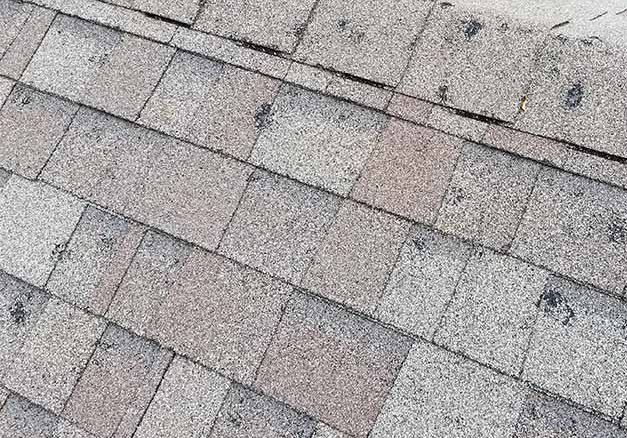
Across Missouri, Kansas and Iowa, the cells that throw hail usually bring a burst of straight-line wind with them, and that's when limbs come down. So a lot of tree claims are really two losses with one date. The limb did obvious harm to one slope. The hail may have bruised every slope on the house.
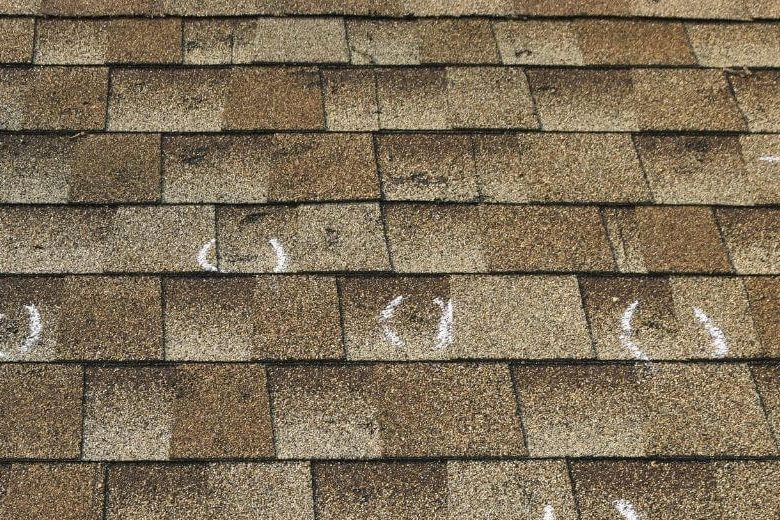
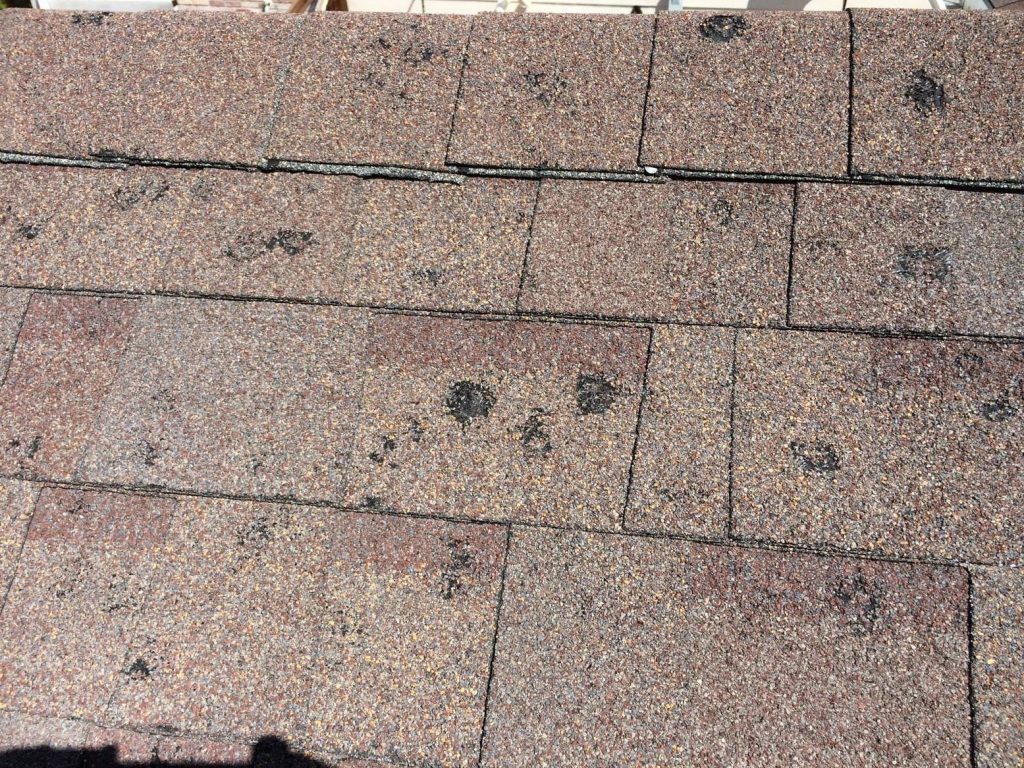
Make sure the adjuster looks at both. A hail inspection works elevation by elevation: a ten-by-ten test square on each slope, the impacts inside it counted, the dented gutter aprons and vent caps photographed because soft metal dates the storm. If the claim only gets written for the patch under the branch, the bruised shingles on the other three sides are left out, and you'll find them in a few winters as leaks. Our page on wind damage versus hail damage shows how adjusters separate the two on one roof.
How these claims usually get divided
Think of two buckets. The first holds the house itself: roof, gutters, ceilings, insulation, anything the limb or the water broke. That falls under your dwelling coverage like any other storm loss. The second bucket holds the tree. Many policies only pay to remove a fallen tree when it struck a covered building or blocks a driveway, and removal is often capped at a separate, smaller amount. Call your agent and ask for that number. We won't guess at it.
If the tree belonged to the neighbor, your own policy normally pays for damage to your house. The exception is a tree that was plainly dead and the owner had been warned, in which case your carrier may go after them later.
One more thing about money. In parts of the Plains a policy may carry a percentage wind and hail deductible, and a limb dropped by wind can fall under it. You owe that deductible, and any contractor who offers to cover it is asking you to help commit fraud. Our page on deductible waiving explains why we refuse.
Section repair or a full roof
A single limb that punched through one slope of an otherwise healthy roof is usually a section repair. We replace the broken decking, lay new underlayment, and weave matching shingles into the courses around the hole. It's honest work and it holds.
The conversation shifts in three situations. If hail also bruised the rest of the roof, the claim may support a full repair or replacement on its own. If the shingles are discontinued and the patch would show as a stripe of the wrong color, state matching rules may come into play. And if the roof was near the end of its life anyway, we'll say so and lay out what a patch buys you versus what replacing it would.
The photo file that settles a tree claim
When we inspect after a limb strike, you get the pictures: the branch in place if it's still there, the break on the trunk, the punctured deck, the attic framing with any cracks circled, and the dated hail counts from every other slope. That file goes to your adjuster as is. John Beal Roofing is a third-generation family company holding an A+ with the BBB, and we'd rather hand over evidence than opinions.
Questions homeowners ask after a limb strike
Should I pull the branch off the roof myself?
No. A limb resting on a roof is often holding itself in place against a cracked deck, and cutting it can send pieces through the opening or roll it onto you. Photograph it, keep people out of the rooms below and let a tree crew with rigging lower it.
Will my insurance pay to remove the tree itself?
Often, when the tree struck an insured building, though removal is usually capped at a separate limit that's smaller than the dwelling coverage. A tree that fell in the yard without hitting anything is frequently not covered. Your agent can tell you the exact limit on your policy.
My neighbor's tree came down on my roof. Whose policy pays?
In most cases your own homeowner policy covers the damage to your house, minus your deductible. If the tree was visibly dead and the neighbor had been told about it, your carrier may try to recover its costs from them afterward.
Can you tarp the roof while the limb is still on it?
Usually, yes, as long as the crew can reach the opening safely without standing on or under the branch. It's a temporary fix to keep rain out until the limb is removed, and then the roof gets inspected and dried in properly.
Does one limb strike mean I need a whole new roof?
Not by itself. A single puncture on a sound roof is normally repaired in that section. A full roof becomes the right answer when hail damaged the other slopes in the same storm, when matching shingles can't be found, or when the roof was already near the end of its life.
More on storm damage
Free Hail Damage Inspection
No cost, no obligation, and you get the photographs either way.
Free inspection, documented for your claim.
Call one number from any of our forty Midwest metros and a live dispatcher answers, day or night.