
Midwest hail damage · John Beal Roofing since 1947
Drone Roof Inspections After Hail: What They Catch and Miss
A camera over the roof is fast and keeps everybody off the ladder. It can't press a shingle, and that gap shows up in claims.
Short answer
A drone roof inspection is good at photographing a whole roof quickly, especially steep, tall or fragile roofs that are dangerous to walk, and it documents missing shingles, dented metal and obvious impact marks well. It can't feel a shingle, so it can miss the soft bruise where hail fractured the fiberglass mat without breaking the surface, and that fracture is the damage most asphalt claims turn on. Drone imagery works best as a supplement to a hands-on test square, not a replacement for one.
Why drones showed up on roofing jobs
Getting a person onto a roof safely takes a ladder, a harness on steep pitches, and time. A small drone launches in a couple of minutes and can photograph every slope, the chimney crown and the full ridge line from angles a ladder never reaches. During a big storm, that speed is attractive to a roofer. For the homeowner, it means nobody steps on a roof that's already fragile. Insurance carriers use aerial imagery as well, for underwriting and sometimes to look at a roof before deciding whether to send a field adjuster. That's a reasonable tool. The real question is what you can and can't conclude from the pictures.
What the camera does well
Aerial photos are excellent at anything you can see. Missing or torn shingles show up clearly, and so do lifted tabs, displaced ridge caps, branches lying on the deck and damage around chimneys and skylights. Dented vents and flashing often show too, if the light is right. A good set also gives a clean overhead view of the whole roof layout, which makes it easy to point at a specific slope in a report and say exactly where the damage sits. On a three-story house with a steep pitch, or a slate or clay tile roof that shouldn't be walked, the drone may be the safest first look anyone gets.
The blind spot
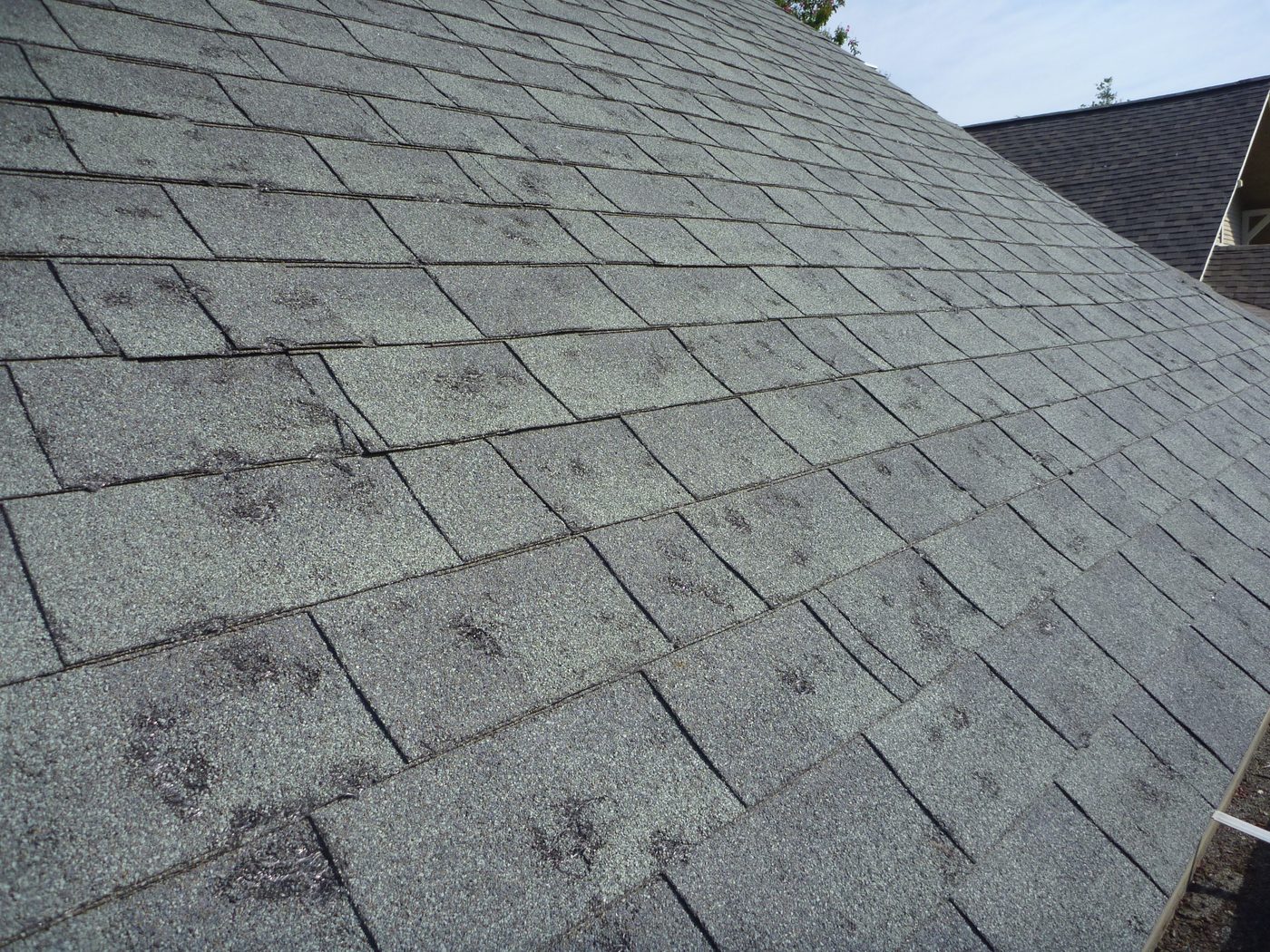
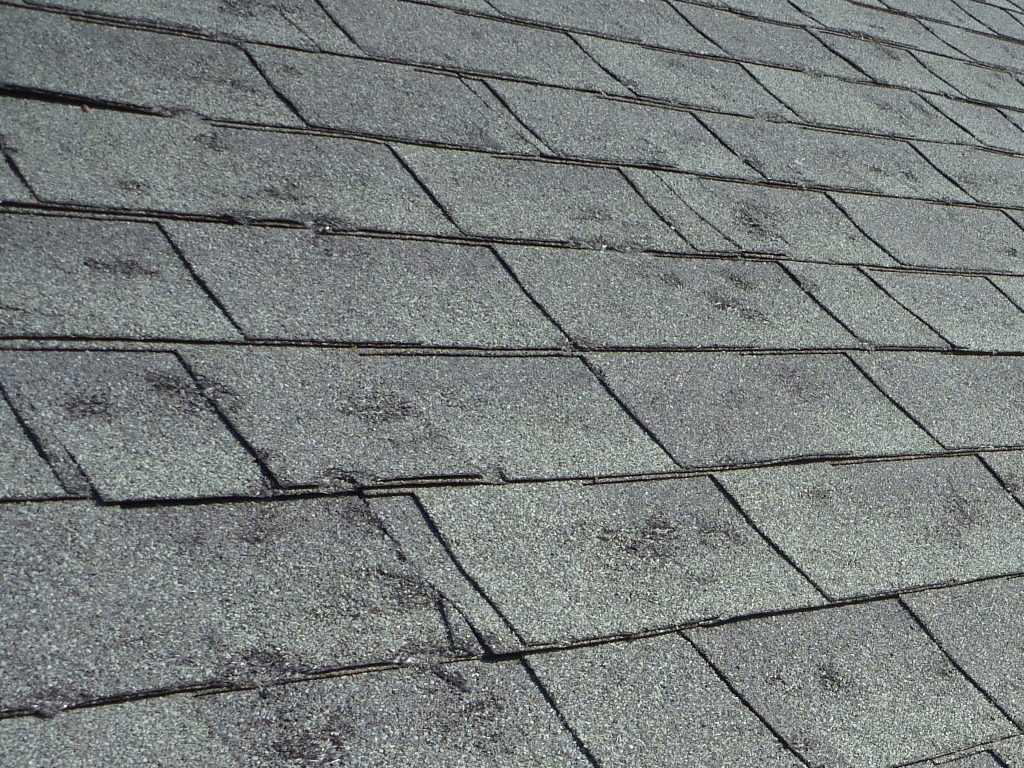
Hail damage on asphalt is often structural before it's visible. The stone flexes the shingle hard enough to crack the fiberglass mat while the surface stays mostly intact, and the reliable way to find that is to press the impact point. A fractured spot gives. A sound one doesn't. No camera does that. Overhead photos also flatten texture, so a light scatter of shallow bruises on a dark shingle can vanish entirely, and glare off a dewy roof washes out detail. The drone can't lift a tab to check the sealant strip, look under a ridge cap, or tell you how deep the dent in a vent cap really goes.
The test square still decides the claim
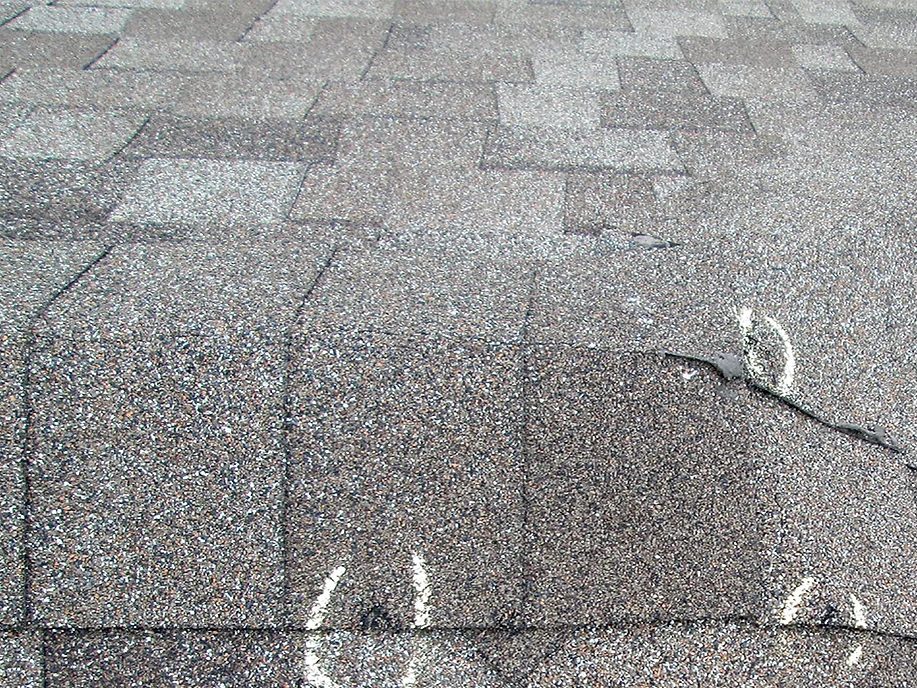
Most carriers judge an asphalt slope by counting impacts inside a ten-foot by ten-foot square marked on each elevation. Somebody has to be on the roof to chalk it, examine each mark by hand and sort the hail hits from blisters, scuffs and ordinary wear. That's the evidence an adjuster works from, and it's what holds up if the claim gets disputed. An overhead photo can support the count. It rarely replaces it. If a roof was only flown, expect the adjuster to want a hands-on look anyway. Our page on meeting the adjuster covers how that visit usually goes.
How we handle it on your roof
On a roof that's safe to walk, we walk it. We chalk the test squares, press the impacts, photograph the soft metals and check the flashing up close, because that's what tells us whether there's a claim and what the scope should be. On a roof that isn't safe to walk, or a fragile material that shouldn't take foot traffic, aerial photos are a sensible way to see the surface without breaking anything, and we'll tell you so. Either way you get the photographs and a plain account of what we found. If the roof is sound, you'll hear that too.
What to ask a company selling a drone inspection
Ask who's flying. Anyone flying a drone for business in the United States is supposed to hold an FAA Part 107 remote pilot certificate, and a legitimate operator won't mind showing it. Ask whether anyone will get on the roof afterward, and if nobody will, how they plan to check for mat fracture. Ask for the full set of photos instead of a few highlighted frames. And be wary of a free flight that comes bundled with a contract to sign on the spot. The aircraft doesn't make the sales pitch more trustworthy. Our storm chaser warning page lists the patterns.
Big flat roofs are a different story
Large low-slope roofs are where aerial imagery really earns its keep. A warehouse or apartment complex can carry acres of membrane, and a drone survey is a quick way to map ponding, debris, punctures and damaged rooftop units before a crew walks the trouble spots. It still won't tell you whether hail crushed the insulation board under the membrane or let water saturate it. That takes core samples and moisture testing done in person. Our page on commercial hail damage explains how those buildings get inspected.
If your carrier inspected from the air
Some homeowners only learn their carrier relied on aerial images when a claim decision or a renewal letter shows up. If a decision came from imagery and you think it's wrong, a hands-on inspection with dated photographs and test-square counts is the most direct way to answer it. Ask the carrier which images were used and when they were captured, because a photo taken before the storm can't show damage from it. If the claim has already been turned down, our page on a denied hail claim walks through the next steps.
Our honest take
A drone is a flying camera, a very good one, and nobody should be talked out of it or oversold on it. It's a quick, safe way to see a roof's surface and a weak way to judge the shingle mat, which is where hail does its quietest work. If hail fell at your address, get a free inspection where someone actually puts hands on the shingles and hands you the photos afterward. Call John Beal Roofing at 1-800-564-6232. A live person picks up every hour of every day, storm or no storm.
Frequently asked
Is a drone roof inspection accurate for hail damage?
For visible damage, often yes. For mat fracture under intact granules, not reliably, because finding it means pressing the shingle. Pair drone photos with a hands-on inspection on any roof that can be walked safely.
Will my insurance company accept drone photos?
Many carriers use aerial imagery themselves and will look at drone photos as supporting evidence. Most still lean on hands-on test-square counts to decide whether a slope is damaged.
Does a drone pilot need a license to inspect my roof?
Commercial drone operators in the U.S. are required to hold an FAA Part 107 remote pilot certificate. Ask to see it before anyone flies over your house for a business purpose.
When is a drone the better choice?
On roofs too steep or too high to walk safely, and on fragile materials like slate or clay tile that crack under foot traffic. On large commercial roofs it's a fast way to map where a crew should look.
Can a drone find a roof leak?
Sometimes it spots the cause, like a missing shingle or torn flashing. Most leaks get traced from the roof surface and the attic together, often with a hose test, and a drone can't do either.
Related reading
Free Hail Damage Inspection
No cost, no obligation, and you get the photographs either way.
Free inspection, documented for your claim.
Call one number from any of our forty Midwest metros and a live dispatcher answers, day or night.