
Midwest hail damage · Repairs and matching
Shingle Color Matching on a Midwest Hail Damage Repair
A patched slope almost always looks patched. Here's why, what can be done about it, and when the mismatch becomes your carrier's problem.
Short answer
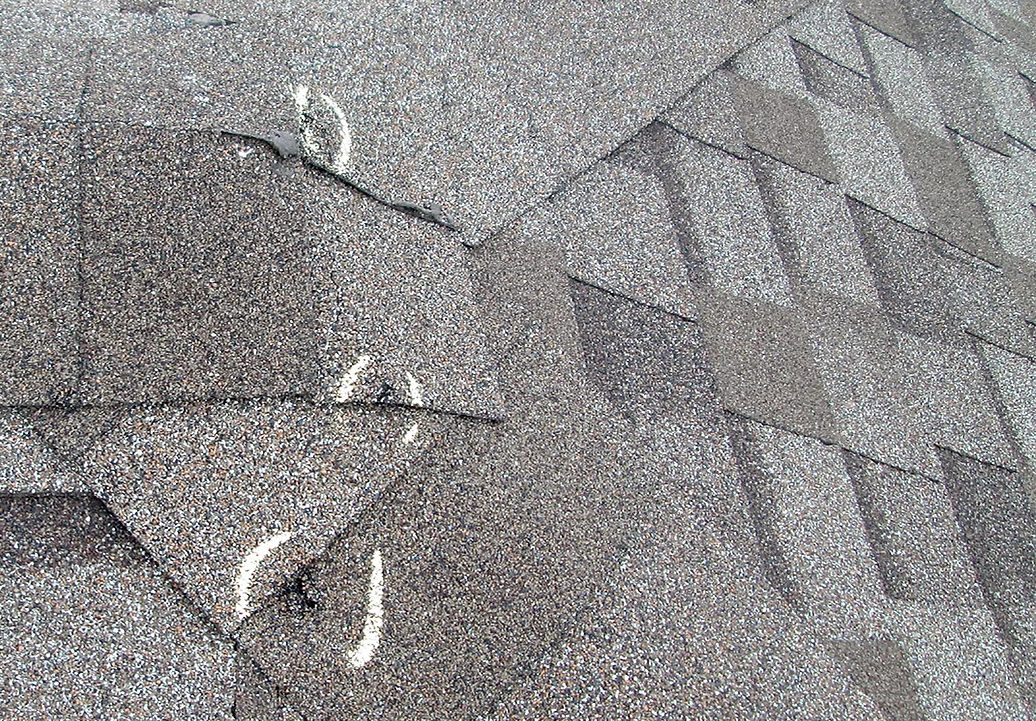
A shingle repair rarely matches the existing roof because the old shingles have faded and lost granules, the original color may be discontinued, new production runs vary slightly in blend, and older shingles can be a different physical size from current ones. A careful roofer can get close by sourcing the same product line and using donor shingles from a hidden slope. When the mismatch is severe, state matching rules or policy language may require the insurer to pay for more than the damaged area.
Years of sun change everything
A new shingle out of the bundle wears a full coat of ceramic-coated granules. The shingles on your roof have spent years in Midwest UV, freeze-thaw and wind-blown grit, and they've shed part of that coat into your gutters. What's left is lighter, flatter and a little chalky. Lay a fresh shingle beside them and it reads a shade darker and sharper, even when the wrapper says the same name.
The gap narrows over time. Never completely. A patch on a slope that gets full afternoon sun tends to weather in faster than one on a shaded north face, which is one reason we try to keep repairs where the sun works hardest.
The blend in the bundle isn't the blend on your roof
Most architectural shingles get their look from several granule colors dropped onto the asphalt in a pattern. Every plant and every run varies a little, which is why manufacturers tell installers to pull from several bundles at once. Your roof came from one batch. The repair is coming from another, sometimes made at a different plant. Usually close. Rarely exact.
Discontinued colors and changed sizes
Colors get retired. Whole product lines get retired. If your shingle hasn't been made in years, nobody can buy you the same thing new, and the nearest current color is a judgment call.
Size can be a bigger problem than color. Older three-tab shingles were commonly made in a 12-by-36-inch English size, while most shingles sold today are metric, roughly 13¼ by 39⅜ inches. The exposure differs. A metric shingle woven into an English-size roof won't line up with its neighbors, and the tab cutouts drift out of alignment across the patch. You can see it from the street. Our page on 3-tab versus architectural shingles explains why that matters on a claim.
How we get a repair as close as we can
Identify the product first
We pull a shingle from the damaged area and check its dimensions, nail line, sealant pattern and granule blend. Carriers sometimes send a sample to a lab for the same reason.
Use donor shingles
Many homes have a rear slope or a garage face nobody looks at. Weathered shingles from there move to the front repair, and the new ones go where they won't be noticed.
Break the patch at a line
A difference that stops at a ridge, hip or valley reads as intentional. A blotch in the middle of a field doesn't.
Work in mild weather
Old shingles turn brittle and their seal strips weld down. Lifting them on a cold morning cracks them, so repairs on an aged roof go best on a warm afternoon.
When a repair is the wrong call
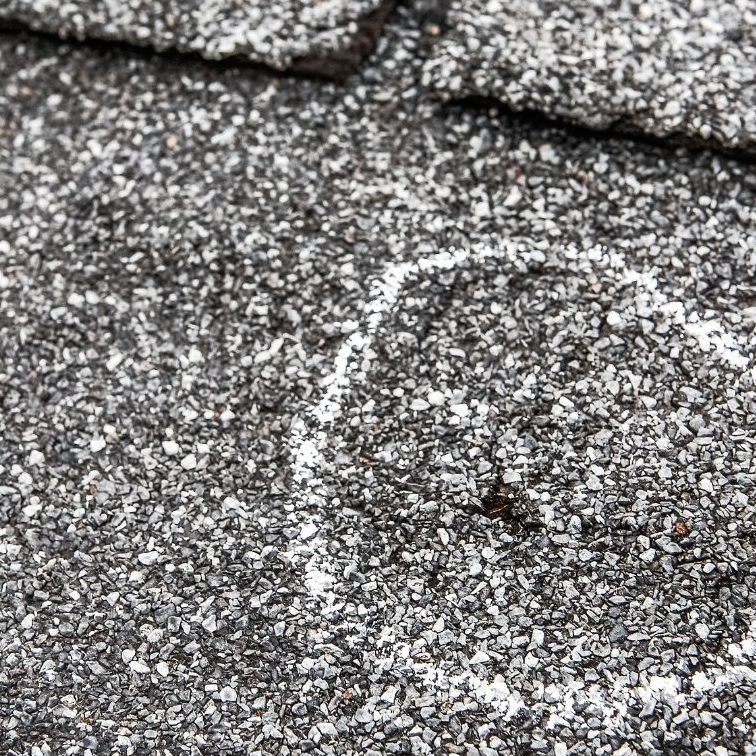
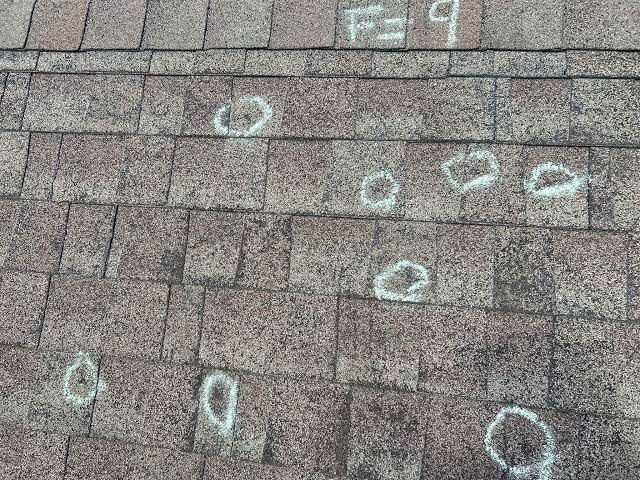
Hail rarely hits one shingle. It hits every slope facing the storm, and if the test squares show enough strikes, the honest answer is replacing those slopes or the whole roof. We won't talk you into scattered patches across four elevations because that's what a first estimate happened to pay for. Every patch on an old roof means lifting brittle shingles around it, and every one of those is a seam.
Where matching rules come in
Some states have regulations or court decisions requiring insurers to replace enough of a roof to produce a reasonably uniform appearance when matching material isn't available. Others leave it to the policy wording, and some policies now carry endorsements that limit cosmetic matching outright. Since it varies by state and by contract, read your own declarations page and ask the adjuster directly. Our state-by-state matching page goes deeper.
A matching argument needs evidence: the shingle identification, proof that the color or size is discontinued, and photos of new material laid beside the old. We put those in the file when they apply. If the carrier agrees to more than the damaged area, our page on partial replacement covers where the line usually gets drawn.
Setting expectations before the crew arrives
If you're going ahead with a repair, ask to see a loose new shingle held against your roof before anything is nailed. Look at it from the yard, not from the ladder. That five-minute check tells you more than any color chart, and it's a fair thing to ask any roofer for. If the difference bothers you then, it'll bother you every time you pull into the driveway.
Ridge caps deserve their own look. They're usually cut or bought as a matching accessory, and on an aged roof the cap line is often the most weathered strip on the house. A new cap run over old field shingles can read as a bright stripe along the peak. Sometimes the better call is leaving sound old caps in place and blending the repair below them.
Questions homeowners ask us
Will new shingles eventually blend in with my old roof?
They get closer as the new granules weather, but an exact match on an aged roof is uncommon. Expect a visible difference for the first few years, smaller on slopes that get full sun.
Can you match a discontinued shingle color?
Not with new material. The options are the closest current color, donor shingles from a hidden slope, or, where the mismatch is significant, asking the insurer to replace the affected slopes or roof under matching rules or policy terms.
Why does my repair look crooked next to the old shingles?
Probably a size difference. Older English-size shingles and newer metric ones have different exposures, so courses and tab lines don't align across the repair.
Does insurance have to replace the whole roof if a repair won't match?
It depends on your state and your policy. Some states require a reasonably uniform appearance and some policies exclude cosmetic matching. Read your declarations and ask the adjuster in writing.
How do roofers identify my exact shingle?
By pulling a sample and checking its dimensions, nail line, sealant pattern, granule blend and any markings on the back. Insurers sometimes send a sample to a lab for identification.
Keep reading on this site
Free Hail Damage Inspection
No cost, no obligation, and you get the photographs either way.
Free inspection, documented for your claim.
Call one number from any of our forty Midwest metros and a live dispatcher answers, day or night.