
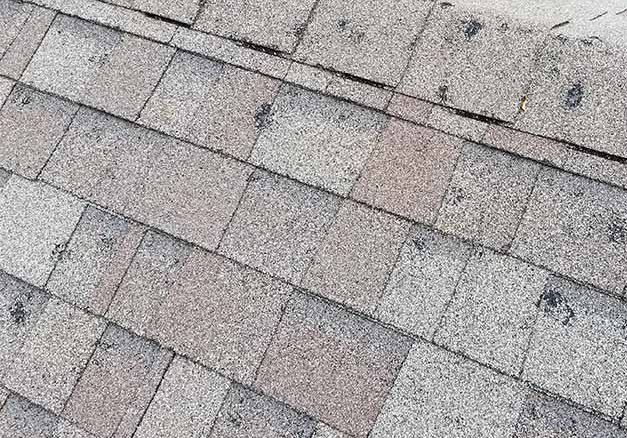
Midwest hail damage · What sits under the shingles
Roof Decking Replacement After Midwest Hail Damage
Nobody can see the deck until the old roof is off. Here's how we decide which sheets stay and which go, and how replacement decking gets paid for on a hail claim.
Short answer
Roof decking gets replaced during a hail replacement when the sheathing under the old shingles is rotted, delaminated, soft underfoot, cracked, or too widely gapped to hold new nails. Hail itself rarely breaks decking. The bad sheets are usually old leak damage that only shows once tear-off exposes the wood, and most insurance estimates handle it as a per-sheet allowance or a documented supplement.
Why nobody can count bad sheets in advance
An estimator standing on your shingles is reading the deck through layers: shingles, underlayment, and whatever earlier crews nailed down over the years. Soft spots give some of it away. A slope that flexes like a trampoline between rafters is telling you something. But a sheet of OSB can be swollen along one edge and solid everywhere else, and you won't know until it's bare.
So an honest estimate lists decking as a conditional line, priced per 4x8 sheet, with a note that the final count comes after tear-off. A bid that promises zero decking on a thirty-year-old roof is guessing. So is one that assumes the whole deck goes. We'd rather write the conditional line and show you photos than surprise you in either direction.
What actually ruins a deck
Old leaks
A pipe boot that's been weeping for five winters leaves a dark, punky ring in the wood around it. Push a screwdriver in and it sinks. That sheet can't hold a nail, so it comes out.
Delaminated plywood
Plywood is glued layers. Years of attic moisture can let those layers let go, so the top ply lifts and bubbles. Shingles nailed into a loose ply will pop their fasteners.
Swollen OSB edges
Strand board doesn't rot the way plywood does, but its edges swell when they get wet and stay swollen. That ridge telegraphs straight through a new shingle as a visible line.
Hail isn't on that list, and that's deliberate. It takes very large stones to crack sheathing outright, and when it happens you can usually spot it from the attic as a split board or a punched spot showing daylight. Far more often, a hail claim is simply what finally gets the old roof off, and the deck damage underneath is years older than the storm.
Plank decking on older Midwest houses
Plenty of homes built before the 1960s were decked with 1x6 or 1x8 boards instead of sheets. Board decking can be perfectly sound. The trouble is the gaps. Boards shrink over decades, and shingle manufacturers publish limits on how wide a gap their product can bridge. Past that, the installation instructions call for new sheathing, laid over the boards or in place of them.
We see it most on houses whose first roof was wood shake. Shakes were laid over spaced boards on purpose, so they could dry out between rains. Asphalt over that skip sheathing doesn't work. It's one of the few situations where a full redeck is normal rather than the exception.
How decking gets paid for on a hail claim
Sheathing broken by the storm is part of the covered loss. Sheathing that rotted from an old leak usually isn't, by a strict reading of most policies, because that's long-term water damage. In practice the line blurs. The new roof the carrier is buying can't be installed over mush, and many adjusters write a per-sheet allowance into the first estimate for exactly that reason.
When the count at tear-off runs past that allowance, the extra sheets go to the carrier as a supplement. That request lives or dies on photos. Our crews shoot each bad sheet before it comes off, with a tape or a marker in frame, and log the count. If replacement is required by code or by the shingle maker's instructions, ask your agent whether your policy carries ordinance or law coverage, which is the part that pays for code-required work.
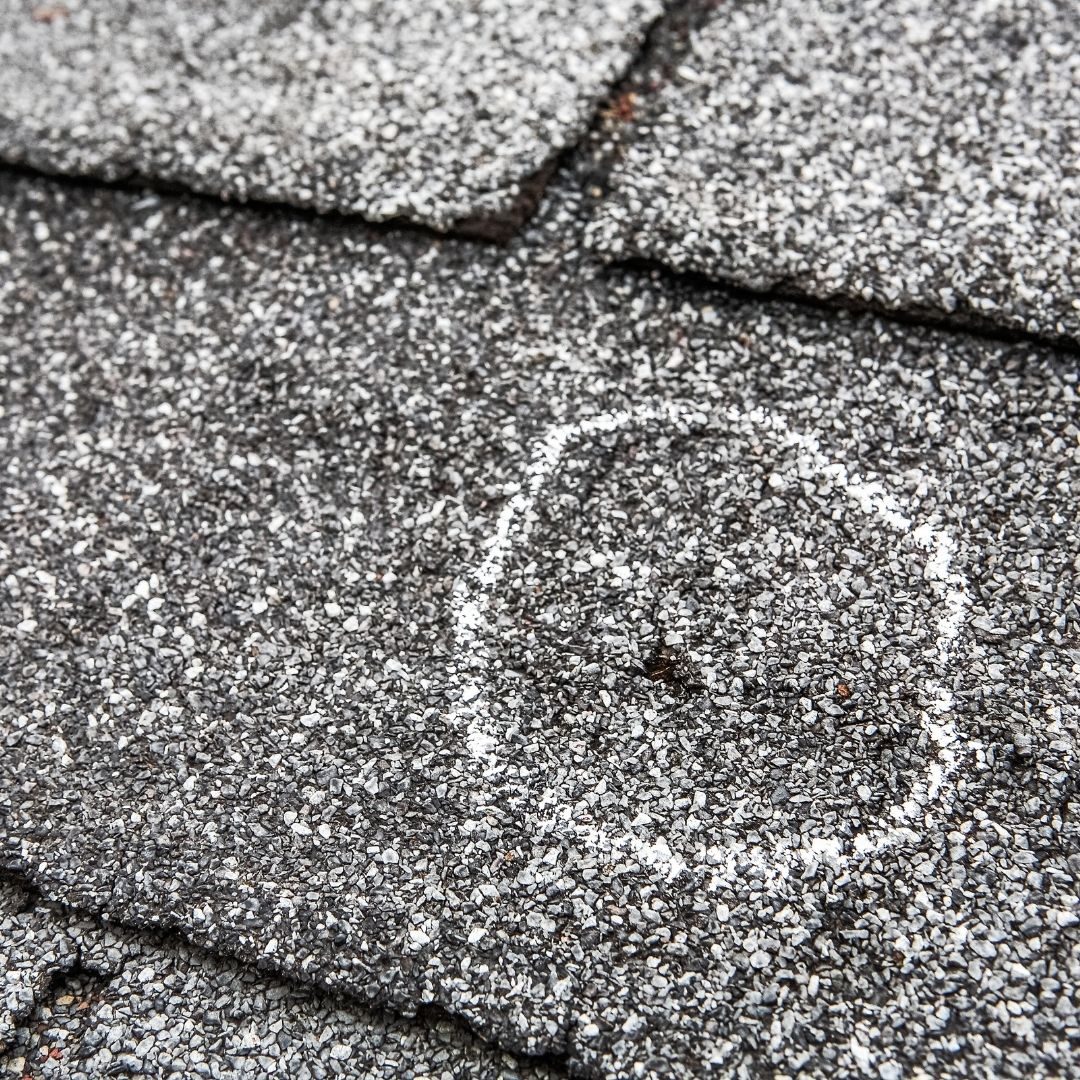
Thickness, clips and the parts you never see
Replacement sheathing is typically 7/16-inch OSB or 1/2-inch plywood, matched to what's already up there so new sheets sit flush with old ones. Where rafters are spaced wider, thicker panels or clips at the unsupported edges keep the deck from sagging between framing. Sheets get a small gap at each joint so they can swell in a humid August without buckling. None of that shows once the shingles are on, which is exactly why rushed crews skip it.
Things we won't do with a bad deck
We won't lay new shingles over a sheet a screwdriver goes through. We won't bill a full redeck when six sheets are bad. And we won't hide the count. Before the crew closes up a slope, you or your adjuster can see the old wood in the dumpster and the photos in the file.
One more. If there's a second layer of shingles on the house, both layers come off. Stacking a new roof on two old ones hides the deck entirely and adds weight, and building codes in most places cap a roof at two layers anyway.
Questions worth asking before tear-off day
How is decking priced in the contract?
Get the per-sheet number in writing before work starts, so the final invoice isn't a negotiation.
Who decides a sheet is bad?
The crew lead on the roof, with a photo. Not a salesman on the phone.
Will I get the photos?
Ask for them in the same folder as the rest of your claim paperwork.
What if it rains mid-job?
Any torn-off slope gets dried in with underlayment the same day. Bare wood shouldn't sit open overnight.
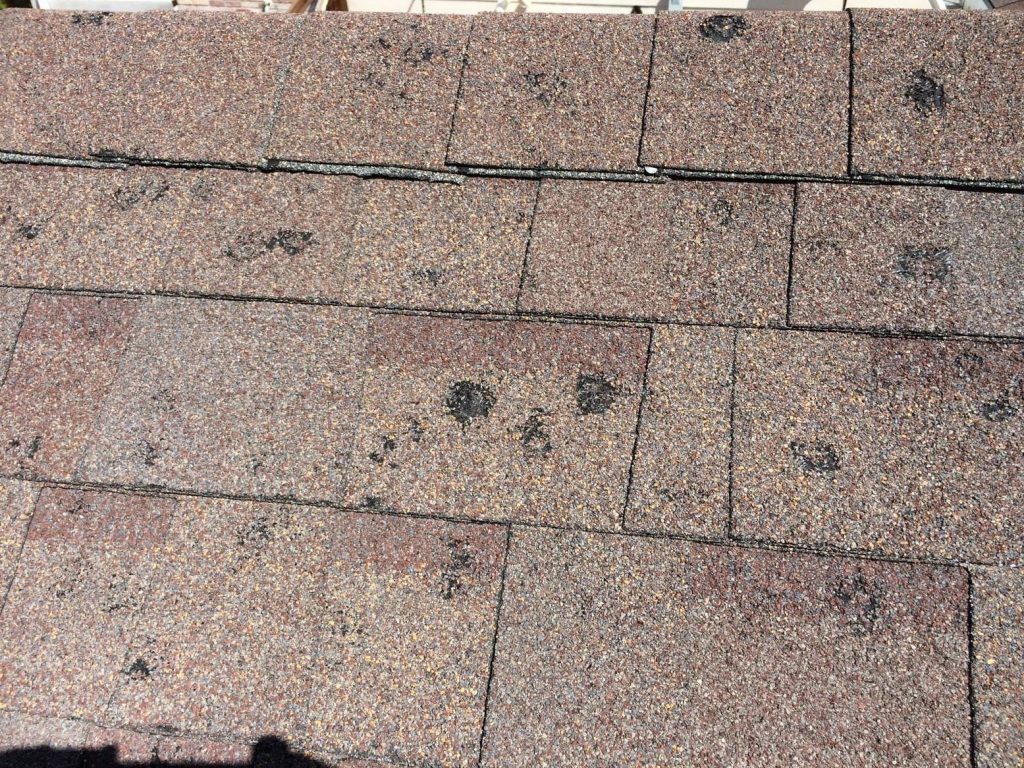
Questions homeowners ask us
Can you tell from the attic if my decking is bad?
Partly. Dark staining, rings around nail tips, sagging between rafters and daylight at a seam all point to trouble. A clean attic doesn't prove the deck is fine, though, because swollen edges and soft top plies often look normal from underneath.
Does a hail claim pay for new plywood?
Storm-damaged decking is part of the loss. Sheets that rotted from older leaks are a gray area, and many adjusters include a per-sheet allowance because the new roof can't go down without a sound deck. Extra sheets found at tear-off are submitted as a supplement with photos.
Why does my estimate say decking 'if needed'?
Because nobody can count rotten sheets through the shingles. The conditional line fixes the price per sheet in advance, and the quantity is filled in after tear-off.
Is OSB worse than plywood under shingles?
Both are accepted by shingle manufacturers and building codes. Plywood shrugs off a soaking a little better and OSB is more uniform sheet to sheet. Matching what's already on the roof matters more than which one you choose.
Do I need new decking if my old roof had wood shakes?
Usually yes. Shakes were installed over spaced boards, and asphalt shingles need a solid deck, so replacing a shake roof with asphalt almost always includes new sheathing over or in place of those boards.
Keep reading on this site
Free Hail Damage Inspection
No cost, no obligation, and you get the photographs either way.
Free inspection, documented for your claim.
Call one number from any of our forty Midwest metros and a live dispatcher answers, day or night.